


It’s been almost two years since the first UK and international projects were able to benefit from the Enhanced Audio-Visual Expenditure Credit (EAVEC) for lower budget feature films intended for theatrical release (previously referred to as the IFTC), and the initiative is helping enhance the UK’s position as a world-leading film and HETV production destination, making it a prime choice for makers of limited budget features.
The EAVEC is available to qualifying projects with budgets up to £23.5m at an effective net rate of 39.75%, calculated on a maximum of 80% of £15m of qualifying core expenditure. (For qualifying live action films with a budget of over £23.5m, the standard AVEC has an effective rate of 25.5%.)
One project that has already felt the benefit is Kirk Jones’ Bafta-winning I Swear, a biopic of Scottish Tourette Syndrome campaigner John Davidson (played in the film by Robert Aramayo). The film shot on location in Scotland across 36 filming days between July and September 2024, with Glasgow doubling for Davidson’s hometown of Galashiels in the Scottish borders.
UK producer Piers Tempest of Tempo Productions, who produces alongside Jones and Georgia Bayliff, believes I Swear would not have happened without the EAVEC which, he says, offers ease of processing and operation.
“It’s inexpensive to finance,” says Tempest, “and most importantly the EAVEC comes back relatively quickly – and extremely quickly compared to other fiscal incentives.”
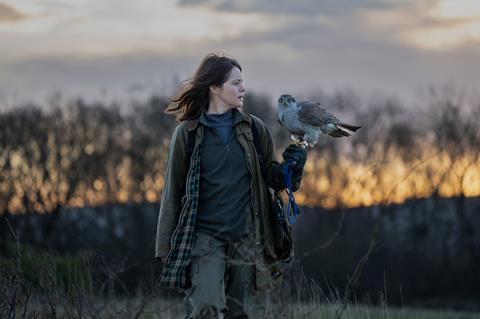
Another EAVEC beneficiary is fellow Bafta nominee H Is For Hawk, directed by Philippa Lowthorpe, who adapted Helen Macdonald’s bestselling memoir alongside Room author and screenwriter Emma Donoghue. The film is produced by US company Plan B alongside Cardiff-based production company Good Gate Media, founded by John Giwa-Amu.
“The enhanced tax credit, blended with the funding from Creative Wales/Ffilm Cymru, which Good Gate secured, was essential to making the finance click and giving investors sufficient coverage,” says Giwa-Amu. “It ensured the film remained in the UK, and specifically Wales.”
Starring Claire Foy and Brendan Gleeson, H Is For Hawk shot in Wales for five weeks, and also around Cambridge and Bristol.
“Having previously lost a prestige project to Eastern Europe, the combination of the enhanced tax credit with Creative Wales makes for a very competitive offering to bring in inward investment to the UK,” Giwa-Amu says. “British crews continue to be excellent, as are the locations and competitive costs.
World-class package
Indeed, for those productions who have already taken advantage of the EAVEC, it is a core part of the world-leading package of incentives that the UK has to offer.
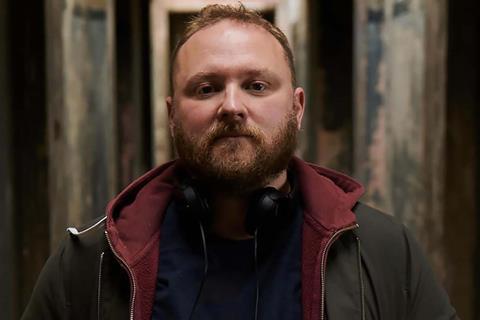
“The UK has established cast, established crew,” says American producer Adam Richman, co-founder of New York-based Double Nickel Entertainment, which recently produced Sky Original family comedy Grow with Glasgow-based Blazing Griffin and CinemaLive. “The tax credit is so meaningful, and it also shows a real commitment on behalf of the government to say, ‘Hey, we’re interested in independent film’.”
Directed by John McPhail, and with an ensemble cast boasting Nick Frost, Alan Carr and Golda Rosheuvel, Grow shot on location in Scotland for six weeks, after six weeks of onsite prep. It secured backing from Screen Scotland, Orogen Entertainment, SC Films International, Foundry, Zertex Media, Pont Neuf Productions, and Grapevine Films.
Richman says that filming in Scotland was a no brainer after talking to the British Film Commission (BFC) and Screen Scotland, the latter of which stepped in after original funding fell by the wayside in the eleventh hour.
“We started shooting Grow on April 1 2024, the first day that you could be eligible for EAVEC,” Richman notes. “We were probably one of the first, if not the first, films to use the EAVEC. Knowing it was coming helped us to close our financing.”
Producers who have utilized the EAVEC agree that it has proved invaluable in helping secure funding. That includes producer Olivier Kaempfer, who recently worked on Alicia MacDonald’s Finding Emily, produced by Working Title Films alongside Kaempfer’s Parkville Pictures for Universal/Focus Features. It shot for just under eight weeks in Manchester, both on location and at Space Studios.
“We were in the early stages of putting together a production plan and, given the value that the EAVEC offered to any financier that we were speaking with, it immediately helped in making it feel more viable,” notes Kaempfer. “At the same time, it allowed us to be as ambitious as possible with our gross budget spend on screen.”
Says Kaempfer, the single biggest benefit of EAVEC in cases where there is a single financier for a film is that it allows a producer to present an opportunity where certain risks have been mitigated. “That’s especially true in a risk-averse market climate,” he adds, “in particular when it comes to first time directors or up-and-coming cast.”
That’s a sentiment shared by producer Matthew James Wilkinson of the UK’s Stigma Films, who is currently filming the Brian Kelly-directed survival thriller No Way Off in Northern Ireland.
“For independent projects, having access to the new EAVEC could make the difference between getting a film over the line or not at all. It’s a very attractive incentive to international money, and a solid piece of collateral for lenders to may view this as a key element to securing further funding, such as a gap loan.
“For No Way Off, the ability to access the EAVEC strengthened our position with our financial partners and made it possible to deliver on a logistically difficult project,” he continues. “Having an improved UK tax credit will always be a lifeline for local independent production.”
Double Dutch
A key strength of the EAVEC is its attractiveness to overseas producers. In that regard, the BFC, which has an Memorandum of Understanding with the Netherlands Film Commission to support film and HETV co-productions, is monitoring its appeal to producers there.
Dutch producer Leontine Petit of Lemming Films, which has offices in Amsterdam, Berlin and Ghent and has several projects in development with UK producers, can clearly see the benefit of the EAVEC. “The introduction of the tax relief for independent film has made the UK more attractive as a production partner for Europe,” she says.
It is also important, notes Petit, for co-production partners to have access to each other’s crew, talent, locations and post facilities. “Only by competing financially can we choose to work with the UK, and in this way we make European film stronger.”
As a fellow international producer, Richman, who is new to working in the UK, agrees that the country’s full package of incentives, including the Enhanced AVEC, makes it easier for him to return for future projects.
“Grow is my first movie in the UK, and I know there will be many more,” he says. “When working in the UK, the emphasis from everyone from the agents, the BFC and the regional agencies to the investors and the tax credit is: ‘How can we help you get your movie made?’”
For more information about the Enhanced AVEC visit https://britishfilmcommission.org.uk/plan-your-production/accessing-uk-tax-reliefs/






No comments yet