













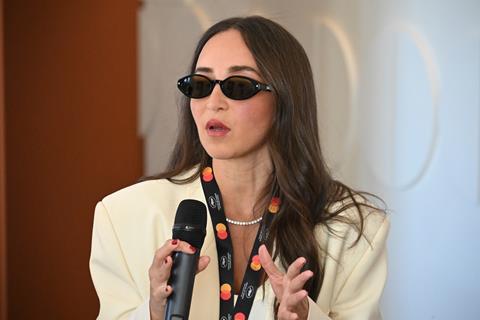
Content creation arrived in Saudi Arabia before cinema, and — as this Cannes panel heard — emerging long-form talent cut their teeth on social media, learning some valuable lessons.
Saudi Arabia has a headstart when it comes to content creators. Before 2018, when cinemas reopened in the Kingdom, young Saudis were already making and distributing content on YouTube and social media as no other channels were available to them.
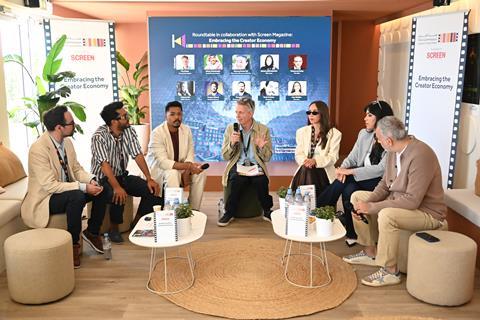
At the Cannes panel ‘Embracing the Creator Economy’, hosted by Saudi Film Commission in collaboration with Screen International, experts explored opportunities for the mainstream film and TV industry to work with these creators, many of whom have built sizeable fanbases.
“The story of Saudi for content creators is unique because back in the day, we had no cinema,” said Bahaa Abdulmajeed from Saudi Film Commission. He cited content media studio Telfaz11, founded in 2011, as “a great example of success”.
“They started from YouTube, making scripts and videos, and they created this fanbase. If you look at YouTube at that time, it was professional at that level. They were creative with limited support, and with no way to make short films or long fiction.”
Fast forward to the present day and the company’s movies, including titles such as Abdullah Majed’s Alzarfa, are blockbuster hits with local audiences. “The guys came from YouTube and they became a really reliable production house in Saudi,” added Abdulmajeed.
“It’s the only country where content creation started before cinema,” agreed MBC Studios general manager Zeinab Abu Alsamh. “There is a level of respect and credibility for content creators here that I don’t think is there around the world. They helped us be entertained before cinema was there. We owe them that — and our talents are very young.”
Several of Saudi’s filmmakers who are most popular today with local audiences cut their teeth making YouTube videos. They targeted young audiences who remain loyal today. Examples include the team behind the Shabab Albomb films, which have been box-office hits.
Meanwhile, Abdulrahman Abumalih’s podcast Thmanyah has the world record for most viewed episode on YouTube, easily outstripping anything put out by high-profile podcasters such as Joe Rogan. By contrast, the global film industry has a wary relationship with content creators, still unsure whether they are potential allies or subversives who are overturning conventional business models. However, in Saudi, they are embraced.
“We’re not trying to protect cinema and film from the content creators. Maybe that happened in other countries, but we want to hear what they have to say,” said Abu Alsamh.
Saudi content creator, filmmaker and fashion guru Lina Malaika, who was on the panel, is one of many artists whose work cuts across multiple disciplines. “When I started my journey as a filmmaker, [cinema] was non-existent in the region,” she said, reflecting on how her career developed in the pre-2018 period. “I decided to start writing my own scripts, hoping to pitch to regional [backers] in Egypt or Lebanon and have it produced there instead of Saudi. But then my journey took me on a different route and I started doing my own content creation.”
Malaika has gone on to make fashion documentaries and short films, with her early work premiering at Red Sea International Film Festival. “I feel like as I was evolving as a creative, Saudi started opening up at the same time, in parallel.”
Malaika acknowledges it was “a struggle at the beginning because you don’t have resources or regional benchmarks”. But she says she has now been embraced by the fast-growing local industry and opportunities are opening up for her and others.
Emerging talent
Veteran Egyptian producer Mohamed Hefzy founded Film Clinic in 2005, before content creators were posting material on YouTube. Nonetheless, when he produced one of his early movies, 2008 comedy Waraqat Shafrah, he was working with three then unknowns — Hesham Maged, Ahmed Fahmy and Chico — who he discovered via DVDs that were circulated by fans. All three have gone on to become among the most bankable actors in the Arab world.
“In a way, this is exactly the same philosophy as looking out there at what is on YouTube and social media,” said Hefzy. But he warned it is naive to expect newcomers posting their material on YouTube to emerge automatically as fully fledged filmmakers unless there is infrastructure and training to support them. “Some content is very cinematic…[but] not everybody can make that transition successfully. You have to be careful.”
One obvious attraction about content creators is that their work “comes with a lot of data”. As Hefzy noted: “You can see how audiences are reacting to YouTube videos much faster.”
Paris-based talent manager Florent Lamy, co-founder of Elev8on, said that gatekeepers in the European cinema industry are still failing to notice the quality of content creators’ work. “For me, they [the creators] are like real artists — actors or musicians… it’s funny, but when I speak to some producers in France, they are scared and misunderstand [the differences] between ‘creators’ and ‘influencers’.
Other panellists highlighted the creative advantages that content creators have over many rivals in the traditional film business. “Content creators can be riskier [in their work],” said Casper Shirazi, founder of Dubai-based Storyfied Ventures, which helps brands to engage with long-form entertainment.
The challenge is monetising the work. Shirazi argued that content creators understand their audiences and should therefore be allowed to “build entertainment and engagement” in the way they know best.
Victoria Fäh, manager of IPR LAB and Future Content at investment fund IPR.VC, is looking for content creators that her company can back. “We are developing new ways of investing into creative content and creative business,” she confirmed.
“We are interested in that direct-to-consumer relationship,” added Fäh, explaining why financiers are so intrigued by content creators’ connection to their audiences. “What creatives have been excellent at is not just staying within one [format], for example video or audio only, but being able to do all of it. We look at how you can combine audio, video, merchandise, products, everything into one and that is true to the story, the IP, the audience — and how we can build a resilient business that is not reliant on one revenue stream, that is on multiple platforms and that is informed by data.”
Cinema is a collaborative medium whereas content creators often work alone. Nonetheless, as most panellists agreed, there are huge amounts of talent in Saudi’s creative content world, and the film and TV industry would be rash to not tap it.