


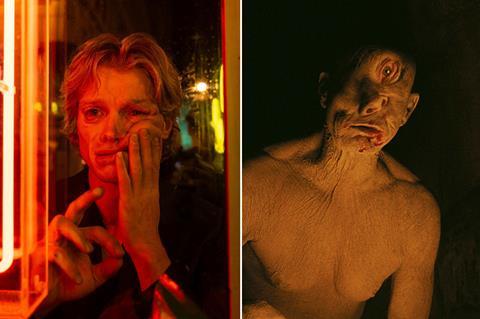
Ask leading figures in the sector what makes the UK such a world leader for visual effects (VFX) and special effects (SFX) and they point to the sustained excellence in everything from creature creation and prosthetics to motion capture.
“I think you can certainly say we are up there with the best,” says director James Watkins, whose new Gotham City-set body horror film Clayface (distributed by Warner Bros) was number one at the US box office in late October. “We have world class talents working in VFX and there is a reason why films [do their] work here. It is because they have developed relationships, it’s a trust-based business. And it is not just about the technology, it’s about the interpretative artistry to put the right ideas forward.”
Watkins shot Clayface on location in Liverpool and Manchester, with a base at Warner Bros. Studios Leavesden. London-based Framestore and Red Visual Effects handled the VFX, led by British veteran VFX supervisor, while several British artists including among them Dixie George and Adrian Rigby, were involved in the complex prosthetics and make up.
“If you look pound for pound at what you can get, the UK is extremely competitive both in terms of value and the skills base we have,” Watkins continues.
Framestore also provided 1100 visual effects shots for another of this year’s biggest hit movies, Oscar contender Project Hail Mary. Meanwhile, Mark Barkowski, ILM’s London-based visual effects supervisor, helped bring Hulk back to life for Spider Man: Brand New Day, while DNEG was heavily involved in creating the Cyclops for Christopher Nolan’s awards favourite The Odyssey.
As DNEG’s ninth feature with Director Christopher Nolan, ‘The Odyssey’ features visual effects supervision by Andrew Jackson, Andrew Lockley, and Giacomo Mineo. In keeping with Nolan’s filmmaking approach of capturing as much as possible in-camera, DNEG’s work centred on seamlessly blending practical and digital techniques. One of the most demanding aspects of the film was bringing the Cyclops to life for the film’s largest sequence, “Cyclops Island,” which required seamlessly integrating practical builds with digital enhancements.
To achieve the creature’s unique single-eyed appearance, the production combined a live-action actor, Bill Irwin, with a full-sized 38-foot puppet. CGI was utilised to refine the puppet’s joints and structure while warping the actor’s facial features to create the single eye and nose. These digital elements were then composited with live-action plates across cave, forest, and beach settings using miniatures, tiled plates, and practical water effects to preserve cinematic realism.
Effects legacy
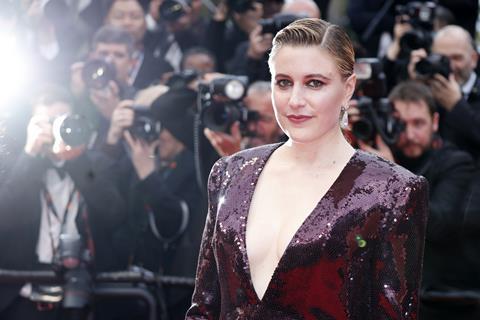
Double Oscar winner Paul Franklin OBE, who previously oversaw visual effects for Christopher Nolan’s Inception and Interstellar, has recently been hard at work on Netflix’s Narnia: The Magician’s Nephew, directed by Greta Gerwig. He can’t say too much about the project in advance of its theatrical release on February 12, other than to acknowledge that, yes, it has “a lot of talking animals and fantastical creatures.”
Back in the 1990s, Franklin helped launch UK VFX outfit Double Negative (known today as DNEG), and one of its first big projects was Vin Diesel-starring sci fi actioner Pitch Black (2000). “That was done on a bit of a shoestring budget, but showed that British visual effects artists could match the kind of work coming out of Hollywood,” Franklin recalls. “We offered something that was comparable at a very competitive price.” (This was true even in the period before the UK began to offer one of the world-leading tax incentives; three decades on, the UK Audio-Visual Expenditure credit (AVEC) offers an uncapped net relief of 29.25% on UK VFX expenditure for eligible features and HETV.)
Franklin also points to the early cutting-edge work of technology companies like Quantel, which designed one of the first digital manipulation tools for moving images nicknamed ‘Harry’. “[UK companies] were all building the foundations for this vibrant visual effects community that was really embracing this emerging world of computer animation.”
Another essential element which continues to strengthen the UK’s effects offering is education, with many institutions offering dedicated VFX and SFX training. DNEG’s visual effects supervisor Andy Lockley – who has won Oscars as part of the team behind Christopher Nolan films Tenet, Interstellar and Inception and has recently worked on The Odyssey – is, for example, an alumnus of Bournemouth University.
There are also plenty of opportunities for visual artists to emerge from other creative fields. Framestore’s Brazilian-born, London-based creature supervisor Dorothy Ballarini studied visual arts, and was a ceramicist and sculptor. Now, she is overseeing creature creation on films like The Sheep Detectives and Wicked: For Good.
“I knew that the UK had a strong tradition in creature creation, in puppetry and animatronics,” she explains about what drew her to London 15 years ago, pointing to the hot house creative atmosphere in which there was camaraderie as well as healthy competition, new ideas were freely shared and artists were inspired to push outside their comfort zones. “All the visual effects houses were close together, and so you knew everybody.”
Regional talent

The UK’s effects base is not, however, entirely in London; there are plenty of VFX houses doing top-level work across the nations and regions – many with individual expertise contributing to the UK’s reputation as master creature crafters. In Northern Ireland, for example, new virtual production studio Studio Ulster boasts Europe’s tallest motion capture stage, In Scotland, LA-based animation, visualization and VP specialists Halon Entertainment has invested in a new £28m facility in Glasgow.
Meanwhile, in Wales, Danny Hargreaves’ Real SFX has proved an inventive and versatile outfit, working on everything from HETV shows Dr Who and Peaky Blinders to action movies like Expendables 4 and providing everything from “explosions, fire effects, smoke, wind, rain and elemental effects to movement effects and engineering systems” notes Hargreaves.
Having spent two decades working on bringing Dr Who’s aliens and monster to life, Hargreaves – who is originally from London but is now based in Wales – has also done groundbreaking creature work for director Tom Hooper on Bad Wolf’s His Dark Materials. “That was an opportunity for us as a company to work with VFX, puppeteers, lighting and lots of other departments,” he notes.
This growth means that since Real SFX was set up in 2008, it has recruited a permanent staff of 12 and has access to a pool of around 200 technicians from across the UK. “We are a one stop shop,” says Hargreaves. “As a production, you can just say what you want and we take care of the rest. At a peak, we can be servicing shows in Scotland, Manchester, Bristol, London and Cardiff all at the same time.”
After all his years in the industry, Hargreaves has a clear idea of what makes the UK such world-leaders when it comes to VFX, SFX and creature creation. “It is due to the fact that we in the UK are the best. That might sound arrogant but, in terms of quality, creativity, history, reliability and training, I really feel that the UK industry is the best in the world.”
For more information, visit the British Film Commission’s dedicated UK directories for VFX and virtual production



No comments yet