
















Colombia’s status as an international production hub has boomed since Covid, backed by a generously funded tax incentive. The country’s film commission is confident a newly elected government will keep this production surge on track.

Colombia’s status as an international production hub may once have been a little-known secret, but it has now become a well-known fact. Since the second half of 2020, as Covid restrictions began to ease for production, more than 190 international projects have brought about $1.25bn (cop4tn) of foreign investment into the country, according to Colombia Film Commission (CFC).
“That figure proves this is nothing new, that producers aren’t making some kind of bet when they come here,” says Diego Bustos, recently appointed as director of CFC. “Our incentive system is very established, and our importance is well known and well understood.”

For many producers, Colombia’s two, mutually exclusive incentives, initiated by a 2012 law designed to develop the country’s film and TV industry, are the initial attraction. The modestly funded Colombia Film Fund (FFC), aimed at both homegrown and international projects, offers cash rebates of 40% on audiovisual services and 20% on logistical expenses incurred in Colombia (capped at around $1m per project) by films, series, short web or animated series, and music video packages.
The much more generously funded CINA (Certificate of Audiovisual Investment) incentive, created in 2019 and aimed squarely at international projects, offers transferable tax credits equivalent to 35% of Colombian audiovisual and logistical expenses (with no per-project cap) on films, series, videogames, commercials, post-production projects and other types of content. Both incentives apply to payments for Colombian cast and crew members — though not to those brought in from other countries — and both have minimum spend requirements of less than $1m.
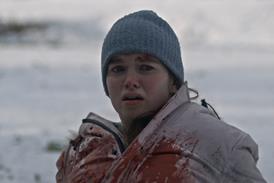
The CINA credits come in the form of certificates that are issued within 10 days of documentation being submitted, according to CFC, and can be sold quickly, usually at a small discount, to Colombian taxpayers on the country’s stock market. Feature films that have recently claimed CINA credits after shooting in Colombia include The Last Photograph, the Zack Snyder-directed crime drama that premiered this year at Toronto International Film Festival; The Black Demon: Atlantis, sequel to the Dominican Republic-shot shark horror; Studiocanal’s family outing Paddington In Peru; US-backed horror thriller The Whistler; and Amazon-set US creature feature Beware Boiúna (see sidebar, overleaf).
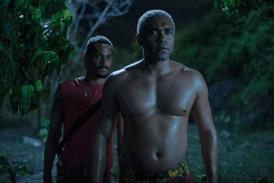
Among streaming series that have benefited from the CINA incentive have been two seasons of Netflix’s One Hundred Years Of Solitude, based on the classic novel by Colombian author Gabriel Garcia Marquez; the second season of BBC thriller The Night Manager; and upcoming HBO Max historical drama Carlota.
It is not just the incentives, however, that have made Colombia an attractive destination for international projects. “The Colombian audiovisual sector has been growing for the last 20 years,” suggests Bustos, “and that wouldn’t have been possible if our crew members, production service companies, vendors and so on didn’t have the experience they’ve gained making movies and series.”
While a few crew positions — such as intimacy co-ordinators — can still be hard to fill in Colombia, the gap between supply of and demand for film labour in the country is closing as workers learn on the job. Bustos cites One Hundred Years Of Solitude as an example. “For the first season, they hired a lot of Colombians, but had to fly in some heads of department, mostly from Mexico,” he says. “For the second season, the Colombians who showcased their talents on the first season had repositioned themselves to fill those needs.”
The supply-demand gap is being further reduced by training programmes for film workers funded through a charge on incoming productions equal to 5% of a project’s CINA tax credit. Colombia’s list of production service operators, meanwhile, now takes in around 30 companies, some of them focused on post-production. The most prominent players, which are mainly based in capital city Bogota, include Dynamo, which has satellite offices in Madrid, Mexico City and New York and worked on One Hundred Years Of Solitude among other projects; Jaguar Bite, which worked on The Last Photograph and also has a Mexico branch; AG Studios, which has serviced films from Netflix, Lionsgate and other US companies; and Cali-based 64A Films, with a track record including The Whistler.
Locations bonanza

Bio-diverse locations in Colombia — the fourth biggest country in South America by area and the second most populous — range from cities and beaches (on both the Pacific and the Atlantic) to highlands, grasslands and deserts. Cities such as Bogota, where the Mediapro, TIS Studios, RCN and Caracol physical production facilities are situated, and Medellin, where The Night Manager shot, are busy production centres. Bustos says there is also growing interest in locations such as the rainforest of the Amazon region in the country’s far southeast, the mostly desert region of Atlantic coast peninsula La Guajira, and the Caribbean ports of Barranquilla and Cartagena.
CFC is working with film offices and governments in a number of regions to launch local film commissions that can help attract more production to lesser-known locations. Travel to, from and around Colombia is facilitated by international airports in Bogota, Medellin, Cali, Barranquilla, Cartagena and half a dozen other cities. Bogota’s El Dorado International is the busiest in Latin America for cargo and one of the top three in the region for passenger traffic. It services direct flights from New York, Miami, Paris, London, Toronto and Atlanta, although its lack, since the pandemic, of direct flights from Los Angeles is an inconvenience for Hollywood-based producers.
Safer shooting
Where not to go in Colombia is sometimes a question asked by visiting producers aware of the country’s problems with drug-related violence and guerrilla conflict that persisted into the first decade-and-a-half of the 2000s. Insiders say Colombia has become much safer since the government signed its peace deal with guerrilla groups in 2016, although there are still reports of violence in isolated pockets of the country.
Bustos advises producers with concerns to make sure they are informed about conditions on the ground. “Do the due diligence and work with partners that are well-established, know where they are going and are known by the authorities,” he says. “Once you know how the country works, you can establish a cluster of places where you can do production without any type of danger.”
Bringing international producers to experience the country first hand has helped change perceptions, he adds: “That has worked well. They can see there are cities where you can move around very securely without any hassle.”
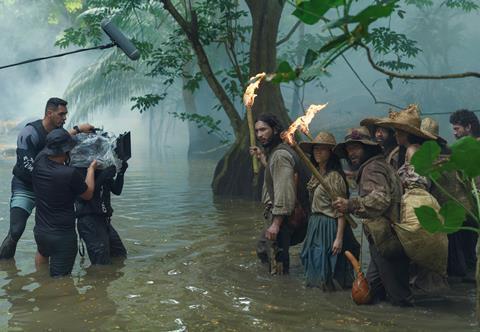
Bustos is optimistic the growth of Colombia’s international production business can continue under Abelardo de la Espriella, the recently inaugurated new president and leader of the right-wing Defenders of the Homeland party. CFC is about to release a study on the impact of the CINA incentive since 2022 (when the last study was published) and is waiting to hear about allocations for the country’s two incentive programmes.
For 2026, the CINA incentive was given a record-high allocation of approximately $90m (cop350bn), 49% more than in 2025 (FFC got about $1.9m in 2026). As of early October, nearly 62% of the allocation had been awarded to a total of 31 projects. For 2027, says Bustos, “We’ve been working around cop350bn and hoping to maintain that.”
As well as maintaining the incentives, Bustos — an economist who spent more than a decade at Proimagenes Colombia, the promotional agency that oversees CFC and manages the CINA system — has other goals in his new position at the commission. One is to bring more mid-range independent features to Colombia, which up to now has been most successful attracting streaming and TV projects. “Our ecosystem grew up making movies,” says Bustos, “so that’s where there is a lot of potential.”
Also being discussed for the future under the country’s new government, he hints, are reinstating direct flights from Los Angeles to Bogota and the CINA incentive programme rules on above-the-line payments to non-Colombians. The current rules, he concedes, mean that projects involving major name actors are much more likely to go to the UK or Australia than they are to even consider Colombia.
“We are thinking of strategies to keep attracting productions and maintain our position in the region,” promises the CFC director. And Colombia’s new government, he adds, “is working very closely with us in order to make some changes”.
Case study: Beware Boiúna
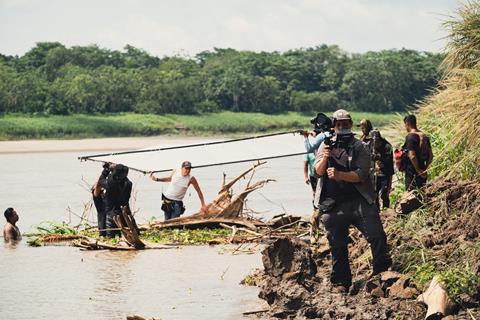
Producer Jeremy Bolt looked at options on three different continents when he was planning where to shoot Beware Boiúna, his creature feature about a medical mission in the Amazon jungle that becomes a fight for survival against a giant snake. In the end, a number of factors favoured shooting the Constantin Film and Bolt’s JB Pictures project in Colombia. “Being an independent film, obviously the tax credit was critical,” says Bolt of the country’s 35% CINA incentive.
But the authenticity of the locations — specifically the country’s 156,000 square miles of Amazon jungle — was also a plus. “I was scouting on the Amazon and you got a sense of something very primal, which I wanted to bring to the film,” recalls the producer.
Another important factor was finding a local partner for the project in production services company Jaguar Bite. “They had a can-do approach and were not frightened by our budget parameters,” reports Bolt.
“Constantin and Jeremy were looking for a production partner that would help them understand how you could shoot this movie in Colombia,” says Jaguar Bite production vice-president Juan Pablo Solano. “Not only because of the incentive, but also how to assemble a team that would live up to the expectations they had for the movie.”
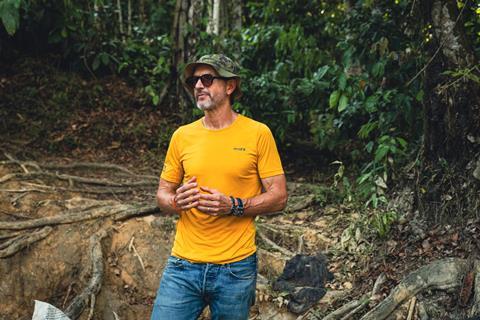
Jaguar Bite’s back-office staff handled logistics related to the incentive. The Bogota-based company, which has worked on a number of incoming Hollywood productions, also helped recruit Colombian crew and local actors who made up around half the cast.
Bolt, director Mike P Nelson, director of photography Nick Junkersfeld and Constantin production executive Bernhard Thur were the only non-locals — all other crew members came from Colombia’s own film and TV industry and proved to be “very strong and extremely passionate”, says the producer. “I would put any of the crew that worked on Beware Boiúna against any of the crews I’ve worked with all over the world.”
Filming in late 2024, the project made use of locations on and around the Amazon river. Half the shoot was based in Leticia, Colombia’s southernmost city and capital of the Amazonas department, and the other half in Girardot, two hours’ drive from Bogota.
The challenges included aggressive mosquitoes, electrical storms and torrential rain. But it was “a fantastic shoot”, says Bolt. “I was expecting it to be much harder, but perhaps the fact we were so prepared made it easier.”
Beware Boiúna premiered at September’s Fantastic Fest in Texas and was released in the US by Lionsgate in October.






No comments yet