









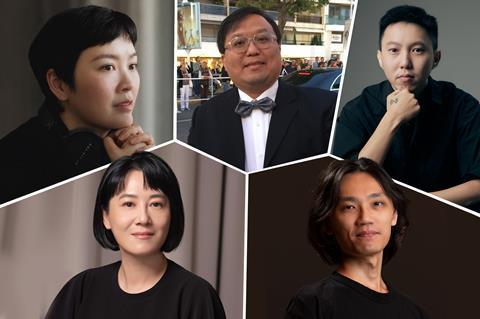
Taiwan has a fresh wave of producers and directors who have achieved commercial and critical success in 2026.
Here, Screen profiles the Taiwanese talents behind Sundance competitor Levitating, Busan award-winner To Be Ordinary, Toronto premiere Happily Ever After, San Sebastian selection Will You Still Be My Friend? and Tokyo competitor Fuxi: Four Tales Of Feasting, among others.
Kuek Shee Heng, producer/sales executive
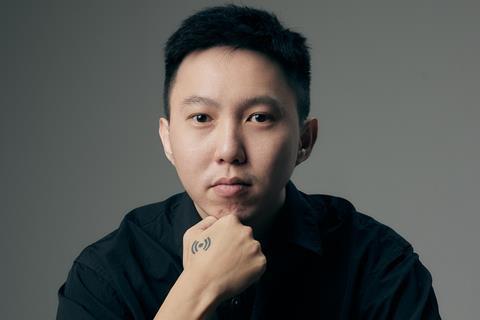
Malaysia-born Kuek has studied and worked as a producer in Taiwan for 15 years. He founded Taipei-based production company Aview Images in 2022 and expanded into international sales and distribution with Bangkok-based Chada Entertainment earlier this year.
“I started my career as a producer, but my knowledge of the sales and distribution pipeline was quite limited,” he says. “Through my new Thai company, I aim to gain a better understanding of the market and, in turn, bring that knowledge back into the development process. The idea is to make more informed decisions when developing projects from the very beginning.”
He believes that Taiwan’s production has reached a mature stage and the richness and diversity of Taiwanese stories has the potential to reach a much wider international audience, particularly with genre films.
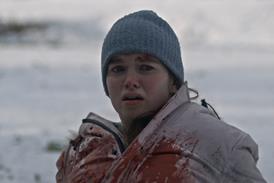
This year saw a trio of films that he co-produced premiere in top festivals: Sundance competitor Levitating from Indonesia, Locarno competitor The House On The Moon from Singapore and Indonesia’s Oscar submission Four Seasons In Java.
“I’ve always been interested in exploring how films are made in different countries as every industry has its own working methods and approaches. International co-production for me is about creating opportunities to learn from one another and bringing different perspectives together through filmmaking.”
His upcoming projects include Black Sun by director Nelson Yeo (The House On The Moon), which is scheduled to film in Taiwan in Q2 2027, and The Summoner, a Thai film inspired by shamanic rituals in northern Thailand, which will mark Chada Entertainment’s first in-house production.
Lee Yun-Chan, director
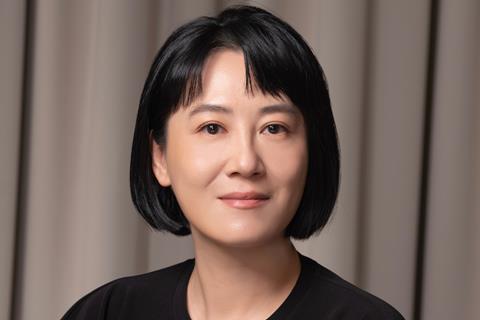
After a hiatus of 16 years, Lee made a triumphal return to feature filmmaking with her fourth film To Be Ordinary winning the best director award at Busan Competition in October.
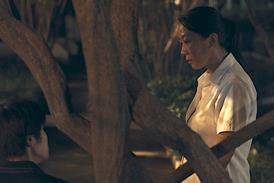
The drama revolves around a young man who becomes paralysed in a car accident, breaking the delicate balance of his family. “Despite having a more restrained approach, many Korean audiences cried. I’m pleasantly surprised that the film can touch them so deeply,” she says. “Perhaps it is because the big screen makes it easier to feel the power from the actors.”
Lee made her 2006 feature debut with The Shoe Fairy, which competed in Busan’s New Currents, and turned to raising a family after making her third feature Dancing Without You in 2010. After her children became teenagers, she directed Disney+ series Women In Taipei in 2022.
“When I was almost 50 years old, I felt that it would be too late if I didn’t start making films again,” says Lee. “After attending Lee Chang-dong’s masterclass at the 2023 Golden Horse Film Festival, I was so inspired that I decided to write the story of To Be Ordinary.”
In recent years, Lee has found that it is more difficult to make arthouse or non-commercial films due to rising production costs. She secured the first investment for To Be Ordinary from a high school classmate before receiving funding support from Taiwan’s Ministry of Culture and TAICCA.
The film also played at Tokyo, ahead of its theatrical release in Taiwan on November 13.
Lu Po-Shun, director
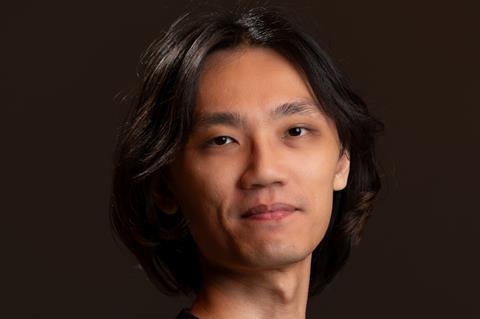
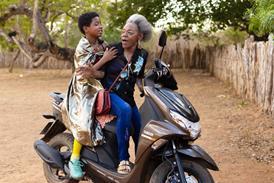
Lu’s feature debut Will You Still Be My Friend? had its world premiere in San Sebastian’s New Directors competition. The coming-of-age drama – about the bonding of two pre-teen boys – also played at Busan and as the closing film of Taiwan’s Kaohsiung Film Festival.
“While in Busan, one Korean audience member mentioned a Korean saying about seasonal friends, which means you can be good friends in spring but the friendship will sadly end when autumn comes,” says Lu. “This is the emotion that I wanted to convey in the film. Who would have thought that similar emotions are shared across borders?”
The film was shot in Lu’s hometown of Kouhu in Yunlin County and in Kezailiao in Kaoshiung City.
“I grew up in Kouhu and went to Taipei for university,” he says. “After graduation, I returned to my hometown. Many familiar places are captured in the film.
“The story has some semi-autobiographical elements, particularly the friendship between the two boys. However, some of the events might not be real. It’s the emotions between the characters that are deeply connected to my growing up years.”
The story is based on his 2021 short When Henge Meets Crescent, which is one of several he has shot on location in Kouhu over the last decade.
The film has received two nominations at the upcoming Golden Horse Awards: best adapted screenplay and best newcomer for Jaden Wang, who was only 13 at time of filming. A Taiwan release is scheduled for December 4.
Feng-I Fiona Roan, director
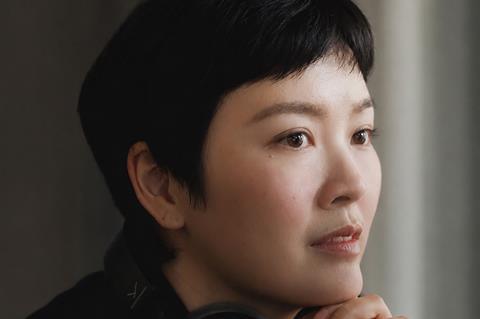
Roan became the first woman to win the Golden Horse best new director award with her 2021 feature debut American Girl. She now returns with Happily Ever After, which premiered at Toronto before playing Busan and Tokyo.
The expectation that came with making her second feature proved a challenge. “It’s important not to let American Girl define what I should do next,” she says. “Of course, you can still see familiar dynamics that I keep returning to – the relationships between sisters and their parents.”
Her new film explores the growing distance between two sisters when one is unconvinced by the other’s sudden engagement, forcing both to question what happiness truly means.
“The Toronto audiences laughed so much throughout the screenings. I almost felt like I had made a comedy!” she says. “It was really heartwarming because when audiences are laughing, they’re immersed in the story. That’s all we can ever ask for as filmmakers.”
After a long search for the right cast, producer Clifford Miu came across an interview with Yeh Shuhua, aka Shuhua from K-pop sensation i-dle, and insisted on an audition. “When we met, she was incredibly natural,” says Roan. “I gave her two scenes to read, and we decided on the spot that she was the protagonist.” It became Yeh’s acting debut.
Roan previously proved her talent spotting skills with American Girl. Young actors Caitlin Fang and Audrey Lin both shot to fame and won acclaim for their subsequent work after starring in the film.
David Tang, producer
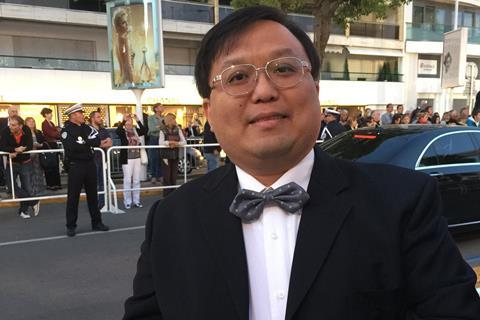
Tang spent two decades working as a film journalist before going behind-the-camera. The turning point came with John Woo’s two-part war epic Red Cliff, in which he was deeply involved from early financing and casting to principal photography and global promotion.
Through his various production companies such as Renaissance Films and Rise Pictures, he has since produced more than 20 features, including thrillers Who Killed Cock Robin, The Soul and The Abandoned.
This year has been particularly productive with a trio of co-productions including Macao-Taiwan’s I Blew Out The Candle Before Making A Wish, which premiered at Udine’s Far East Film Festival; The Age Of Goodbyes, which premiered at Toronto with Malaysia’s Edmund Yeo vying for best director at the upcoming Golden Horse Awards; and Fuxi: Four Tales Of Feasting, mainland Chinese director Qiu Jiongjiong’s Tokyo competitor.
“When a pitch lands on my desk, I have to genuinely love it and it must show distinct commercial promise or unmistakable artistic merit,” says Tang. “Sharp market instinct and precise judgment are needed to identify the right capital partners in order to secure financing in the most efficient timeframe.”
The veteran producer has witnessed a fundamental shift in filmmakers’ mindset. “Today’s directors, commercial or auteur alike, share a common drive to step beyond the domestic market onto the global stage,” he adds.
“Rather than creating in an artistic vacuum, they care about delivering returns for their investors. That balance between creative voice and financial accountability is completely different from where the industry used to be.”






No comments yet