









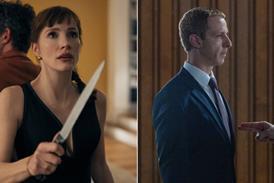
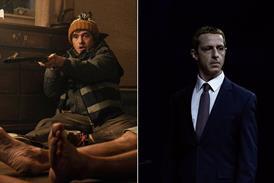



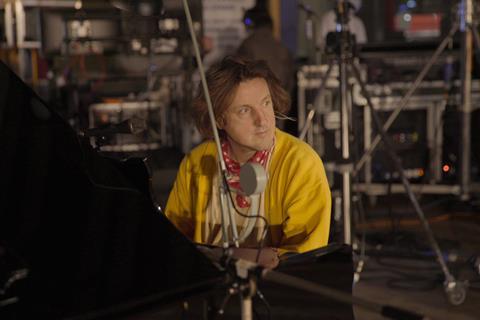
UK composer Daniel Pemberton’s extensive credits include Steve Jobs, Spider-Man: Into The Spider-Verse, Materialists, Ferrari and Eddington. Winner of the World Soundtrack Awards’ film composer of the year in 2021 for Enola Holmes, Rising Phoenix and The Trial Of The Chicago 7, as well as for discovery of the year in 2014 for Cuban Fury and The Counsellor, Pemberton has been nominated again this year in the film composer category for his eclectic scores for The Drama, Project Hail Mary, Masters Of The Universe and animated sequel The Bad Guys 2.
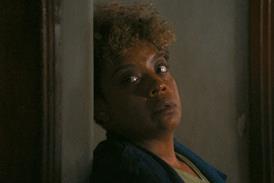
You’ve been nominated this year for four very different scores. Let’s start with your score for The Drama, which was just three flutes recorded in a single day at Abbey Road Studios. How did that minimalist approach come about?
I’d just come off Project Hail Mary, and I was meant to be starting Masters Of The Universe. A24 [The Drama’s distributor] reached out and were very keen for me to look at the film, because they had some music that wasn’t quite working. I said, “I can’t do it. I’m exhausted.” They kept reaching out, and I thought, okay, if they’re this enthusiastic, I should at least extend the courtesy of looking at the film.
I watched the film and had to go for a half-hour walk after because it was so intense. I thought it was a very intriguing movie, but the music shouldn’t do a lot; the score should be a question. I think the problem they had previously was that the music was telling the audience how to think. I wanted to come up with a system that was individualistic and recognisable because I felt the film could take a strong identity, musically. I wanted to do the whole thing on one flute but we ended up with three. I tried to score this slight, uncomfortable tension within a lot of the pieces where they slowly move in and out of time, which is imperceptible but creates a sense of unease and tension.
Did they show you the film with the previous score in place?
I saw a cut of the film with some music in. But that’s useful because I can see what the picture can take, and my feeling was less is more. As soon as you tell the audience how to feel, they stop thinking. Whereas if you can keep them guessing, like the script does and the performances do, they’re fully engaged. That was my approach: keep the audience guessing, keep them on edge.
Project Hail Mary saw you reteam with Phil Lord and Chris Miller, who you’d worked with on Spider-Man: Into The Spider-verse and its sequel Across The Spider-Verse. What was the approach to Project Hail Mary?
We were all very conscious of the fact that this was a film we sadly don’t see enough of these days, which is a big-scale, original movie, so we wanted to do something spectacular and powerful and unique. My initial idea was to do a kind of space dub thing with steel drums and harmonica but when I read the script, I realised that was not going to work, although steel drums are still a big part of the score.
I wanted to capture the physicality of the ship. The biggest breakthrough was a squeaky tap. I went to stay at a friend’s house in the country – it’s quite an old house, with very old pipes – and when I turned the tap on in my bathroom, it had a very interesting sound. It was kind of organic and had harmonics in it. I recorded it on my phone and sampled it until it was an instrument and it sounded beautiful. It was this mix of water, metal, pressure and air. And that became an instrument I could play on my keyboard. Suddenly I found a way in. I started writing things I sent to Phil and Chris, who would play them to Ryan [Gosling] on set.
From there, it started expanding into two things. Firstly, organic matter, which was any kind of sound I could create that felt like it was representative of something organic, because I wanted to capture the fact that the world is beautiful, but not perfect. Organic matter is always mutating and strange and has discord in it. I wanted sounds that had that kind of feel, so I used a Cristal Baschet, a French instrument from the 1950s, which is this kind of weird sculpture that you play glass rods with wet fingers. For me, that was the most symbolic instrument on this score. On top of that, we wanted to get the human body into it, so there’s a lot of human percussion. My favourite thing is we got a bunch of school kids into Abbey Road and had them clapping and stomping.
And then we also brought in the voice. The voice was a huge part of this score. But there’s also this slightly distorted, tweaked, manipulated voice which is introduced where we meet Rocky. We did a lot of experimentation and built these interesting electronic instruments.
Moving on to Masters Of The Universe, which is, once again, completely different to any of the other films you’re nominated for, this one being a 1980s rock extravaganza featuring Queen’s Brian May.
It’s a rock opera, basically. Initially, I was not sure about doing a big action blockbuster but I enjoyed the script. I met with [director] Travis [Knight] and said, “I want to do it as if it was scored by a band like Queen or ABBA, today.” Travis said, “That’s exactly what I wanted to do as well.” So I went into it with the aesthetics of a rock band doing a film score rather than a film composer doing a film score.
I wanted to make a ridiculously maximalist score that had everything in it: choirs, synthesisers, orchestras, big guitar solos. Masters Of The Universe is completely ridiculous and over the top but it’s still got a level of complete sincerity, which I love. Queen, as a band, is the best example of that, because they wrote these songs that are huge and flamboyant and sort of ridiculous, but you believe everything they say because there’s such sincerity in them. That’s what I wanted from this score.
When we started, I had this dream of trying to get Brian May [to play on it] because I love the work he did with Queen on [the scores for] Highlander and Flash Gordon. I never thought we’d get him but I was doing something in Abbey Road and heard he was upstairs mastering an album. I knew the mastering engineer, so I said, “Could you tell Brian May I’m trying to get hold of him, and I’ll be in the cafeteria whenever he’s finished?” We met and he was on board. I wrote all of his guitar parts and he loved them. I had so much fun making that score.
Finally, there is The Bad Guys 2, which is not the first animated sequel you’ve done.
When you do the first film, it’s not really till the end that you’ve worked out the language, whether that’s the melodic and thematic language or the sonic landscape. So coming into the sequel, you’ve done a lot of the hard work and now you get to play more and expand on it. We had this huge song at the beginning with Busta Rhymes, which was so much fun to do. We also wrote this song called ‘GoodLife’ that we had Rag’n’Bone Man on and this rapper called WizTheMc; I was convinced it was going to be a super smash, and it wasn’t.
One of the things I love about being a film composer is I get to not do the same thing over and over. People don’t hire me to do the thing I did before; they hire me for my ideas and my outlook. Every film is a new challenge.
What’s next for you?
I’ve got Ink with Danny Boyle and Musk with Alex Gibney. Again, those scores are radically different from each other. That keeps me engaged and always very enthusiastic about what I’m doing. I’ve literally just finished the Elon Musk film; I’ve done a song with David Byrne for that called ‘Let Me Sell You A Dream’. And I’m just starting Slow Horses season seven, which is my little TV sideline. I can’t give it up, because it’s still such a great show.




No comments yet