




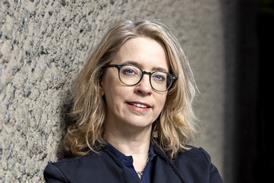


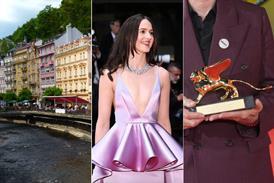
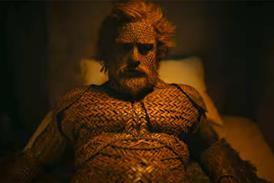
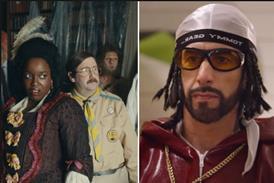
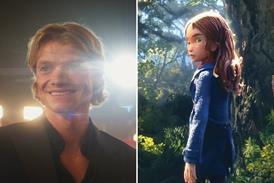

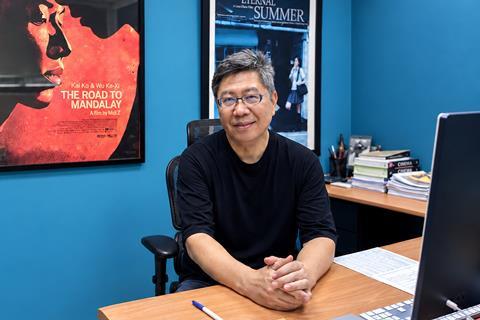
Seasoned Taiwanese film producer Patrick Mao Huang has prioritised international collaborations and emerging filmmakers through his Taipei-based production, distribution and sales company Flash Forward Entertainment.
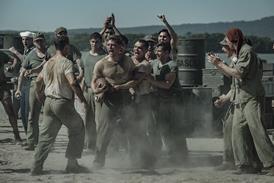
Midi Z’s The Road To Mandalay, CB Yi’s Moneyboys and Cannes Critics’ Week grand prix winner Tiger Stripes by Amanda Nell Eu are among his outstanding works.
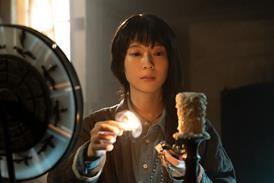
Beyond features, Huang has been active in XR and immersive storytelling, co-producing Cannes XR’s best immersive work winner 2024 Colored, and Venice Immersive 2025 competitor The Shadow (L’ombre).
What is your office like?
Flash Forward’s office has been in New Taipei City for more than 20 years. There are about 10 of us and we host different productions from time to time. With countless restaurants and bubble tea shops nearby, it’s almost dangerously convenient.
What’s the first thing you do at your desk each morning?
I travel almost half the year and work remotely on my phone. When not travelling, I come into the office in the afternoon and stay until late.
What was your first job in the industry?
My first proper job after graduating in the United States was as deputy general manager of Golden Harvest Film’s Taiwan office, handling distribution. It gave me a crash course on Taiwan’s film business.
Who helped you most when you first started out?
Monica Hsu, then general manager of Golden Harvest Film, taught me things that film school never could: how the Taiwanese market worked, relationships and unwritten rules, and audience response. Those lessons stay with me today.
Who do you look up to in the industry?
I admired Paolo Lee for his incredible instincts. The late Malaysian Chinese distributor-producer who built his career in Taiwan passed on Milos Forman’s Amadeus at the American Film Market but changed his mind when he was en route home. He flew back to Los Angeles just to get it. The film went on to win best picture at the Oscars [in 1985].
What are you most proud of professionally?
In distribution, I’m proud of turning non-commercial films such as Quill and March Of The Penguins into box-office successes in Taiwan. As a producer, it’s about spotting emerging filmmakers and helping them make that first important leap.
What do you like best about your job?
Every film lets me start over, almost like starting a new company or living another life. Producing allows me to constantly explore people, history and worlds that I don’t know.
With whom would you most like to take a meeting?
People at the frontier of AI and technology in Silicon Valley, China or Korea. I want to know how they imagine entertainment in five to 10 years from now.
What would you do if you didn’t work in film?
Probably as a creative executive in advertising. I would still be telling stories through images, words and technology, just for a different kind of product.
What is your favourite festival?
Cannes puts me at the frontier of new filmmakers, trends and technologies, while Busan is more practical because so much of my work is in Asia. The food in both places is excellent, and that matters.
What excites you about the future of the business?
AI may change how stories are developed, produced and consumed, just as vertical drama has become a business model that few could have imagined 10 years ago. The forms will keep changing, but people still want great stories and characters.
What was your favourite film growing up?
Francois Truffaut’s The 400 Blows introduced me to arthouse cinema, but Edward Yang’s A Brighter Summer Day hit closer to home.
What book are you reading?
I met scholar Qin Lanjun while serving on an XR competition jury in Xi’an, so I’m reading her book Coding The Everyday: A Critique Of Popular Software.
How do you unwind?
Making short AI videos. It isn’t always relaxing as it can take ages to fix one thing, but it means I’m inventing a character or telling a story in one shot instead of scrolling through TikTok.
What would you tell your younger self?
I’d start international co-production much earlier. I’d travel more, build those relationships sooner and learn co-production by actually living it.
Who would play you in the biopic of your life and who would direct?
Perhaps Tony Leung Chiu-wai and Bong Joon Ho could make my uneventful life interesting. I’d probably finance it myself, make it with AI and become the AI actor if Tony says no.





No comments yet