












The name has changed but the aims, ambition and cutting-edge content remain the same for the organisers of GIFF Pro, the Geneva International Film Festival’s industry programme, formerly known as the Geneva Digital Market (GDM), which opens on November 3.
Focused on audiovisual innovation, GIFF Pro’s 2026 lineup reflects the fast-paced developments in the use of AI both in terms of attitudes to its use and the advancements in what it can do and be deployed to do.
“We’re not afraid of AI at the GIFF Pro because we can discuss it and examine it,” says GIFF Pro head of industry Mathieu Gayet. “We’re not saying that you need to be against it. We need to control it; we need to take care of what users are getting from AI.”
Reflecting GIFF Pro’s no- fear approach, Swiss filmmaker Romed Wyder and content creator Ulrich Fischer will be in Geneva to share their experiences of extending cinematic storytelling beyond the screens.
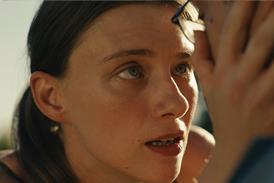
Wyder’s thriller Where Is Ava? (Ou Est Ava?) is set in a world where a mysterious virus has broken out, turning women into men. In a panic, a family barricades itself in an alpine hut, but after a short time, family members begin to become increasingly inhumane.
The film had its world debut at the Zurich Film Festival earlier this year and will be rolled out across both French- and German-speaking regions of Switzerland by Xenix Film Distribution in early 2027. Fischer has teamed with Wyder to create a post-screening experience: After each screening, audiences will be invited to continue their experience of the film by talking with the film’s characters via AI.
“It’s going to be like an extended discussion with the characters from the film,” says Gayet. “Audiences will have a computer where they can talk with the characters and ask questions, ‘I saw you in the film doing that, why did you do what you did?’” It’s taking the script and the characters and saying, okay, maybe we can have a different interaction between the audience and the character after they saw the film.”
‘Br.ai.n – Where is Ava?: When Characters Live Beyond the Film’ aims to platform a technical discussion about how they used AI rather than why.
“It’s taking the work and saying, ‘we can have a different way of showing what you imagine’. The film can be played without the innovative part, but both combined can create a different discussion about what kind of cinema a theatre could host in terms of content,” Gayet adds. “If it’s successful, it can lead to new cinema experiences for audiences. It’s not a marketing stunt. It’s a secondary discussion with the audience. You have to see the film because you need the story.”
One anticipated GIFF Pro panel ‘Extended Realities – Making the Black Mirror Experience: From Intellectual Property to Location-based Entertainment ’, will examine how to turn the world of Black Mirror into a physical and immersive experience.
David Bardos, CEO of Univrse, a Barcelona-based studio creating immersive location-based VR experiences, will take attendees through making the project, from adapting the original IP to combining physical sets, free-roaming VR and interactive storytelling into one coherent audience journey.
With his team, Bardos has developed XRoam, Univrse’s proprietary platform for multi-user VR content, and helps shape industry-wide standards for location-based entertainment.
The project represents the more “commercial” end of this year’s GIFF Pro programme “It’s a 40-minute narrative-driven project built on the Black Mirror IP. They can talk about how they produced it to give our independent artists a glimpse of how do these things right now,” Gayet says.
A further case study that puts narrative and creative orthodoxy at its heart while deploying cutting-edge AI is the Arte-backed six- part surreal sci-fi comedy Paradoxes.
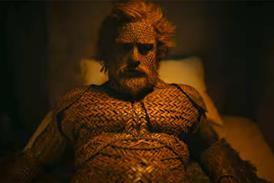
The TV show follows the story of a man who accidentally falls into a black hole that appears in the middle of the forest who has to confront his old neuroses in the hope of saving the world.
Creators Emilie Valentin and Pierre Zandrowicz will talk about conceiving and producing a series mixing live-action footage with content created using generative AI tools.
As co-founder of French immersive media studio Atlas V, Zandrowicz is a pioneer in virtual reality storytelling in Europe and won the Jury Award at SXSW in 2022 for On the Morning You Wake.
With Paradoxes, his first TV series, he continues to explore new narrative forms, bringing together the absurd, science fiction and the intimate.
“Creators are starting to use AI technology in a clever way, finding the right moment that fits with the story correctly,” Gayet says.
GIFF Pro takes place from November 3-6 as part of the Geneva International Film Festival,






No comments yet