















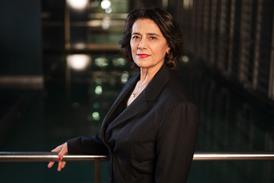

Screen’s sister publication Broadcast asks six major UK industry figures for their take on Bajaria’s sacking and the UK’s relationship with the SVoD giant.

The world’s top content executive, Netflix’s Bela Bajaria, was unceremoniously fired earlier this month after a decade at the company, and replaced with former Disney exec Peter Rice, whom the streamer’s co-chief executive Ted Sarandos welcomed in terms so glowing that it was difficult to avoid reading them as fairly biting criticism of his predecessor.
The streamer is under pressure – its share price has fallen almost 45% over the past 12 months. Despite a 12% rise in revenue for Q3 to $12.9bn, which beat predictions made by both Netflix and Wall Street, and profits of $3.7bn revealed the week after Bajaria’s sacking, the company’s growth is perceived as sluggish by investors.
After 25 years, that slowing in the pace of growth is perhaps inevitable – Netflix is now a mature product, having moved from being an upstart offering prestige shows just over a decade ago into one of the world’s major TV outlets and film distributors. And with that, one established Netflix supplier points out, has come a need for breadth of content.
“It’s gone from catering to niche audiences and bending towards creatives to needing to appeal to broader audiences if it wants to stay on that road of growing every year,” they say.
Alongside that, competition has increased – both from other streamers and from the new disruptor in town, YouTube. Data from US ratings provider Nielsen shows that Netflix’s share of American TV viewing has hovered around the 8% mark since Q3 of 2023, and currently sits at 8.1%. Over the same period, however, YouTube’s share has steadily grown from 9.1% to 13.9%.
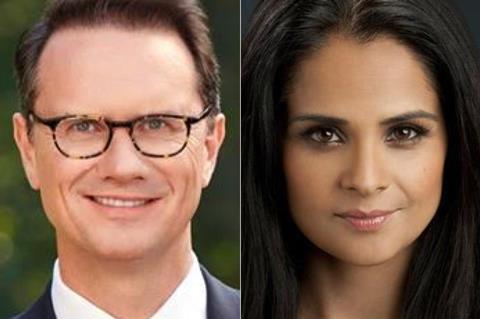
But in the Q3 earnings call last week, Sarandos pointed to content-related concerns, saying the streamer was “not satisfied” with the pace of growth in viewer hours. According to Netflix, customers watched more than 97 billion hours of content in the first half of 2026, up 2% from a year earlier.
One person who understands Netflix well suggests Bajaria was fired for problems beyond her control.
“Bela feels like she was a sacrificial lamb on the Wall Street altar,” one says. “They have lost one of the best in my opinion.”
In particular, Sarandos homed in on US operations where, he said, “we do need better execution”. By comparison, he said, the streamer had found great success in India, Korea and Japan, and that its content slates in EMEA and the Nordics were “killing it”.
‘Gourmet cheeseburger’
The consensus among Broadcast’s sources is that it was this struggle in the US that prompted her fall from grace. Bajaria once described Netflix’s ideal content as being a “gourmet cheeseburger” (a term originally coined by vice-president of drama series Jinny Howe), in that it is simultaneously premium and commercial.
The problem, as one respected TV exec puts it, is that in recent years, the streamer has been “too big on the cheeseburger and not big enough on the gourmet”.
“Netflix needs to make sure it’s still at the high-quality end of people’s viewing choices,” they say, adding that being “too mainstream” perversely won’t generate the major hits it needs.
Netflix built its originals on “distinctive, authored pieces” such as Stranger Things, The Crown and House Of Cards, they argue – but with the rush to popularity “you stop being able to find the surprise hits that Cindy Holland was so good at”, they say, referring to the company’s former VP of original content, whose role was subsumed into Bajaria’s in 2020.
One specialist in UK streaming drama points out that while the US office might have been chasing popular hits, it wasn’t exactly finding them.
“I think there has been a little bit of falling in between,” they say. “There are hits such as Virgin River, which is doing a network television job for Netflix, but has [Bajaria] really had enough of those?
“And then at the same time, their award tally has gone down.”
At this year’s Emmys, the streamer’s content was nominated for 111 awards, the lowest since 2017, and won just 16, down from 30 last year and the lowest since 2016.
They point to Addams Family-inspired series Wednesday as an example of the peaks Netflix can achieve, but with huge gaps between the short-run series suggest these shows have failed to create the level of audience engagement Netflix is after.
“As the competition has heated up, they haven’t had the populist, bums-on-seats hits in the US to rival shows such as [Paramount drama series and spinoff-generating powerhouse] Yellowstone, which are really capturing the heartland,” they say.
“Yes, Netflix needs to be cool, but you also need to do a job comparable to that done in the UK by ITV and 5 – regular people television.”
Arguably Bajaria’s success overseas spotlighted the challenges Netflix has faced in the US. Its local teams, which Sarandos acknowledged were storming ahead of the US, largely operate independently from the American headquarters, commissioning for the local markets as they see fit – and Bajaria, more than anyone else, is seen as the driving force behind that.
“That is an incredibly difficult thing to set up, so she deserves credit for that,” the drama streaming specialist says.
“The US is the most difficult market in a way, because the costs are so high and there is such intense competition. Meanwhile, the UK has been empowered to have the success it’s had, which isn’t the case with other US-led streaming services.”
Bigger swings
According to Barb, by the end of 2025, Netflix was in 60% of UK households, and in August its revenue in this country topped £2bn, putting it ahead of all of the UK’s commercial PSBs for the first time. UK returning dramas and limited series are more than healthily represented in the biannual Netflix global engagement charts – since mid-2023, there has been an average of three shows ordered from the UK office in the top 25, with titles such as Who Is Erin Carter?, Adolescence, and no less than three Harlan Coben thrillers making it into the top five.
The streaming drama specialist cites these Harlan Coben novel adaptions as examples of finding the right balance of gourmet and cheeseburger – adding that while technically they’re all limited series, collectively they function as a relatively low-cost franchise.
“I’m sure the UK punches way above its weight,” says one UK factual specialist. “Many big US hits are commissioned out of the London office.” They point to Baby Reindeer and Adolescence as examples, but also to docuseries such as Should I Marry A Murderer?.
“The UK team just appears to take ‘bigger swings’,” they say.
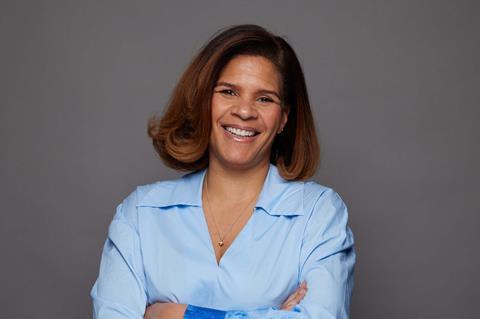
The respected individual adds that “content out of UK working and is at a good budget level – [UK content chief] Anne Mensah finds the returning hits and really backs the talent”.
Another source agrees, suggesting that she played a key personal role in the success of The Gentlemen series one which secured 96.4 million views worldwide in the three months after launch.
This praise of Mensah’s ability to support talent is strikingly similar to Sarandos’s comments when announcing Rice’s appointment.
“In a competitive market where creative talent have choices of where they want to work, we want Netflix to always be the place that they love to do the best work of their life, and Peter is the exact right person to lead those efforts in the US and around the world,” Sarandos said in a statement.
The respected individual echoes Sarandos’s assessment, adding that the appointment will provide the “reset” the company needs in the US.
“Peter will seek to attract the best writing talent, and platform them to elevate their work,” they say. “The formula is clear, you back the best writing talent and make them feel they can produce something incredible.
“If you’re chasing mainstream hits, you don’t make the most of talent – Netflix, particularly in scripted, needs to go back to being a showrunner’s medium, and Peter will do just that.”
UK model
So, will the US office be looking to the UK team as a model to follow?

The drama streaming specialist offers a slightly different view, arguing that it ultimately isn’t so much a matter of shifting strategy in the US, rather of simply doing the existing one better.
“That portfolio approach – going hard when the case is strong to risk extra money, while also holding steady on other shows so you know you can wash your face – is the playbook for almost anywhere,” they say.
Whether or not the overall strategy changes, one area in which we might see a shift is in the attitude to returning series, several contributors suggest.
Netflix has a reputation for quickly cancelling shows after a single series in favour of shiny new projects that will attract fresh subscribers. But as Sarandos turns his attention to engagement, particularly given the need to please advertisers, it may be that this comes to an end.
“They have realised they need to support second series more,” the respected individual observes. “They didn’t market the second series of a number of shows sufficiently – and if it’s been 18 months or two years, the audience needs to be reminded about the show and told to go and look for it.”
They add wryly: “I suppose Netflix might have thought the algorithm would do that for them, but it didn’t.”
One of the industry’s most senior execs is at pains to point out that this was unlikely to have been Bajaria’s fault, but they say, “for such an extraordinary service that has got such global dominance, they have a sort of institutional arrogance, assuming they only need to market their shows on the platform”.
This may well be changing, they agree – adding that they’re also hopeful Netflix will be more willing to take a risk on shows which might have had a shaky start.
“If you want to build franchises, you’ve got to have faith in them starting out,” they say, pointing to UK PSB titles such as Gogglebox on Channel 4 and Line Of Duty, which had less-than-brilliant ratings for their early series, but grew into reliable and crowd-pleasing hits.
And, they say, the streamer would do well to follow HBO Max’s lead in its commissioning of The Pitt which, through planning and careful budget control, has been designed to have much shorter gaps between seasons, harking back to a bygone era of cable TV releasing annual instalments of top shows.
“What you’re doing then is creating habits, rather than just the occasional fireworks,” they say.
Business as usual
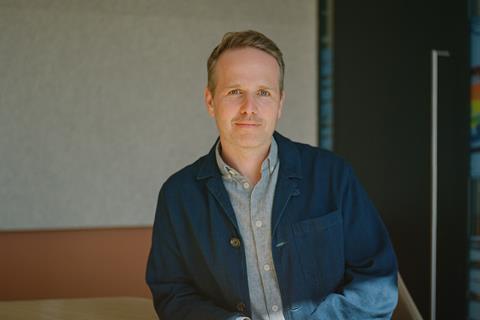
From a UK perspective, the contributors agree, it is likely to be “business as usual”, with Mensah and her team – which includes director of film Ollie Madden, now one year into his role after joining from Film4 – “in a good, safe position” in the wake of the shake-up.
Netflix’s current UK film slate includes John Crowley’s Walk The Blue Fields starring Emily Blunt and Andrew Scott, Kneecap filmmaker Rich Peppiatt’s Bad Bridgets and a new film from The Inbetweeners.
One senior exec argues that the team could do with finding itself reliable unscripted IP in the vein of The Traitors or Last One Laughing. They are optimistic that former Traitors commissioner Syeda Irtizaali is more than equal to the task.
The factual specialist highlights the ever-growing role live content and sport are likely to continue to play in the streamer’s bid for engagement.
“Appointment-to-view television is going to be key,” they say. “If the company is on a perpetual story of looking for the next growth, that’s ultimately going to come from big events.”
From the UK’s point of view, it doesn’t hurt that Rice is a Brit, the drama specialist observes.
“He doesn’t see us as ‘that quaint little country’ or part of ‘general international happenings over there’ – he understands the culture the market and the potential,” they say.
“If you’re peripheral and expensive, you’ve got a big problem, and the UK is cheaper than America, but we’re more expensive than Germany, Italy and France. So you need to have a good connection into the mothership, the US side, for the big swings to get all the support they need.”
A version of this story first appeared on Screen’s sister site, Broadcast.






No comments yet