













Alfonso Cuaron has revealed his optimism for the future of the theatrical experience but also said he is “very afraid” about how it will develop.
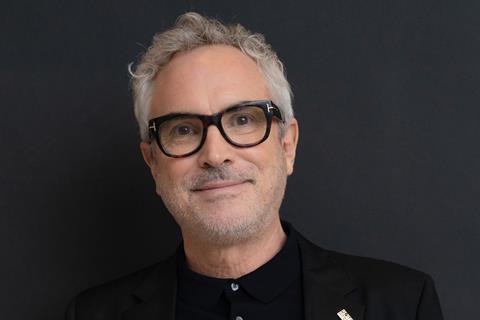
The Oscar-winning director of Roma, who is at Busan International Film Festival (BIFF) to present a special Imax screening of 2013’s Gravity, addressed the challenges facing the film industry at a press conference today (October 8).
“I believe that the theatrical experience will keep on existing, and I hope so because I love the theatrical experience, but I think it’s going to coexist with more forms,” he said.
“I’m very pleased about that, and I’m also very afraid. But I want to learn from the new generation about how they take this new world and turn it into art, and that’s at the end of the day what I’m putting my focus on.”
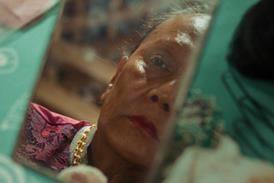
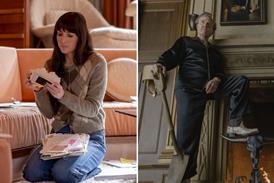
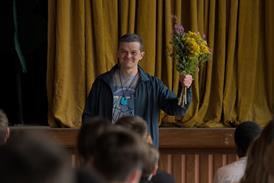
Making his first visit to South Korea, the Mexican filmmaker sat alongside his son, Jonas Cuaron, who co-wrote Gravity and directed immigrant drama Campeon Gabacho, which receives its Asian premiere at BIFF following its debut at SXSW.
Hinting at future projects, Alfonso said he would “love” to work on a comedy, while Jonas said he is working on “several promising projects” including one “around horror”.
Campeón Gabacho plays in the World Cinema section of BIFF and tells the story of a Mexican immigrant boxer in the US. The cast is led by Juan Daniel García Treviño alongside Leslie Grace, Ruben Blades, Eddie Marsan and Rosario Dawson.
Asked about the immigrant narrative and its political resonance today, Jonás said: “Immigration is always simplified into concepts and numbers, abstract ideas. I was excited to give a human face to the immigrant story, a character who has struggles… but also a character filled with aspirations, romantic dreams, and a very poetic imagination.”
Alfonso said: “Even the simplest films carry social codes that have meaning… Every story we hear about immigration is filled with tragedy because that’s an aspect of it.” He added how he sees the “joyful experience, the human experience,” of it in his son’s film. “Hardships don’t take away joy and imagination.”
Looking back, Cuaron explained how he tried to dissuade his son from following in his filmmaking footsteps: “When [Jonas] was growing up, I consciously pushed him away from studying or getting involved in film,” he recalled. “We went to the movies together and he shared my love of cinema, but I told him I can’t encourage you to study film.
“The reason I pushed him away is because I didn’t want him to narrow himself to cinema… The danger is that when you grow up watching films, everything around you is referential to other films and not to life.”
He added that part of filmmaking is the “dreams that are crushed and will never come to life,” and that he didn’t want his son to “endure that pain,” but added with a laugh, “It’s too late now”.
Cuaron also led a masterclass at the festival, in conversation with Yeon Sang-ho, the South Korean director of Colony, Train To Busan and Paradise Lost, of which the latter will screen at BIFF.
The 31st BIFF opened on Tuesday and will run until October 15.






No comments yet