








Yu Aoi and Issey Ogata star in the film, which premieres in San Sebastian competition
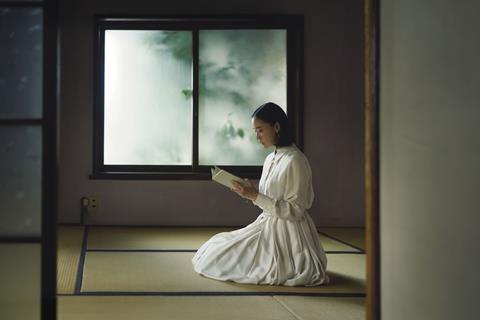
Dir/scr. Maha Harada. Japan 2026. 109mins
Novelist-turned-director Maha Harada’s In My Father’s Room is a highly personal film that clearly stems from a sincere commitment to certain spiritual and aesthetic values. But despite combining finesse, visual polish and considerable charm in its character-driven story of a woman retracing the final days of her late father, the writer-director’s debut feature is ultimately more an objet d’art of preciousness than depth.
Ultimately more an objet d’artt of preciousness than depth
The film features strong performances, notably from veteran Issey Ogata, whose credits include Edward Yang’s Yi Yi, Alexander Sokurov’s The Sun and Martin Scorsese’s Silence. But despite this, and a revived interest in Japanese art cinema, this contemplative drama, which is closer in feel to the less commercially resonant work of Naomi Kawase, is unlikely to make only limited global ripples following its premiere in San Sebastian competition.
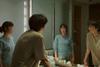
Harada is a prolific, best-selling novelist in Japan, if less visible in translation – although ‘An Unnecessary Man’, the short story on which this film is based, was published in English by prestigious literary magazine Granta. Like several of Harada’s works, the drama draws on the director’s interest in the visual arts – she was a founding curator at Tokyo’s Mori Art Museum. Here, her heroine is Satomi (Yu Aoi), a 40-year-old woman who has long worked as an attendant at an art museum, where her job seems to consist of sitting quietly alongside pieces by the American painter Mark Rothko. One day, Satomi receives a mysterious packet sent to her by her recently deceased father Yuichi (Ogata), containing a single key. Yuichi and his wife Shuko (Eri Watanabe, from Shall We Dance?) had divorced after 50 years, Shuko deciding to devote her life to freedom, pleasure and the adoration of K-pop stars, after the disillusionment of living with someone she considered “an unnecessary man”.
Yet the supposedly shiftless Yuichi turns out to have been a poet and a devoted aesthete – as Satomi discovers when she explores the shop run by Taku (Eita Nagayama), a tiny, hidden-away temple of a place that specialises in small, rare pottery objects. As Taku explains in a series of narrative flashbacks, Yuichi, a regular visitor, became especially attached to a seemingly ordinary yet somehow sublime earthenware bowl. Taku won’t part with it, so Yuichi asks if he can use it to perform one traditional tea ceremony, albeit sans tea or water.
The mime that Ogata expertly performs, in an extended sequence, embodies the aesthetic mystery – the idea of transcendental profundity where little seems to meet the eye – that is at the film’s core. This is paralleled by the ineffable experience to which several characters attest when gazing at the apparent void of Rothko’s dark rectangles – the very words ‘Mark Rothko’ recurring in the film almost as a mantra of the elusively transcendental.
Characters’ transcendental emotions generally have to be taken as read, rather than necessarily experienced, when they feature as themes in cinema. Ogata’s performance as a half-sage, half-clown figure – his quizzical facial expressions are wonderfully eloquent – achieves much of this for us, and his shambling dishevelment, contrasting with the severe glamour attached here to better established art world denizens, nicely evokes the figure of the authentic aesthete-poet as misunderstood outsider. Viewers without access to Japanese, however, can only guess whether Yuichi is to be taken seriously as a poetic visionary; his spare verses about gloomy swamps and faded bouquets certainly lose something in translation.
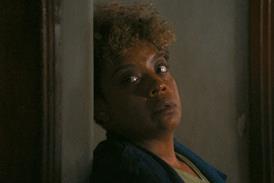
Ogata is nicely counterpointed by Watanabe’s performance as his ex-wife, a hurricane of matronly comic boisterousness. (The pair never appear together onscreen, and it’s hard to quite imagine these two as a couple, despite her eventual tender reminiscences about their early courtship). Yu Aoi (Kiyoshi Kurosawa’s Wife Of A Spy, Hirokazu Koreeda’s Netflix series Asura) is a more opaque presence, never quite achieving full substance beyond Satomi’s pensive, glassy isolation – although the character is more an observer and witness than a conventional protagonist with significant agency.
Visual finesse is appropriately a keynote from the start, the film opening on an image of light reflected on a dark green glazed surface, which looks like paint but is revealed to be the surface of matcha tea in a bowl. Green is a dominant hue, several scenes staged as extended conversations in parks, with DoP Yoshio Kitagawa expertly catching glimmer of reflection on the surfaces of pottery. Full marks too for precise photography that allows us to catch the subtle graduations of black and deep red on those Rothko canvases.
Production companies: Anonyme, Suurkiitos
International sales: Bitters End international@bitters.co.jp
Producers: Kumi Kobata, Shuichi Komuro, Mikiya Sato, Erika Murayama
Screenplay: Maha Harada, based on her story ’An Unnecessary Man’
Cinematography: Yoshio Kitagawa
Production design: Mayumo Tomita
Editor: Azusa Yamazaki
Music: Mamiko Hirai
Main cast: Yu Aoi, Issey Ogata, Eita Nagayama, Eri Watanabe