










Ana Bovino’s feature documentary world premieres at Dok Leipzig
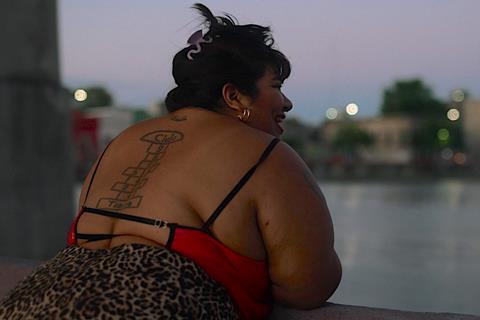
Dir: Ana Bovino. Argentina. 2026. 82mins
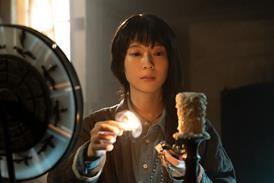
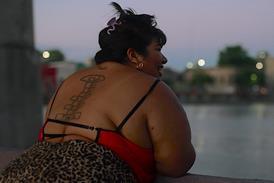
Ana Bovino’s documentary portrait takes for its subject 20-something Buenos Aires resident Jimena and gives her centre stage for its modest 82 minute runtime. The organising principle of the film is a riff on the Scheherazade principle established in the The Thousand And One Nights: a gifted storyteller whose talents are sufficiently sharp that they impact the narrative in which she finds herself. World premiering in Dok Leipzig’s international competition, the film should appeal to audiences interested in intimate, low-profile character-based non-fiction, sitting comfortably alongside the likes of Emma Boccanfuso’s recent Saudades Eternas, a portrait of a Rio favela matriarch.
The Scheherazade device provides the film with a sense of structure
Growing up close to the city’s port, Jimena doesn’t have access to many forms of privilege: her family are economically disadvantaged and, as a woman nicknamed ‘fat’ from very early on in life, there are even more obstacles in her path. Bovino’s debut collages together a few different types of sources: contemporary observational footage of dockside cranes unloading shipping containers; still photographs from childhood; grainy black-and-white camcorder footage of house parties parties from Jimena’s teenage years; contemporary material of Jimena and her friends at a fairground or gathered around a fire. Unusually, too, the film includes sexually explicit material featuring its subject.
The Scheherazade device provides the film with a sense of structure. Onscreen text gives Jimena’s anecdotes titles: ’Night 39, The Tale Of The Marvellous Jewel’, ’Night 57, The Tale Of The Little Soldier Girl’, ’Night 383, The Tale Of the Pots And the Knife’, and so on. As in The Thousand And One Nights, there aren’t 1001 stories here to sit through, which might have been a bit too much of a good thing. In contrast to the ancient text, there is no immediate narrative urgency for the storytelling: this Scheherazade isn’t trying to forestall an execution. Jimena is, on the face of it, simply a chatty person: her anecdotes are not the stuff of after dinner speech punchlines or TED talk life-lessons. They are colourful and full of the details of her life as it has been lived.
We hear about her educated mother – who was supposed to be the family’s route out of poverty until she became pregnant as a teenager. We hear about Jimena’s grandparents, who cleaned offices for a living, and how it was Jimena’s greatest delight as a little girl to accompany them and play at being an office worker, making necklaces out of paperclips and the like. We hear about how her grandmother was a huge and vocal fan of the sex worker community, particularly the transgender girls and cross-dressers who would tout for business in the area. The stories are adorned with specific vocabulary, such as her grandmother’s use of the term ’little parrot’ to describe female genitals.
Another story involving the grandmother tells us about Jimena’s attempts to eat the beautiful pies her grandmother baked but did not want the women in her family to eat, because she believed women should be thin. Jimena describes crawling, military-style, to the fridge in the dead of night to feast. These narratives are hardly groundbreaking individually, but taken together, create a vivid portrait of a life.
A major question the film seems to pose is why Jimena has developed into such a garrulous character. The two of her distinguishing characteristics which come through most strongly in the doc are her size, which is often emphasised, and her perpetual chattiness. Set in the context of the Scheherazade concept, perhaps Bovino is suggesting that Jimena’s own survival tactic, in a world which is not always accepting of her, is her penchant for anecdote: tell people a story and they will listen. It is social survival, rather than physical safety, which is her ultimate aim.
Production company: Navega Cine
International sales: Navega Cine bovinoana@gmail.com
Producer: Natalia de la Vega, Ana Bovino
Screenwriter: Ana Bovino
Cinematography: Delfina Margulis Darriba
Editing: Laura Basombrío
Sound: Mercedes Tennina