










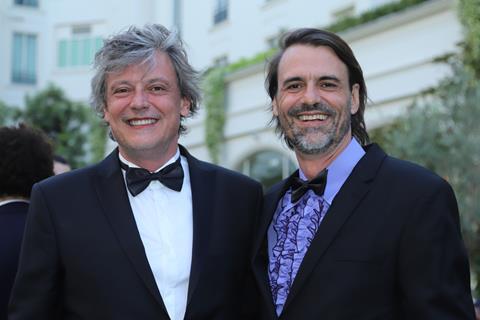
When veteran Brazilian producer Fabiano Gullane spoke to Screen, it looked highly likely that Flavio Bolsonaro, son of Jair Bolsonaro, would become president.
For the industry, the fear was that cutbacks in film funding would follow as Bolsonaro Jr carried on his father’s policy which had included slashing support for national film agency Ancine.
However, to widespread relief and surprise, Bolsonaro didn’t win. Leftist president Luiz Inácio ‘Lula’ da Silva was re-elected and prospects for Brazilian cinema now look far rosier as a result.
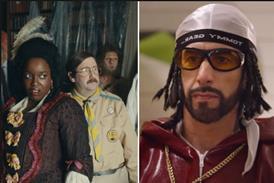
Gullane hasn’t maintained its position as one of Brazil’s most successful producer-distributors for over three decades by allowing political changes to damage the business. The company founded by Fabiano and his brother Caio in 1996 has made over 60 features and 50 series, many of them produced in periods of political turmoil. Two of their most recent features, documentaries Elza and The Project, are screening at the Mostra de São Paulo this week.
“On this last 30 years, we have faced different political situations in Brazil,” Fabiano observes. “We are used to facing good moments and bad moments in Brazil.”
He refers to when Lula first came to power in 2003 as a time “when film was flying,” but describes what happened when Jair Bolsonaro took over the presidency in 2019 as “the opposite”.
However, had Bolsonaro won, Fabiano and his brother would have tried to argue the economic and cultural importance of film and TV to the new president, just as they did during the first Bolsonaro government (“without success!”).
“We are always open to trying to build bridges between different ways of thinking,” says Fabiano.
The company makes between two and three independent features a year, often by auteur directors, while also developing more commercial projects with platforms. The brothers have diligently forged strong relations with international coproduction partners.
“Nowadays, an average of 30-35% of our independent projects’ financing come from international partners. We are completely focused on European partners,” Fabiano says, rattling off names including France’s Playtime and Portugal’s Fado Filmes on Fernando Coimbra’s 2024 film Carnival Is Over, Mubi-owned The Match Factory on Karim Ainouz’s 2024 Cannes Competition premiere Motel Destino and an upcoming project with Italy’s Vivo.
In other words, regardless of public policy toward the audiovisual industry, the company can always find ways to keep on working.
Entrepreneurial beginnings
When they first entered the business, the brothers realised that almost everybody they met wanted to be a director.
“They had a lot of ideas, a lot of projects, but no way of realising them,” says Fabiano, explaining how he and his brother gravitated toward producing. “Since the very beginning, our pleasure was to see movies actually happening.”
This was the early 1990s, a period when it was almost impossible to get features financed. So the brothers made short films instead while also working as line producers for other production companies.
In 1999, they made their first fully-fledged feature, Brainstorm. Directed by Lais Bodanzky, it stars Rodrigo Santoro as a young man forced into an mental asylum after his father discovers he has been using drugs. The film became a critical and commercial hit in Brazil.
Today, the company has around 100 employees and has diversified into production services, post-production, distribution with its Gullane+ label, and music publishing.
“We organised the company to be able to manage both indie and production services. It’s a balance. We are trying not to give up these author-driven projects,” says Fabiano.
Senna documentary
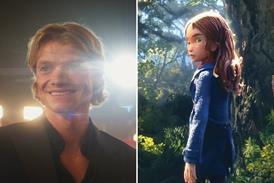
The current slate includes Karim Ainouz’s next film Neon River and a feature documentary about Formula One hero Ayrton Senna. Gullane produced a TV drama mini-series with Netflix about Senna in 2024 as well as three seasons of an animation series. Fabiano is also well aware of the award-winning film made by Asif Kapadia (“a masterpiece”) but still believes there is plenty of mileage in another Senna feature doc.
“Senna is the biggest Brazilian hero because Pele [the footballer] is from a long time ago. Senna for many generations, even for young people, somehow represents the spirit of the Brazilian people. We have many problems in Brazil, many problems to solve, but for us it is important to show positive stories.”
Fabiano acknowledges that the Senna project notwithstanding, “for the most part, documentaries are not profitable” but says that Gullane will continue to work in non-fiction. “Documentaries can go deep into some issues that Brazil must face,” he says.
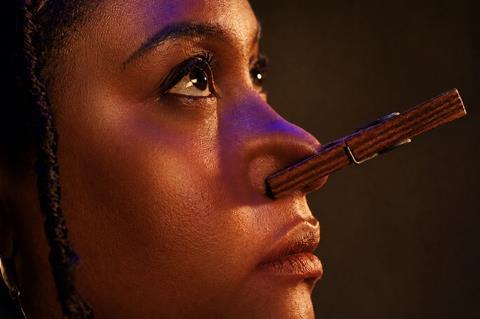
The company has made several films exploring the legacy of colonialism and the plight of the indigenous people, among them The Project: The Myth Of Colonialism’s End, directed by Sabrina Fidalgo and Yvan Rodic which has screened at the Mostra de São Paulo.
The brothers’ philosophy hasn’t changed over the last 30 years. “We must be resilient to overcome all these bad moments – and not go crazy in the good moments!”
They want the politicians to recognise that if they don’t support the cinema sector, “we will have almost 100% of American content”.
Cinema market share for Brazilian films is still only at around 10% but the Gullane siblings are determined to boost that figure through more movies like their hit Till Luck Us Do Part comedy franchise (2012-2015) while also ensuring local films are shown on the platforms – and that film exports rise too.
“We must have a vision for the future.”






No comments yet