









Guillermo del Toro’s Frankenstein is the culmination of an almost‑lifelong obsession. The writer/director tells Screen how the time finally came to realise his biggest passion
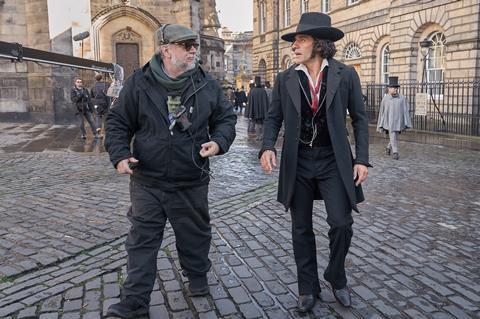
When Guillermo del Toro saw James Whale’s Frankenstein for the first time, aged seven, it was a divine experience. “On Sundays we would go to church, then buy something for lunch and bring it to the house,” remembers the Mexico-born filmmaker, who was raised Catholic.
“Channel 6 in Guadalajara had a 24-hour marathon of horror movies. That Sunday, I saw Frankenstein and Bride Of Frankenstein. It was shocking to make sense of a lot of the Catholic feelings [I had] by seeing Boris Karloff. In a St Paul on the Road to Damascus way, I saw a messiah.”
The young del Toro had found his religion. “There are two jump cuts to the face of Boris when he crosses the threshold and turns,” he recalls. “He did something remarkable with his eyes. They are equally dead, alive, and in ecstasy. He looked like [the sculpture Ecstasy of] Saint Teresa by Bernini. His eyes were rolled back, completely watery, which is a description Mary Shelley puts in the book. He is resurrected like Jesus. To me, the resurrection and the stigmata of the wounds made sense. I said, ‘That’s me. That’s my Lord.’ It was a real moment of pure soul transference.”
Aged 11, he read Shelley’s novel, Frankenstein; Or, The Modern Prometheus. By then, he had decided he wanted to be a filmmaker. “I said, I got to make this on Super 8. I can get my friends. We can shoot it in the water tower on my roof.”
It never happened. Later, he toyed with making it on 16mm. Again, nothing came of it, but the book remained a touchstone.
“It grew up with me. It became a way to talk and think about my father. Most fathers bring a child into the world, don’t explain the world, they just toss you out and you’re left to figure it out. Whether it’s John Milton writing Paradise Lost, Pinocchio or Frankenstein, they’re all asking the same basic questions. What am I doing here? What is my purpose? What is my nature and why did you make me so?”
The young filmmaker’s acclaimed 1992 debut feature Cronos brought him to Hollywood, but del Toro continued to obsess about Frankenstein, incorporating its themes and elements in his movies, notably 2002’s Blade II and 2004’s Hellboy.
“Then, there was a point where I became a dad and I wanted to talk about me and my kids and how you become your father at age 40, 41. You look in the mirror and go, ‘Who’s this guy?’ I thought I had behaved differently, acted differently. And there he is. It evolves with you.”
Monster jam
In the early 2000s, del Toro had a first-look deal with Universal, the studio behind Whale’s Frankenstein, along with versions of Dracula, The Wolfman, The Invisible Man, Dr. Jekyll And Mr. Hyde, The Mummy and The Creature From The Black Lagoon. Keen to remake this trove of classic horror, the studio handed del Toro the keys to its monster kingdom.
“I pitched a version of Creature with the Creature and girl falling in love and getting it on, which I made later [as The Shape Of Water]. I had a good take on Jekyll And Hyde. I was very interested in The Mummy as an unstoppable creature, almost like an action movie. I had a good take on Van Helsing. I had a great idea for Bride. I was full of ideas.”
The filmmaker developed a version of Frankenstein that was going to be two movies. “The first was going to end with the Creature saying, ‘He has told you his story, now I will tell you mine.’ The second was the Creature. I’m glad I didn’t do it back then, because I was too young. This is a movie you can only approach when you’re ready to listen to what the movie wants, rather than dictate it.”
As the years went by and del Toro got older, he felt ready to tackle Frankenstein. He found a home for it at Netflix, where he had made 2022’s stop-motion version of Pinocchio, another sacred text he had long wanted to adapt.
“It’s so personal to me, it’s so biographical to me, it is the DNA of what I know about the romantics, the DNA of what I know about Mary Shelley, the DNA of my own story,” he says of Frankenstein and its author, whose mother died 11 days after giving birth to her.
“The commonalities I have with Shelley are curious but multiple. She’s a Protestant English girl, I’m a Catholic Mexican boy. But the notion of miscarriages; my mother’s mother died when [my mother] was born. Many of my siblings were miscarried. I was almost a miscarriage. The fusion of religious identity with horror and birth and death, the graveyard poetry, there are so many things that are common. Catholicism is a lot swarthier and full of pageantry but those commonalities are there.”
Oscar Isaac was del Toro’s pick for the role of Victor Frankenstein, with Andrew Garfield as his creation. But Garfield pulled out mere weeks before filming was due to begin.
“I said, ‘Anything that goes ‘wrong’ is actually the movie trying to right itself,’” recalls del Toro, who found a replacement in Jacob Elordi. “It’s his part. There’s no past. What he did with it is something he said to me on the first Zoom call. He said, ‘This creature is more me than me.’ I understood exactly what he meant. It is the same with me. This movie is more me than me.”
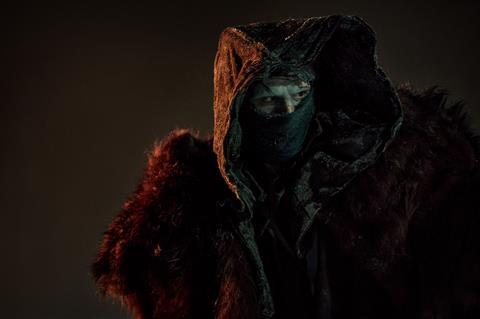
Visually, Elordi’s creature is very different to Karloff’s iconic monster. “I said, ‘I don’t want any Boris. It’s not a homage. Let’s not make it something patched together, but something newly minted.’ That’s a big difference with all the other versions. The idea was we need to feel we’re watching a blank human soul, which is what you get as a father. You get something that, by absence, presence, ignorance or will, you sculpt through pain. It is a blind spot of parenthood, you’re given a blank, beautiful book and you fill it with gibberish.”
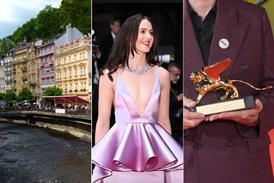
Del Toro’s time with Gothic horror filmmaking has come to an end now both Guillermo Del Toro’s Pinocchio and the $120m Frankenstein – which premiered at Venice ahead of a brief theatrical run and November streaming release – are off his bucket list.
“Every movie I made led to this – Crimson Peak, Blade II, Cronos, The Devil’s Backbone. I think this fulfils my attraction to a certain proclivity. The two things I’ve always wanted to do were crime movies – which I’ve done only one, Nightmare Alley – and horror. So, I’m going to turn to a life of crime after this. That, and stop-motion.”
To those ends, del Toro is preparing to direct a stop-motion adaptation of Kazuo Ishiguro’s fantasy novel The Buried Giant for Netflix and is writing a “very violent, very cruel” crime thriller in which Isaac would again star. He is also trying to acquire the rights to a book that he hopes to adapt for Elordi. “So, that’s my next five years. Probably.”


No comments yet