










To many, Tinto Brass is an ageing satyr of European cinema – but the artistic directors of Venice and Locarno hold a different view
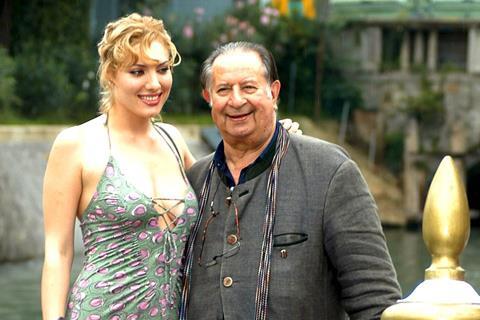
Italian filmmaker Tinto Brass ended up being charged with indecent exposure when he visited Venice Film Festival in 1995. He was there to promote P.O. Box Tinto Brass, which was not in official selection, arriving on the Lido by boat with several of the film’s stars. Most were scantily clad in protest at the bourgeois nature of a festival that did not seem to welcome their presence. Brass’s motto at the time was: “The ass is the mirror of the soul.”
To his detractors, the cigar-smoking Italian director of notorious historical sex epics such as 1976’s Salon Kitty and 1979’s Caligula starring Malcolm McDowell and Helen Mirren is one of the ageing satyrs of European cinema – a pornographer as much as an auteur. But others take a different angle.
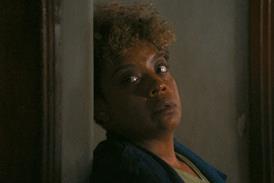
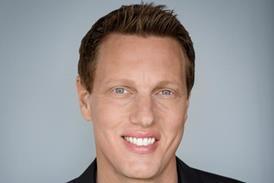
Venice Film Festival artistic director Alberto Barbera has received criticism for programming a single female filmmaker in this year’s main competition (May el‑Toukhy with Woman Unknown), but he is unapologetic about having a nonconformist taboo-breaker like Brass at the Biennale, this time with an official invitation. As part of its classics section, the festival is holding a “pre-opening” screening today (September 1) of London-shot Deadly Sweet (1967) in a new 4K restoration by Rome’s Centro Sperimentale di Cinematografia with the support of Netflix.
The thriller stars the late Jean-Louis Trintignant and Ewa Aulin, whose characters first meet when he sees her bent over the corpse of a murdered nightclub owner. Brass, now 93 and slowed by a series of strokes, will make it back to the Lido if his health permits. Venice is his hometown, and the father of his first wife and muse Carla Cipriani, who died in 2006, was the founder of the city’s iconic Harry’s Bar.
“I discovered Tinto Brass with his first feature [1963’s Who Works Is Lost],” recalls Barbera. “I was impressed by him because it was iconoclastic, in the vein of the Nouvelle Vague cinema and very local in the sense that it was a Venetian story with Venetian characters.”
Barbera followed Brass’s career closely and was especially struck by Deadly Sweet with its stylish visuals and pop culture references. He says he does not know Brass well, although the director again turned up on the Lido with a boat full of actresses in 1999, when Barbera was in his first stint as Venice boss.
“It is completely reductive to reduce Brass to an erotic filmmaker,” insists Barbera of a director who has made documentaries, satires, thrillers and even westerns as well as his later skin flicks. “During the 1960s, he was one of the most important filmmakers of the avant-garde – and then, of course, he started to make erotic films. In a way, he started to make erotic films visible in the mainstream culture in Italy at the time.”
Commercially viable
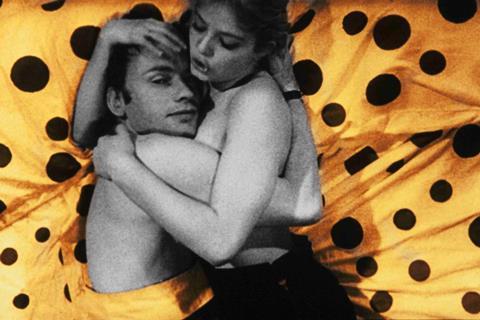
It is a measure of Brass’s commercial viability that so much of his work remains in wide circulation. In the UK, Salon Kitty – the progenitor of the Nazi exploitation genre with its tale of a brothel owner and prostitute seeking revenge on an SS officer – is available through the British Film Institute’s streaming service, while several of Brass’s films can be streamed through MovieItaly+.
The Netherlands-based distribution company Cult Epics recently released a restored version of erotic drama The Key (1983), set in 1940s Venice, while Alain Carradore’s Paris-based Sidonis Calysta continues to sell several of the director’s titles on Blu-ray, including spaghetti western Yankee (1966), which screened in a restored version at this summer’s Locarno Film Festival.
Giona A Nazzaro, artistic director of the Swiss festival, is a keen enthusiast of the Italian provocateur. “Yankee is one of the most Godardian Italian westerns ever. It is a deeply political film, an anti-imperialist film, an anti-Vietnam [war] film,” says Nazzaro.
“To understand Tinto Brass, you also need to understand a little bit of Italian culture where someone like Brass was very disruptive with his joyful imagination. He had a keen understanding of what you could do with the form of cinema, with editing and lenses.”
When Barbera returned in 2012 to begin a second stint as Venice’s festival director, he launched the Venice Classics section, partly in response to rights-holders having started to restore older films in their catalogues.
“They realised it was profitable to re-release films on DVDs or even in theatres,” says Barbera, who says he sought to strike a programming balance between acknowledged masterpieces and films that have “maybe been forgotten or which need to be re-evaluated from the point of view of today”.
Screening these titles many years after their initial releases can allow audiences to see them in a new light. “It can completely change the view we have,” says the festival director. “Seeing them with the eyes of today, it means seeing another movie.”
Open debate
Barbera also says it is a way of getting the most important and provocative movies from the past in front of younger audiences. It would be easy to draw a line between the more respectable films of the younger Brass, when he collaborated with the likes of Roberto Rossellini and Umberto Eco, and the raunchy softcore features of his later years such as Miranda (1985), All Ladies Do It (1992), Frivolous Lola (1998) and Cheeky (2000).
Barbera, however, insists the work should be seen in the context of the time in which it was made.
“Of course, some of the elements of the erotic films by Tinto Brass are not acceptable from our contemporary sensibility,” he says. “[But] they were part of the social and cultural debate of the time. They must be seen as they were, as part of our social and political development in the ’80s and the ’90s.”
Barbera adds that we are in a moment where “sex and eroticism have almost disappeared from films. We are living again in a moment where a sort of moralism forbids [us] to talk about this aspect of human beings; there is a sort of puritanism again which is dominant and which I think is quite dangerous because it completely puts to the side one of the most relevant dimensions of human beings. Stimulating discussion about that is quite important.”
One prediction can safely be made. Whatever anyone’s estimation of his work, Brass’s return to Venice will generate plenty of discussion.


No comments yet