









“It’s shaping up to be a vintage edition of the festival,” says Sarajevo Film Festival director Jovan Marjanovic on the eve of this year’s edition.
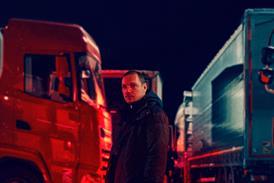
The festival opens on August 14 with Pawel Pawlikowski’s Fatherland, which world premiered in competition at Cannes. “It’s talking about post-war Europe, but it’s so much about identity and the state of Europe today in terms of divisions. It’s highly relevant to the times,” says Marjanovic.
A restored version of Bosnian filmmaker Danis Tanović’s 2001 feature debut No Man’s Land will close the festival on August 21.
“It really hasn’t been seen much in the past 25 years, for various reasons that have to do mostly with the company that produced it going bankrupt, and then the rights moving from one catalogue to another. Now they are with Studiocanal, who did a wonderful restoration.”
Marjanovic is excited about the “great bouquets of filmmakers from different fields” in the masterclass lineup, which features Emily Watson, Paweł Pawlikowski, Woody Harrelson and Asghar Farhadi.
He is confident the festival can withstand the impact of the heatwave gripping parts of Europe. “We’re a festival with a lot of outdoor locations,” he admits. However, he is confident the city is “used to this”, and the air conditioning in closed locations is primed to “work overtime”.
Marjanovic spoke to Screen about the shape of the programme, shoring up Sarajevo’s cinema infrastructure and the festival putting its money where its mouth is when it comes to supporting female filmmakers.
What trends did you see in the films submitted for this year’s festival?
There were more submissions, which was surprising, given several territories in the region [Southeast Europe and Caucasus] have been reporting reduced public funding for film. We had plenty to choose from, which has resulted in really exciting competition programmes, especially on the doc side where there are a lot of relevant topics, and also a lot of creative, artistic docs.
On the feature narrative side, it’s varied, but it’s stories that mostly have to do with identity, with home, migration, the individual versus the collective and the other way round.
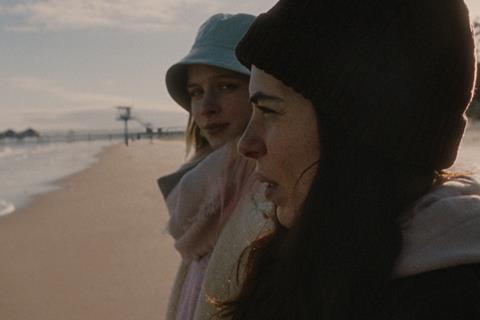
Several festivals are struggling to achieve gender equity in their lineups. However, Sarajevo’s narrative feature competition lineup is particularly strong for female directors this year. What is Sarajevo’s approach to championing female filmmakers?
To put the money where your mouth is. We have been running with one of our principal sponsors – Uniqa Insurance Group from Austria – a female filmmakers support programme which funds eligible films made by female filmmakers with grants of €30-50,000. It’s in its second year.
What are your ambitions for the festival?
We’re opening up a new space called Festival Atelier. It’s on the street where Archduke Franz Ferdinand was assassinated. We’re opening up a space that I hope can be used for residency programmes, workshops, for filmmakers’ own work – to edit a film, write a script. It’s a multifunctional space, so it can also double as a gallery, as a pop-up kind of shop, or a festival venue for screenings.
We’re hoping to start the renovations on the Meeting Point Cinema, which is the best arthouse cinema in the city. We run it normally. It’s a one-screen theatre, and we want to turn it into three screens. We have been awaiting paperwork for a couple of years already.
The common denominator is we want better infrastructure for the festival and cinema year-round in the city.
Why was the new Open Air Premiere audience award, for films from former Yugoslavia, so important to introduce this year?
Our competition programmes are focused mainly on arthouse, auteur films. It felt there was a need, and a space, for films that might have a broader audience and that are looking for wider theatrical releases after the festival.
There has been an increase in production of such films, which is good news. Even better news, we’ve had in the past couple of years some real box office hits – Croatian-Serbian co-production The Wedding, which had north of two million admissions in the former Yugoslavia, and super low-budget Bosnian film Testament, which also went up to half a million [admissions] in Bosnia, which is crazy. You have box office hits in Serbia, every year or couple of years, something that really scoops regionally north of one million admissions.
The award is €20,000, including €15,000 in kind in marketing in Cineplexx theatres, the leading exhibitor in this territory.
What kind of audiences does Sarajevo attract?
The audience is very big. It attracts over 150,000 admissions across the various activities; it has over 3,000 festival guests and a very robust industry programme.
It’s probably the biggest film festival in the region, and is among Europe’s biggest festivals overall. It focuses on cinema from the region, and it puts filmmakers from this part of the world at the centre of the festival’s attention… It’s a place where the rest of the world can come and take a peek at what is happening in this region, and also do business with people in this region.
It’s also a showcase of the best of international cinema to the audience of the city and the audience of the festival, which is only 50% local Bosnian audience, and 50% from outside of the country, mainly from neighbouring countries.
Top restaurant tip in Sarajevo?
There are quite a few good restaurants around town. You can obviously eat great grilled meat, that’s a specialty. But funnily enough, we all hang out at a fish restaurant, Luka.




No comments yet