







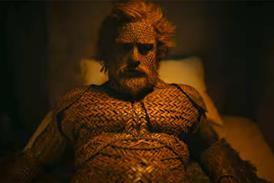
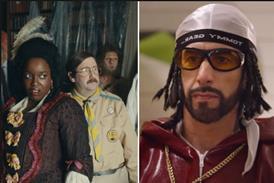
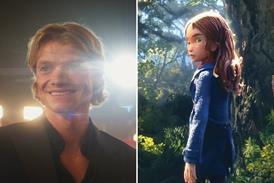

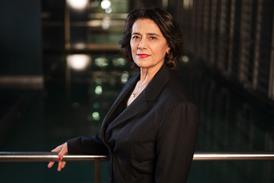

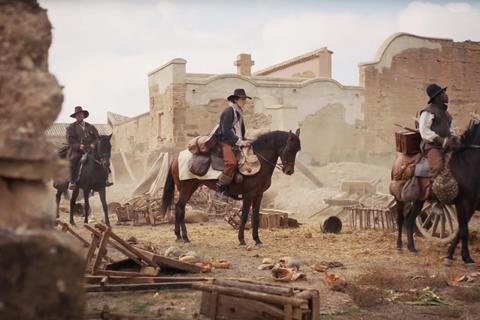
A 17th-century portrait travelling from the Spanish court to that of Louis XIV provides the unusual premise for Les Indes, an offbeat journey across Europe blending documentary realism with elements of the western genre.
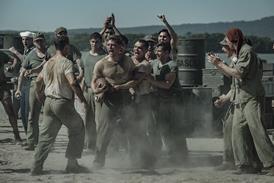
The film marks the feature debut of Swiss artist-filmmaker Pauline Julier and French-Swiss theatre director Nicolas Chapoulier. Set against a backdrop of war and revolt, it stars Théo Urtubey, Raphaël Thiéry and Lazare Minoungou as the three men tasked with delivering a portrait of the Spanish Infanta Maria Theresa to her future husband, the young Sun King. Their perilous journey explores class divisions, colonialism and the brutality of war.
Produced by Switzerland’s Alina Film and Spain’s Lastor Media, with MoreThan Films handling international sales, Les Indes premiered in Venice’s Giornate degli Autori sidebar and is competing at the Geneva International Film Festival (October 30-November 8).
For Julier and Chapoulier, partners in life as well as filmmaking, the premise had lingered for years. “It was one of those stories people would tell at school or over drinks. It stayed with us for years,” recalls Chapoulier.
“There was something extraordinary about a painting taking so long to reach its destination,” adds Julier. “And because so little is known about what happened along the way, it gave us tremendous narrative freedom to fill in the gaps.”
Contemporary parallels
The directors were less interested in the painting itself than in what its passage across Europe could reveal about society, both then and now. “We wanted to tell the story of an image – how it circulates, how it moves and what it represents,” says Julier. “Through that journey, we could explore much broader questions about representation and power.”
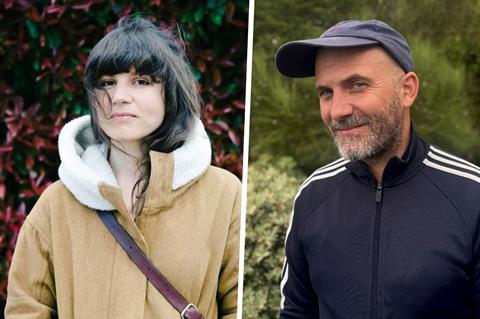
The human dimension was equally important, transforming the historical premise into fiction rather than documentary. “We also wanted to focus on the seemingly insignificant people entrusted with transporting this incredibly important image,” says Chapoulier.
Chapoulier points to the contrast between past and present. “Today, images fly over wars via satellites. Back then, paintings had to travel through them,” he says.
The pair, who began writing during France’s gilets jaunes (yellow vests) protests, found parallels between contemporary unrest and the inequalities of 17th-century Europe.
“It’s a fascinating moment of transition,” says Chapoulier. “Trade routes are developing, capitalism is taking shape and there’s this belief that commerce might bring peace to Europe. At the same time, society is deeply divided. We began to see how much this period could tell us about our own.”
The historical setting also offered an opportunity to challenge the conventions of costume drama. “We wanted something between a western and a period film,” says Julier. “We weren’t interested in celebrating the grandeur of historical figures. We wanted to place these characters within the landscape, to show how small they are in relation to the world around them.”
Shot in Academy ratio by cinematographer Sylvain Verdet, the film juxtaposes sweeping landscapes and compositions inspired by classical paintings with intimate close-ups of flora and fauna.
Filming proceeded chronologically from October to December 2025, beginning in Spain, crossing the Pyrenees and ending in Switzerland, which doubled for France.
Creative friction
The co-directors brought contrasting disciplines to the project: Julier works in experimental documentary and visual art, while Chapoulier comes from theatre and performance. Their differences became central to the creative process.
“We don’t always agree, but that tension is part of how we work,” says Chapoulier. “It helps us find a balance and pushes us towards something more radical.”
The film has struck a chord since Venice, including at an October screening in São Paulo, where Brazil’s hotly contested presidential election lent particular urgency to its themes.
“People picked up on the political dimensions, particularly class and representation,” says Julier. The response across festivals has also surprised her. “To be honest, I wasn’t sure audiences would grasp all the different layers. But they did, and I’ve been delighted by how much they bring to it.”
Screening the film on home turf in Geneva brings an added mix of anticipation and apprehension for the filmmakers. Chapoulier, meanwhile, hopes local audiences will leave with questions rather than answers.
“I like films that have gaps, ellipses, spaces that the audience can fill for themselves,” he says. “I want people to feel a little unsettled by the ending, to participate in making sense of it.”





No comments yet