












The Chilean Film Academy said on Wednesday it will submit Manuela Martelli’s Cannes Un Certain Regard mystery The Meltdown for Oscar consideration as the body called for a “strengthening” of government support and celebrated the number of submissions directed by women.
Gabriel Díaz, president of the Chilean Academy, said: “These have been days of watching excellent national premieres. For the first time in history, half of the submitted films were directed by women, which speaks to an industry that is modernising and evolving healthily […] All received state support, and the vast majority are international co-productions, which has boosted the multiplier effect of the audiovisual industry in various sectors of the national economy.”
Díaz recognised the Council of Arts and the Audiovisual Industry (CAIA) for its ongoing support and called on the ministry of cultures, arts and heritage to continue its backing “by strengthening the Audiovisual Fund, without censorship or prejudice”.
The Meltdown will open in Chile on September 3 and US distributor Kino Lorber is planning a theatrical release.
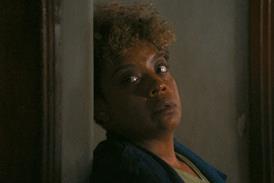
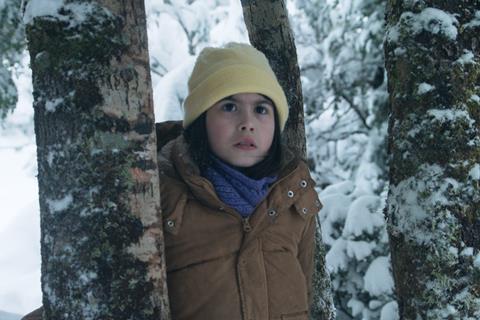
Martelli’s follow-up to her Augusto Pinochet-era political thriller Chile ’76 takes place in 1992, two years after the end of the dictator’s regime, as a nine-year-old girl staying at her grandparents’ Andean home befriends a German teenage skier who goes missing.
Maya O’Rourke, Maia Rae Domagala, and Saskia Rosendahl star. Martelli wrote the screenplay and the Chile-US-Spain-Mexico project was produced by Alejandra García for Ronda Cine, Alex C Lo for Cinema Inutile, and Andrés Wood for Wood Producciones.
It is co-produced by María Zamora for Elastica Films, Julio Chavezmontes for Piano and Pablo Díaz for Fundación Río. Losange Films handles international sales.
Producer Garcia said, “A lot of effort went into this production: snow that wouldn’t arrive, an eight-year-old girl, dogs, an international cast, a large budget to finance, and many other challenges. Bringing the film to fruition was not easy.”
Writer-director Martelli added, “This film has been a great adventure, a ‘little Fitzcarraldo’ of the Andes.”




No comments yet