








The Dinard Festival of British and Irish Film is facing an uncertain future as it waits the outcome of an independent review commissioned by the local mayor’s office to assess the festival beyond this year’s edition, citing economic challenges.
According to a report in French newspaper Ouest-France, the review will address an annual deficit of €250,000, against the festival’s total budget of around €700,000.
The review is expected to last around four months with the aim of being delivered around February 2027.
It will cover artistic and cultural content as well as management and economic models. Ouest-France noted: “While attendance has remained stable—with nearly 21,000 admissions over the five-day festival in 2025—the town hall acknowledges that the event is not what it used to be. In recent years, it has struggled to attract partners, bring in British actors, and draw crowds.”
The Dinard film festival has taken place in the coastal Brittany town since 1989, funded originally by the CNC and the-then British Screen, with the aim of introducing French audiences to a wealth of UK films and reaffirming cultural and economic ties between the two industries. It has long been beloved by many in the UK and Irish industries for its relaxed and intimate setting, but industry attendance has fallen steeply in the past few years, hastened by the end of the convivial chartered flight from London to Dinard.
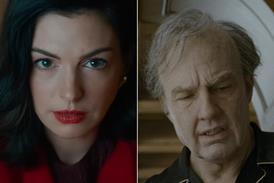
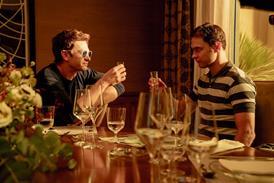
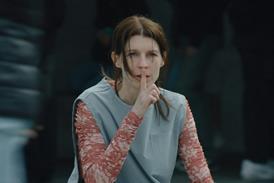
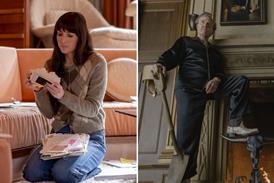
The 2026 festival, the 37th edition, is taking place from October 7 to 11, with a lineup that includes Clio Barnard’s Cannes Directors’ Fortnight prize winner I See Buildings Fall Like Lightning and Kieron J. Walsh’s Edinburgh International Film Festival award winner Skintown.
It is the last under the artistic direction of London-based Dominique Green, a well-respected figure in the UK industry, as her fixed tenure comes to an end this year, after seven years running the festival. No appointment to replace Green has been made.
“There’s no question that there are economic issues around the festival, because we have a limited number of cinema seats, so we can’t increase the capacity very much,” Green said.
“The whole question of bringing talent over from the UK has become extremely difficult, expensive, and availability is a big issue. These are issues that every film festival is facing. We are definitely not alone in that. Sponsorship is getting harder and harder.”
Funding struggles

The festival receives French public support from La Région Bretagne, the Brittany regional authority, as well as local Dinard businesses and partners, British Council France (including the Great fund) British Council UK, Screen Ireland and Culture Ireland.
The BFI historically supported the festival but has not since 2022.
Dinard has also recently struggled to attract the presence of the French distributors, despite the launch of an invite-only professionals’ day of networking and talks between the French, UK and Irish industries in 2023.
“It’s not like it was 30 years ago, when [French distributors] came shopping,” said Green. “The good ones still come to see the audience reaction.”
She said the cost of subtitling is also immense. “Our technical costs are very high.”
What comes next
When asked if the Dinard mayor’s office is committed to continuing a festival of British and Irish film beyond 2026, mayor Arnaud Salmon said: “It seems premature to me to answer that question.
“We intend to commission an AMO [project management consultancy] to think through the future of the Dinard Festival of British and Irish Film, which will celebrate its 37th edition this year. This AMO’s role will be to draw up an objective assessment of these past 37 years and to propose avenues of thinking for the future.
“It’s common knowledge that film festivals are finding it increasingly difficult to sustain themselves in a context where distribution media have changed enormously, where thinking has become ‘multiscreen,’ and where streaming has taken on an almost monopolistic role in the distribution of films. ”The format of the DFFBI [Dinard Festival du Film Britannique and Irlandais] itself, its direct municipal management, and its very high net cost relative to the overall budget, oblige us to take stock. I am not in the habit of making hasty or unsubstantiated decisions, so I am waiting to have our AMO’s study in hand before making fair, well-suited decisions.”
One suggestion if a film festival is to continue that the mayor has put forward is to open the festival to all former British Commonwealth countries. The festival rebranded from the Dinard Festival of British Film to the Dinard Festival of British and Irish Film in 2024, unlocking some funding from Screen Ireland and Culture Ireland.
The mayor confirmed recruitment has not begun for a replacement for Green and is not imminent. “The need for an artistic director is something our AMO will take into account and analyse… We are giving ourselves time to think about the future of the DFFBI as a whole, based on the conclusions that will come out of the AMO’s study.”




No comments yet