











Billy Lumby’s feature debut plays London after a San Sebastian premiere
Dir/scr: Billy Lumby. UK. 84mins. 2026
Living in supported housing in east London, 20-something Jamal (Screen Star of Tomorrow Jonathan Jules) has ambitions to become a rapper – and the talent that could see him make good on those dreams. But Jamal lives with mental health issues, and the medication he takes to quiet the voices he hears comes with debilitating side effects – ones that drive him to come off the pills to devastating results. An immersive, moving character study, Florid effectively cuts through the stigmas surrounding mental health to expose the complex realities of those living with a diagnosis.
Cuts through the stigmas surrounding mental health
Florid is the feature debut of former Star of Tomorrow Billy Lumby, who received a Bafta nomination for his 2016 short samuel-613. That followed a London Hasidic Jew facing a crisis of faith, and Florid shows him similarly adept at capturing the texture and nuance of another insular community. The film plays at the BFI London Film Festival after premiering in San Sebastian, and Jules’s excellent central performance, coupled with writer/director Lumby’s accomplished handling of difficult themes, should see it attract further attention. It is likely to strike a particular chord with home audiences, and anyone facing the challenges explored in the film.
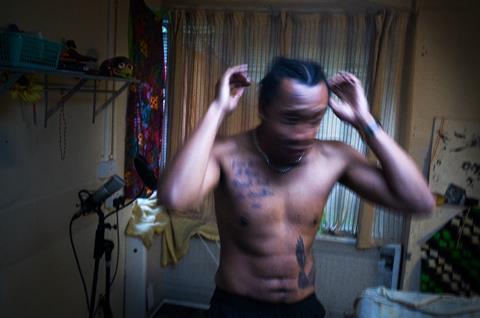
Jamal’s world is almost entirely confined to the small room he inhabits in the faceless apartment block, in which he works on his music and smokes too much cannabis – both self-soothing mechanisms to help combat the side effects of his medication. The worst of those is the shaking, which makes his hands next to useless. As fluid, intimate camerawork from Adric Watson snakes through these sterile, claustrophobic spaces – Jamal’s room, the aggressively neutral corridor and basic kitchen – we understand that Jamal is certainly not here by choice. It’s also clear that, as a young black man with a diagnosis of schizophrenia, those choices are extremely limited.
Yet Lumby (a former Screen Star of Tomorrow) takes great care not to stigmatise Jamal or his surroundings. Care coordinators and medical professionals seem to genuinely want to help (although are underfunded and overstretched), and there are other moments of warmth, particularly with Jamal’s new neighbour Kyla (Saskia Chana). It’s his very human need to connect with her – through his music, his cooking skills (he phones his beloved gran for instructions) – that contributes to his decision to come off his medication and get back to what he believes is his true self. Quickly, inevitably, Jamal begins to spiral; struggling to differentiate between what is imagined and what is real, he makes increasingly dangerous decisions and ends up back in hospital.
In a clinical setting, the term florid is used to describe acute symptoms; it is also a descriptor for something that is excessively ornate. That can’t be applied to Lumby’s film, which is admirable for its raw honesty and stripped-back aesthetic. The screenplay is inspired by Lumby’s own experiences with mental health, and an on-screen credit states that it was made in collaboration with London’s mental health community. (Lumby interviewed many people with experience of hearing voices, along with healthcare and social care professionals.) This authenticity fuels every facet of Jamal’s experience: his loneliness, his attempts to self-medicate with drugs, his manic delusions. And Jules throws himself into the role, fleshing out Jamal beyond his diagnosis, as a driven, sympathetic, kind-hearted young man doing his best with the hand he has been dealt.
Lumby makes the bold decision to make the voices that Jamal hears part of the film’s narrative – distinctly different (one belongs to real-life Hackney rapper and Jamal’s idol Unknown T); they constantly vie for his attention and offer conflicting opinions about who he is and what he should do. This could easily have become a distracting gimmick but, in the hands of Lumby and sound designer Dario Swade, they become an effective dramatic device that invites the audience to a greater understanding of what it truly means to walk in Jamal’s shoes.
As the voices grow louder, they are joined by disturbing flashbacks that push Jamal to face a reality he has desperately been trying to avoid. And if Jamal’s ultimate realisation that the path to peace ultimately lies in self-acceptance is a familiar trope, Florid’s unflinching focus on his unique lived experience gives the film a distinctive identity.
Production companies: Atar Studios, Joi Productions
International sales: Altar Studios, Rupert Lloyd rupert@atarstudios.com
Producers: Rupert Lloyd, Joy Gharoro-Akpojotor
Cinematography: Adric Watson
Production design: Beck Rainford
Editing: Omar Guzman
Music: CJ Mirra
Main cast: Jonathan Jules, Saskia Chana, Marlon Bravi, Unknown T, Louise ‘Lulu’ Parr, Jennifer Greenidge