











The film has its international premiere in Busan competition after releasing in Japan last month
Dir: Shuichi Okita. Japan. 2026. 138mins
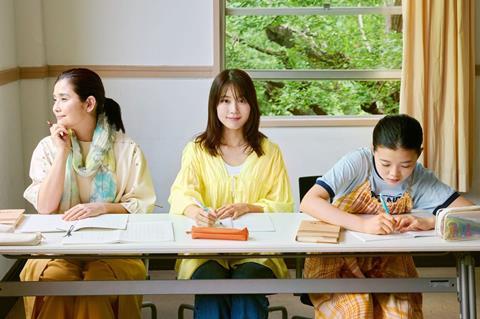
The importance of self-fulfilment and life’s big and small connections fuels Shuichi Okita’s whimsical and inventive comedy drama, which adds to a CV already packed with quirky charmers, including The Woodsman And The Rain (2011) and A Story Of Yonosuke (2012). With Satoko Always, he playfully slips between genres to weave together the tales of three Japanese women of different ages, all named Satoko, who are inspired to tap into their desire to write in a way that could literally change the course of their lives.
The director has a light touch but he smuggles in more serious ideas
Released in Japan in September, Satoko Always has international premiere in Busan Competition. The film’s enjoyable complexity around notions of creativity coupled with the emotional resonance of the individual stories could also find favour with arthouse distributors looking for heartwarming fare.
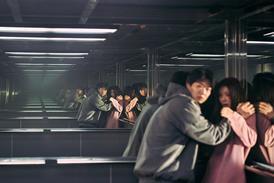
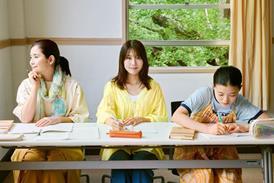
Split into three segments which begin to coalesce, the bookending sections – concerning, at least in part, young and old love – could easily be self-contained shorts in their own right. The first moves with the swift style and upbeat pace of a teen movie as we meet Satoko Nakai (Kashun Himeno), a 15-year-old who regularly attends an ENT clinic for nebuliser treatment for her allergic rhinitis, where she develops a crush on fellow teen sufferer Hayase (Toharu Ogawa). This first love becomes the subject of flights of literary fantasy after her schoolteacher (Yoh Yoshida) notices her talent for fiction and encourages her to write.
Newcomer Himeno is a real discovery, her expressive face and expert timing perfect for Okita’s absurdist observations of teenagehood. Her pairing with Yoshida, who plays teacher Ms Terao as an enigmatic closed book, makes for a great comedy double-act. As Satoko starts to write, beginning with an assigned ”love letter to your favourite food” – fermented salty squid shiokara, which becomes a recurring motif in all three women’s lives – the words appear onscreen and, before long we are snapping between the ‘real’ and ‘imagined’ versions of Satoko’s life in which things can change with a pencil stroke.
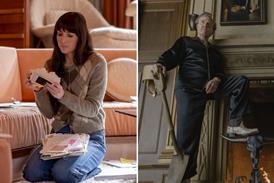
We miss Satoko number one when we join number two, Satoko Nishida (Kasumi Arimura). She is the 35-year-old focus of the more fleeting, less detailed second segment, which as it develops deliberately takes on the heightened tone of the Korean television shows she likes to watch. This Satoko, too, will be encouraged to write after her extramarital affair takes a melodramatic turn.
Finally, we meet 55-year-old Satoko Iijima (Hikari Ishida), whose soon-to-be empty nest leads her to revisit old dreams of becoming a writer. The story she begins to pen is of the fantastical sort, involving a great tit and a bookshop, allowing Okita to whisk us into her imagined realm which features a delightful stop-motion animated bird. Back in the real world, meanwhile, this Satoko begins to discover that her husband (Michitaka Tsutsui) and sons may not take her quite as much for granted as she feared.
The act of writing itself is given a starring role in the film, the sound design emphasising the scratch of pencil and clack of keyboard. Frequently, the letters appear on the screen, often as what is being described then begins to happen or is revised in real-time as the Satokos follow a stream of thought or berate themselves for an idea being “too cringe”. The director has a light touch but, while the emphasis is on comedy, he smuggles in more serious ideas, particularly around the importance of believing in yourself at any age. Ms Terao’s no-nonsense approach to her pupil’s self-deprecation is particularly on point.
Love of all sorts is also celebrated, from the women’s newly or rediscovered passion for creativity to the quiet care that goes into a message carefully written in sauce on top of rice in a lunchbox. What is fact and what is fiction – and where one Satoko’s experience ends and another’s begins – are often deliberately grey areas but that is part of the point and the fun of Okita’s own engagingly elaborate flight of fancy as it reaches its satisfyingly cohesive and sunny conclusion.
Production companies: Amuse Creative Studio
International sales: Hakuhodo DY Music & Pictures, isales-movie@hakuhodody-map.jp
Producers: Ryohei Tsutsui, Miyuki Sato, Suguru Kubota, Yuya Tanaka
Screenplay: Shuichi Okita
Cinematography: Akiko Ashizawa
Production design: Norifumi Ataka
Editing: Masaya Ozaki
Music: Satoko Shibata
Main cast: Kasumi Arimura, Hikari Ishida, Kashun Himeno, Yoh Yoshida, Joe Odagiri, Daisuke Kuroda, Junko Miyabe, Yuzu Aoki, Toharu Ogawa, Yohta Kawase, Kanata Hosoda