



Fanny Liatard and Jérémy Trouilh’s magical realist film takes inspiration from the rare condition of resignation syndrome
Dir: Fanny Liatard, Jérémy Trouilh. France/Belgium/Sweden. 2026. 83mins
Resignation syndrome is packaged in a magical realist-imbued adventure story in Locarno opener The Green Eyes. The rare condition, which chiefly affected traumatised Swedish children from the late 1990s to the 2010s, is characterised by the youngsters exhibiting coma-like symptoms, often considered to be triggered by the refusal of asylum applications.
Lightweight characterisation and a hurried ending mean it’s less affecting than it aims to be
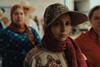
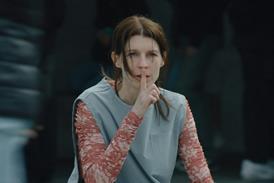
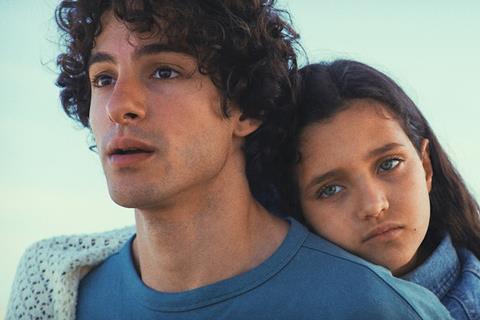
Fanny Liatard and Jérémy Trouilh’s drama transports the condition to the coastal Landes region of south-west France, where 11-year-old Chaya (impressive newcomer Douae Butarbuch M’Zaouki), her older young adult brother Nour (Sayyid El Alami) and their father (Omar Al Jbaai) face being denied residential status after fleeing Iraq for France three years prior. The family are also still dealing with the trauma of the loss of the children’s mother en route, to whose eyes the title refers.
Coming at the idea of forced migration from a child’s point of view offers an empathetic perspective, and the directors’ accessible approach to an enduring hot button issue should see it travel to further festivals following its premiere in Locarno’s Piazza Grande, although the balance between its real world and dream elements is not as successful as in the directors’ debut Gagarine. The Green Eyes will be distributed by Filmcoopi in Switzerland.
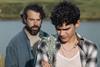
After the family are told they will be returned to Iraq, Chaya and Nour’s father heads to Spain in an attempt to make money to take them to England, leaving the children with only a mobile phone as contact. (That he doesn’t put his own phone number into it beforehand is just one of the film’s more naggingly dubious plot points.) After he leaves, it is Nour who suffers resignation syndrome – or, as Chaya succinctly puts it, “He is hiding in his dreams” – a situation which prompts her to try to follow him into this imagined realm. It’s a place that mirrors environments Chaya knows, but streaming into them is water as black as ink. As Chaya is searching for Nour, back in the real world her schoolteacher Marion (Anamaria Vartolomei) and Nour’s best friend Ben (Arcadi Radeff) are also attempting to help.
In terms of craft, the real and the imagined worlds are both impressively realised. Where the children live, the sea gives way to a pine forest beyond – home to the distinctive Contis Lighthouse, incongruous in its inland setting. This gives scope for some majestic drone photography and camerawork from Victor Seguin that feels in touch with the natural world, but also fable-like. Meanwhile, in the dreamscape, those dark waters rise with a sense of dread, helped by anxious sound design which adds to the otherworldly eeriness. Sound is also crucial to the directors’ depiction of the traumatic event involving Chaya and Nour’s mother, letting us hear what happened rather than seeing it.
Yet, since the children and adults are essentially occupying separate realms for much of the action, it’s hard for Liatard and Trouilh (writing with long-time Jean-Paul Jenet collaborator Guillaume Laurant) to maintain the tension as they cut between the two. Butarbuch M’Zaouki is compelling as the determined and resourceful Chaya and some time is taken to establish her close bond with her brother and teacher. Nevertheless, the subsidiary characters all feel quite sketched and it’s hard to imagine them having lives beyond the confines of this narrative.
There’s a sense that the story is playing second fiddle to the visuals, epitomised by the use of migrating cranes as a metaphor. They are gracefully shown but their connection to the family feels more manufactured than organic. The twists and turns of the plot also result in there being little room for character development, with the story so lean in places that it feels undernourished. As a heartfelt plea for empathy it strikes an emotional chord, but lightweight characterisation and a hurried ending mean it’s less affecting than it aims to be.
Production companies: June Films, Haut et Court
International sales: Kinology, contact@kinology.eu
Producers: Julie Billy, Carole Scotta
Screenplay: Guillaume Laurant, Fanny Liatard, Jérémy Trouilh
Cinematography: Victor Seguin
Production design: Eve Martin, Mikael “Valle” Varhelyi
Editing: Tina Baz, Daniel Darmon
Music: Amine Bouhafa
Main cast: Douae Butarbuch M’Zaouki, Sayyid El Alami, Anamaria Vartolomei, Arcadi Radeff, Omar Al Jbaai