
















Tokyo International Film Festival (TIFF) returns for its 39th edition with a new festival director, the promise of more “glamour” and a shift in the balance between entertainment and arthouse titles.
Running from October 26 to November 4 in the Hibiya area of central Tokyo, the festival will screen 204 films from 112 territories.
It will open with the world premiere of musical drama Sukiyaki and close with Korean zombie blockbuster Colony while highly anticipated monster sequel Godzilla Minus Zero plays as the Centrepiece feature. TIFF’s 15-feature-strong Competition section includes seven world premieres.
If there is a thread between the films in Competition, TIFF programming director Shozo Ichiyama says it is that many deal with historical incidents. That includes Garin Nugroho’s Red Before Dawn, set amid turmoil after Indonesia won independence from the Netherlands in 1946; Teodora Ana Mihai’s Heysel 85, about clashes between football fans at the European Cup final in 1985; and Samuele Rossi’s Even If Hell Came, about the struggle of a young partisan in the Italian Alps near the end of the Second World War.
“I feel that many filmmakers today are using historical incidents to try to find out why our modern world is so divided,” Ichiyama tells Screen.
New leadership
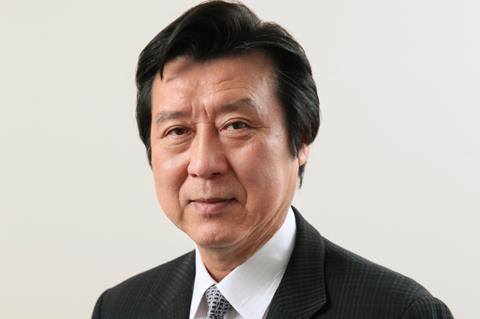
Behind the scenes, TIFF has a new boss, Takeo Hisamatsu, a former Shochiku and Warner Bros. executive who previously held the festival director role from 2017 to 2021. He takes over from Hiroyasu Ando, under whose leadership the festival moved to the Hibiya area, appointed Ichiyama as programming director, and established the TIFF Lounge conversation series and Women’s Empowerment section.
Hisamatsu notes that one of his priorities as director is to lean into the wider cinematic world’s growing interest in Japan, as evidenced by the commercial and awards success of films like Godzilla Minus One and Ryusuke Hamaguch’s All Of A Sudden as well as Japan’s selection as Country of Honour at this year’s Cannes market. The Japanese government has also made cinema one pillar of its IP360 initiative, which aims to grow the creative content industry to ¥20tn (~$126bn) by 2033.
“Introducing international films to the audience in Japan is an important mission of the festival,” says Hisamatsu. “But all eyes are on Japan right now, so I think it’s time to put a little more weight on using the festival to introduce Japanese films to the international audience.”
The director also intends to lean in to the “festival” aspect of the event.
“I want to give it the feel of a celebration, like at a music festival or anime convention,” says Hisamatsu. Efforts to enhance the festive atmosphere, says Hisamatsu, will include a “more glamorous” red carpet ceremony than previous years, as well as a larger emphasis on entertainment versus arthouse when it comes to the selection of films.
Stars and filmmakers set to attend include Cate Blanchett, who will present five shorts backed by the Displacement Film Fund; Australian auteur Rolf de Heer, who presides over the international competition jury; Iranian filmmaker Mohammad Rasoulof and Japanese Korean director Mipo O, who will each receive a Kurosawa Akira honour; and acclaimed Afghan director Shahrbanoo Sadat.
“Rather than a festival targeted only at cinephiles, I prefer a broad-based programme where anyone – even those who only see a few films a year – can find a film they’d like to see,” says Hisamatsu.
Changes
One change to TIFF for the 39th edition is that Nippon Cinema Now, the section devoted to up-and-coming filmmakers from Japan, is now competitive. This year’s jury members are film critic Mathieu Macheret, Myriagon Studio executive Chieko Murata (Kokuho), and Udine Far East Film Festival president Sabrina Baracetti.
“Discovering and supporting new talent is a key mission for our festival, and by adding awards to this category, we hope it will give new filmmakers motivation to keep going, as well as generate interest in their work,” says Hisamatsu.
A further addition is a section titled Crosscut Asia+, a joint initiative with the Japan Foundation that highlights new and old films from Southeast Asia. The six-film section was programmed by Masayuki Ueda, programme director at Tokyo’s repertory cinema Waseda Shochiku, and Raslene, programmer for Jakarta Film Week.
“In the same way Nippon Cinema Now is helping incubate a new generation of filmmakers, we hope this initiative will help incubate a new generation of programmers,” says Ichiyama.
One new industry-facing initiative is a showcase of work-in-progress films called TIFF-WIP.
“Every year, programmers come to Tokyo looking for films, but because they’ve already premiered here, they’re ineligible for many festivals,” says Ichiyama. The new work-in-progress screenings and pitch sessions will give industry professionals early looks at new films for potential distribution, sales, or screenings. There have been eight projects selected for this year’s session, which takes place October 31.
This year also sees the launch of the new Kashiko Kawakita Award. Created in cooperation with the Kawakita Memorial Film Institute, the award is named after the trailblazing woman who fostered connections between the Japanese and European film industries from the 1930s onward. The inaugural award, which honours women who have advanced film culture in Japan and abroad, will go to Sahoko Hata, a film critic, journalist and licensor of French films such as Breathless for the Japanese market.
Challenges
The position of TIFF in the festival calendar has been a perennial issue when it comes to competing for top films, especially with nearby Busan adding its Competition section in 2025.
When it comes to Japanese productions – more than 20 of which played in Busan this year – Hisamatsu says building stronger links between TIFF, creators and distribution companies will be key in convincing Japanese films to debut in their own backyard.
“I understand the appeal of traveling abroad to premiere your film, of course,” says Hisamatsu. “At the same time, if Japanese filmmakers come to TIFF, they can pop in and out freely during the 10 days of the festival, which is very convenient.”
A fresh challenge for the festival is increased costs, which include higher prices for international flights and the weak yen, which sits at ¥157 to $1 – a shift of 42% since 2021, when the average exchange rate was ¥110 to $1.
In September, “with the aim of ensuring the festival’s sustainability at a time when operational costs are sharply rising,” the festival announced it was raising general ticket prices, though it also lowered prices for students.
“We’ve been working on streamlining our operations for a long time now, but we’ll need to continue getting creative and cutting costs in various ways,” says Hisamatsu, who also aims to attract new corporate sponsors ahead of next year’s landmark edition.
“We’re planning to celebrate the 40th anniversary in a big way, so from a business development perspective, this serves as a great starting point.”






No comments yet