



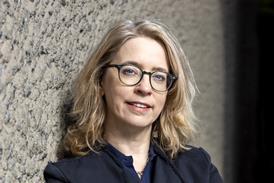





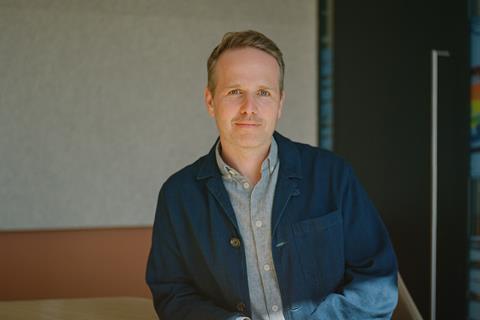
EXCLUSIVE: Before he joined Netflix as its head of UK film in October 2025, Ollie Madden held the broad belief, like many of us, that this is a company that uses cold, hard data to make its commissioning decisions.
“I can tell you honestly from the inside, we don’t,” he reports now, nearly a year into the role. “Any organisation of our size uses data as an input, but all our commissioning decisions are human-led and made based on instinct and emotion and human discussion and collaboration.
“Data can only tell you what happened yesterday, not what’s going to happen tomorrow.”
While the last bit has the whiff of a corporate motto about it, the Netflix ethos of giving smart people the resources to do what they do best and let them get on with it is alive and well, and is largely what drew Madden to the role.
“A big part of the Netflix culture is lack of unnecessary process, lack of red tape, giving people in all departments a huge amount of freedom and responsibility,” he says. “And everybody really lives by it. I hope the filmmakers and the teams we work with feel that and hold us to account in terms of that promise.”
Madden came into the job with a 360-degree perspective of the UK indie sector and the hopes of every film producer that his appointment signalled a willingness from Netflix to engage meaningfully with the local film industry.
He brought with him the talent relationships he has forged through a career that began with spells at Warner Bros, Intermedia and Miramax, before he joined Kudos (then known as Shine Pictures) in 2011 and moved to Film4 in 2017, eventually becoming director of Film4 in 2022. As the son of director John Madden, he could not – nor tried to – escape the chants of nepotism when the Film4 job came along, but when he left eight years later, most producers were singing his praises, applauding what they described as his “impeccable” taste.
Although he’s not the first head of Film4 to move to Netflix – David Kosse worked as head of international film for a few years under Scott Stuber, then Netflix’s head of global film – Madden is the first to work squarely with a UK and Ireland film remit.
Reporting to Anne Mensah, Netflix’s UK-based vice president of content, Madden has greenlit three films so far. The first was John Crowley’s “grown-up love story” Walk The Blue Fields, Conor McPherson’s adaptation of a Clare Keegan short story starring Emily Blunt and Andrew Scott. Produced by the US’ Compelling Pictures and UK-Ireland outfit Element Pictures, it was shot in Ireland and is now in post.
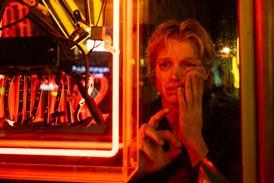
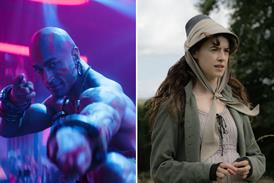
Bad Bridgets, the much-anticipated next film from Kneecap director Rich Peppiatt and producer Trevor Birney, has just wrapped after a seven-week shoot in Belfast. Emilia Jones and Alison Oliver star in the film, which Madden describes as “a punky period revenge story” about an Irish woman who receives a mysterious letter offering her escape to 19th-century New York, where she is pulled into the unruly world of the strange ‘Bridgets’. It is inspired by the non-fiction book by Elaine Farrell and Leanne McCormick called Bad Bridget: Crime, Mayhem And The Lives Of Irish Emigrant Women, and is produced by LuckyChap and Birney and Peppiatt’s Belfast outfit Coup d’Etat Films.
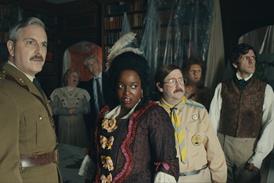
The Inbetweeners 3 has just started shooting in the UK, written and directed by Damian Beesley and Iain Morris, who created the Channel 4 sitcom. It stars the original cast of Simon Bird, James Buckley, Blake Harrison and Joe Thomas, and is produced by Banijay and Fudge Park Productions, with support from Film4, which backed the first two features in 2011 and 2014.
“I’m a huge Inbetweeners fan,” says Madden. “When we sat with Iain and Damian and the team to talk about their pitch for the new film, it was hilarious, but also it has a real reason for being. We’ve got the gang back together.”
Madden describes the budget of each film as “significant”, and confirms that none accessed the Independent Film Tax Credit, meaning they were likely budgeted at over £15m.
“We have the flexibility and the resources to right-size our budgets and give our films what they need,” Madden says.
Netflix’s UK film team was most recently led by Teresa Moneo, the former Miramax and Focus Features exec who initially worked under Kosse with an international film remit and oversaw titles such as the Oscar-nominated Society Of The Snow and Edward Berger’s multiple Bafta-winning Ballad Of A Small Player. She left in early 2025 and joined the latter film’s producer, Good Chaos, a few months later.
Moneo had taken over the UK film brief from producer Fiona Lamptey, who joined the streamer in 2020 as the first UK-based film executive with greenlight power at Netflix. Lamptey’s era yielded a film slate as diverse as Babak Anvari’s I Came By, Sebastian Lelio’s The Wonder, Daniel Kaluuya and Kibwe Tavares’ The Kitchen, and Prince Andrew drama Scoop starring Gillian Anderson.
“Authored, best-in-class British films”
Under Madden, the aim is to make around four big UK films a year. “The point is to build a relationship and a trust with our members, so they know they can come to Netflix for ambitious, authored, best-in-class British films,” he says, using Netflix’s in-house style of referring to subscribers as “members”. He points to popular UK-produced Netflix series such as One Day, Baby Reindeer and Adolescence and says he wants to do the same for UK and Irish films.
The definition of a UK or Irish film at Netflix refers to the on-screen story rather than the nationality of the filmmaking talent.
“We know our UK and Irish membership love seeing British and Irish stories and their own culture reflected authentically on screen. We’re working with a huge number of best-in-class British and Irish cast, crew and film creatives, but it’s about the stories. That approach to commissioning, we do the world over. We cover the globe by commissioning locally.”

He will work with filmmakers of different nationalities if they are telling UK and Irish stories, and possibly even if they are not.
“Our priority is serving our UK and Irish members and telling those stories,” he says. “There are no rules. If we come across something that is undeniable and doesn’t fit that mandate, we’ll talk about it, and we’ll figure out a way to do it if we love it. There’s so much incredible talent.”
Madden works with two creative executives: Lawrence Mason, who has been at Netflix a few years, and former Film4 creative exec Ann Phillips, hired by Madden after post-Film4 roles at House Productions and See-Saw Films. Madden describes them both as “fantastic”.
The UK greenlighting process is “simple, fast and straightforward,” says Madden. “And if we do a film which is designed to sit on [chairman of Netflix film] Dan Lin’s US slate, then I talk to Dan and his team.”
He joins Lin’s weekly meetings online and travels to Los Angeles every six weeks. “There are very few siloed departments here,” he explains. “The whole point of communicating all the time is to make sure we’re getting the best storytellers and the best material from wherever it is, and making sure filmmakers have the best experience working with the company. For example, we make sure the US-run films shooting here always have a production person available in any time zone between the UK and the US. You’re not having to wait a day to get answers.”
Netflix fully funds and has global rights to all of the films on Madden’s slate. From the moment a film is greenlit, it can be in production in just months, propelled by the huge infrastructure support Madden can draw upon from the in-house UK-based production, post, music, VFX, marketing and publicity teams.
Netflix boarded Walk The Blue Fields at script stage when Blunt and Scott were already attached. Madden had previously worked with Crowley on We Live In Time at Film4 and also with Element Pictures on various films including Yorgos Lanthimos’ Poor Things.
“We did some late-stage development and helped them put together the rest of the cast and crew and the production planning. It moved very quickly,” says Madden, who says no one at Netflix takes an executive producer credit.
Bad Bridgets was slightly different. “I adored Kneecap,” says Madden. “I think Rich Peppiatt is one of the most exciting new voices who has emerged in a long time. He’s taken the Kneecap energy and applied it to this story of two Irish sisters and their odyssey to New York.”
Netflix acquired global rights to the project from FilmNation at Cannes earlier this year, after development had been backed by Northern Ireland Screen and Queen’s University Belfast. In this way, Netflix collaborates with the UK’s public funders and the national and regional agencies early on in a project’s lifespan. As a rule, Netflix owns the IP, pays the producers a fee, and has no appetite to change that.
“What I will say,” Madden offers, “is we’re highly flexible as an organisation. There’s no deal template or format that we stick religiously to. We’re a profit-making business, and we need to make sure we’re doing what’s right for Netflix. But we also want to be competitive and make sure we can attract the best IP and the best partner. Those are conversations that we have on every project.”
For example, Banijay owns the rights to The Inbetweeners franchise following its 2016 acquisition of Zodiak Media, which owned Bwark Productions, the original company founded by Beesley and Morris, who now run Fudge Park.
“There are lots of different ways that people we work with can monetise their IP and their content,” says Madden. “It’s a holistic, mutually beneficial relationship and has to be.”

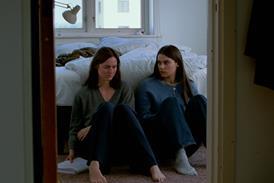
He is referring to the licensing team led by Los Angeles-based Sean Berney, director of film acquisitions, and Samantha Blanco, director of acquisitions, UK and Israel. Their team buys UK-produced indie titles including I Swear, Marching Powder, Wasteman and Paddington In Peru.
“The point is to make sure we have a slate of films in this case that serve our members’ interests and appetites, so [Blanco] can make sure she’s licensing in a faster turnaround way, areas that we’re not covering through our commissioned slates,” says Madden.
Berney and Blanco are the Netflix execs on the ground at festivals acquiring films, and Madden goes to meet filmmakers. He is interested in what packages are on offer at the new-fangled TIFF: The Market, and while the acquisition team will take the lead, Netflix wants to make its mark on a project.
“We always like to have creative involvement and creative voice, particularly if we’ve come on prior to them being finished.”
New voices
Who is he excited about? “We have things in the works with Phil Barantini, who is clearly an unbelievable voice. James Watkins, Sharon Horgan. We’ve got something with Reinaldo Marcus Green. We’re working on an exciting project with an American filmmaker who now lives and works in the UK. We’ve got some newer voices on the slate, like [writers] Yasmin Joseph and Selina Lim. We’re building a pipeline.

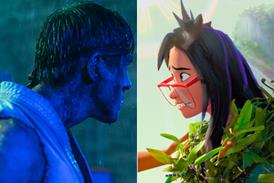
“There’s a real opportunity to bring a bit of swagger back to British film,” he continues. “Part of that is about making films that might have the potential to turn into franchises or might have characters who could come back. But it’s also about looking at genres that we haven’t done for a while, be that a witty ensemble throwback British action piece like The Italian Job.
“It could be a British take on a survival thriller,” he enthuses. “And I would love to find a new young adult film, something kind of edgy and zeitgeisty, like a British Superbad or something warmer, like a Heartstopper or the film equivalent of a Sex Education.
“We’re also looking for a puzzle movie,” he continues. “There’s a fantastic Spanish film called The Platform that did incredibly well for us. I think audiences love engaging with complex narratives that require rewatching sometimes to fully unpack them.”
Madden says conversations are always had with filmmakers about the best launch for their film. This could include a festival premiere or a partnership with another studio for a big release such as the animated Charlie Vs The Chocolate Factory and Greta Gerwig’s Narnia: The Magician’s Nephew via Sony Pictures and even the possible reporting of box-office figures. But fundamentally there is no planned change to Netflix’s theatrical release policy.
“Look, we’re a streaming-first organisation,” he says, with no discernible trace of weariness; after all, this is his first big interview in the role. “That’s our north star, and we’re super clear about that. And our filmmakers know that. That said, we’re in constant conversation with exhibitors. As a company overall, we’re doing wide theatrical releases for Narnia and Charlie Vs The Chocolate Factory, and in terms of awards-qualifying limited runs, we do that quite a lot.”
“Unbelievably resilient”
From his streaming-first vantage point, Madden is clear-eyed about the state of the UK indie film sector.
“Creatively, it’s never been healthier and more exciting. There are some quite significant challenges the industry is trying to overcome. Access to finance and access to distribution is arguably harder than it’s ever been. That said, great bold voices and great filmmaking continue to emerge. In a broader sense, not just in a Netflix sense.
“The British film industry is unbelievably resilient,” he continues. “I can’t remember a time in the almost 30 years that I’ve been doing this when there hasn’t been some sense of trial and tribulation. There are interventions that have happened or will continue to happen that help maintain the health of the industry, and I feel very optimistic and hopeful.”
It is easy for him to be so upbeat. Madden is now in a position where he has the budget for one film that far exceeds the annual pot he had to spend at Film4. But when talking about the golden-ticket project for which he is ultimately looking – “We want to wave something in the air and go, ‘Wow, haven’t read anything like that’” – he knows Netflix is in the same game as everyone else.
Ollie Madden is among the speaker lineup for this year’s Screen Summit, ‘Financing the future of UK film’, taking place at the BFI Southbank in London on September 29. Buy tickets here.






No comments yet