













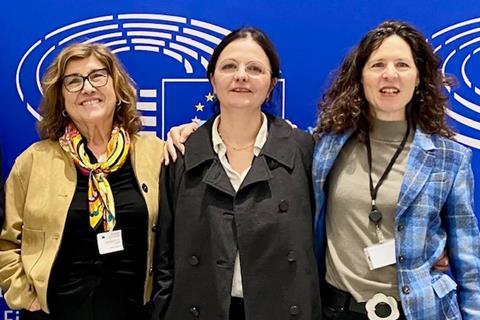
EXCLUSIVE: Producer organisations from France, Germany and Spain have started co-ordinating their activities as lobbying steps up within Europe over film funding, IP rights, investment obligations and AI legislation.
France’s Eurocinema, Germany’s PROG Producers of Germany and Spain’s PATE – which represent independent producers in three of Europe’s largest production territories – have begun working together on issues such as the proposed AgoraEU replacement for Creative Europe and the revision of the Audiovisual Media Services directive (AVMS).
The trio said they are now sharing information and best practices, and establishing common positions, “on a daily basis.”
They say that co-operation has allowed them to be flexible and quicker in decision making.
The trio described themselves as “an addition” to pan-European producer groups such as CEPI, and the European Producers’ Club (EPC), and stressed the continued importance of such organisations in representing the wide spectrum of producer interests from across the member states.
“The reason we are working together is that we each have strong production markets and we have strong cultural policies in place,” said Juliette Prissard, general delegate of Eurocinema, which represents French film and television producer organisations in EU and international policy-making. “What links us is independence - we think that independent producers must be independent of broadcasters, and we are also advocating for producers to keep the rights to films and audiovisual works they produce.”
“On a daily basis, we are trying to exchange information and have a common position in a flexible way, because we’re on the same page about many subjects,” she added.
Fabia Buenaventura, the general director of PATE, said: “We have decided to try this system that, for us, is very flexible and very powerful. We share many of the same problems and can get straight to the point.”
She added the co-operation was also helpful when lobbying Spanish officials in charge of audiovisual policy. “The ministry is always asking for examples of benchmarking with other European countries. For me, this is a practical and useful way to show what our colleagues in France or Germany are doing.”
Julia Maier-Hauff, managing director of PROG, which represents 150 independent German producers, said: “Sharing information with Juliette and Fabia and the issues they have in their countries is helpful for the national debate in Germany and when we are in contact with the ministries here. We are also a good addition to the European associations, and can support a CEPI or an EPC opinion at the European Council level. I think our strength comes from the fact that we come from the big production countries.”
Lobbying challenges
The tie-up between the three groups comes as film producers are competing for political attention against powerful broadcaster and tech lobbying groups as audiovisual and AI legislation is framed in Europe.
While the European Commission has proposed a bigger budget for AgoraEU - €8.6bn - than Creative Europe, its funding scope is much wider, including news media and video games, and it is unclear exactly how much financial support will be allocated to film and TV.
A key concern is that the proposed AgoraEU’s Media+ funding programme would no longer solely provide support for independent producers, but could also direct funding to subsidiaries of broadcasters and platforms.
The three groups are also advocating for continued financial obligations for VOD platforms in European member states ahead of a possible reform of the AVMS directive, and for cultural policies that support the diversity of European filmmaking and producer independence.
The co-operation between the three groups comes despite very different challenges facing producers in each country. France’s government, for example, has long championed a diverse local independent production sector, while Spain has followed a different path in prioritising foreign investment and international film productions.





No comments yet