
















Flanders’ film sector expressed shock and dismay over the political decision last week to scrap regional funding body Screen Flanders.
Staff and administration of the Brussels-based agency discovered it will be discontinued as of January 1, 2027, during an announcement by the Flemish government about wider budget cuts.
Karla Puttemans, CEO of Flanders Audiovisual Fund (VAF), was among those who expressed alarm over the loss of Screen Flanders.
“Given its crucial role in sustaining a strong and economically viable audiovisual sector in Flanders, we deeply regret this decision,” said Puttemans. “Screen Flanders has been a key driver in attracting international coproductions, leveraging the Belgian Tax Shelter and generating significant economic impact.”
VAF co-managed the Screen Flanders fund and Puttemans warned of “painful consequences” for the sector.
“The abolition of Screen Flanders removes a crucial economic lever for the Flemish audiovisual sector, one whose impact extends far beyond the mere loss of a vital funding source for Flemish and international audiovisual productions and co-productions. It also affects the leveraging of the tax shelter, the international visibility and prestige of our industry and region, and the facilities and post-production companies based in Flanders.”
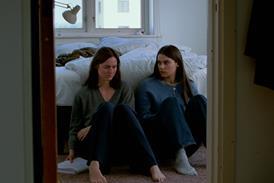
Since its launch in 2012, Screen Flanders has backed several high-profile films shooting in the region, among them features by Adil El Arbi and Bilall Fallah, Sylvain Chomet, Lukas Dhont, Felix van Groeningen and Leos Carax. Recent projects to receive support include Dhont’s Coward, which has been submitted as Belgium’s international feature Oscar entry, and Michael R. Roskam’s Toronto world premiere Le Faux Soir.
Belgian producers were able to apply for up to €400,000 as a refundable advance to cover their production expenses, while international producers could also access support by partnering with a local producer. One of the organisation’s founding aims was to attract international coproduction to the region.
According to recent research cited by the fund, every euro invested by Screen Flanders generated approximately €8 of local audiovisual expenditure in return. In 2025, Screen Flanders invested over €4m in 22 projects, generating more than €40.2m in audiovisual spend in the region.
Nonetheless, when the Flemish economic affairs minister announced plans to balance the budget, Screen Flanders was among the organisations targeted with its entire €3.5m budget removed.
The financing for all other parts of the VAF, including its film and game funds, remain untouched.
“It goes without saying that the Flemish government has had to make very tough choices affecting many in our society. We sympathise deeply with everyone impacted by this,” a VAF spokesperson said.
Producers react
Flemish producers Elisa Heene of Mirage and Peter Bouckaert of Eyeworks Film & TV Drama were among those joining Puttemans in expressing disappointment at the agency’s termination.
“I think it is going to be a very big disadvantage to be competitive for international coproduction,” said Heene, who pointed out that Flanders now risks being left behind after other Belgian regions managed to retain their funding bodies, notably Wallimage, the audiovisual fund for Wallonia, and screen.brussels.
“I understand the budgetary context in which our government is operating,” added Bouckaert. “Our European democracies are facing the greatest challenges they have encountered since the Second World War. [But] what I find lacking in the decision to abolish Screen Flanders is a parallel vision explaining how we intend to strengthen our Flemish audiovisual industry and secure a sustainable future for it.”
Meanwhile, screen.brussels managing director Noël Magis warned that the loss of Screen Flanders will be felt across the local and European film sector.
“It is a strategic error and a very short-sighted approach that has consequences for the Flemish, Brussels, Belgian and European audiovisual ecosystem,” said Magis, who pointed out that his own agency’s budget has declined in two years from €3.1m to €2.8m. “It will have an impact on screen.brussels as we will certainly have more Flemish projects asking for investment from our side.”
Leading representatives from the local film sector are expected to lobby the government in the coming weeks to overturn its decision.




No comments yet