









The influence of talent development schemes on filmmakers and festivals was a hot topic during Sarajevo Film Festival’s CineLink industry programme this month.
Filmmakers and execs debated the question of whether festival-associated labs, workshops, residencies and project development initiatives provide a way into a risk-averse industry for the next generation of filmmakers or too narrowly shape the visions of creatives and exclude others?
French director Céline Sciamma was of the latter view. “I always advise young filmmakers not to go to labs, because then you’re part of this thing, and then you will be in the festival, and so it’s really a way to un-marginalise the thought, and I think it’s very, very dangerous,” Sciamma told a Sarajevo audience, while taking part in a conversation about female authorship in European cinema.
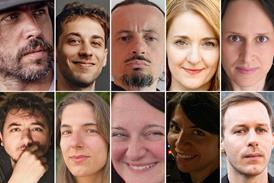
Festival executives from Berlin, Toronto, Cannes Critics’ Week and Sydney Film Festival defended the role development programmes and labs play in discovering new talent, in an on-stage conversation titled ‘Gatekeepers or gardeners? How major festivals cultivate and curate the global film ecosystem.’
“We do 20-30 festivals, markets, labs a year,” said Thomas Rosso, Cannes Critics’ Week’s programme manager and director of its Next Step workshop. “We basically take notes and we feed this gigantic database that we have, where we try to track every single first or second film project that someone has in mind in the world.”
Critics’ Week programmes first and second features, with a selection committee that is separate from those who scout potential projects.
The panel noted submissions and relationships with sales agents are key to their selection processes.
“A lab, or a market, or a talent programme can unite all of us to discuss something,” said Dorota Lech, Toronto’s lead programmer for the Discovery sidebar.
Lech, who is also festival director of Poland’s New Horizons International Film Festival, added, “It still just doesn’t matter, because it ultimately depends on how the film is at the end.”
At Toronto, she said selections “really have to do a lot with the audience. We are a public festival. Of course we have a market and we want and need our films to sell and for business to happen, but we’re tasked with programming for an audience. One of the ways I’m evaluated is if people are buying tickets to the films I select, if they’re filling cinemas, if they’re being reviewed, if they’re being discussed.”
Sydney Film Festival director Nashen Moodley disputed the suggestion festival labs and talent programmes have a “cookie-cutter effect for festivals all over”.
He said, “In my experience, first-time filmmakers have a very strong idea of what they’re going to make and are not easily swayed. Especially with the really great first films. They are pretty fully formed.”
“Maybe the risk is that we all go to the same places, more or less, so there is this kind of caravan of sales agents, festival programmers, producers, co-producers, we all meet in the same places,” admitted Rosso. “We meet at breakfast, we all talk together all the time. The rumour [about a buzzy film] is something that is building festival after festival, months after month, and at some point, maybe even without noticing, we influence each other.”
“Programmers are much more accessible”
“I think there is tension because many festivals try to look like each other sometimes, especially the big ones,” added Elad Samorzik, who is on the selection committee for the Berlinale, and previously was artistic director for the Jerusalem Film Festival. “They are structured in the same way with the main competition and the second competition, and then some sidebars. They are often very similar in their line of programming. For us in Berlin, we are trying to have our own identity, and I think we succeed in that.
“In the selection committee in Berlin, we are very different people. We are seven people, and we are completely different. We have very interesting discussions, and we often disagree with each other.”
Samorzik also noted programmers are easier to access than ever, and therefore less of a closed shop. “Nowadays, programmers have become much more accessible. You can find them really easily; you can write emails, more than like 10, 20 years ago, it was kind of obscure. I get a lot of emails from people I don’t know, and I speak to them, I watch their short films, or I refer them to the right person in my festival.”
When asked if labs and development schemes, which are mostly unpaid for participants beyond some expenses, also discriminate against people who may struggle to take time away from paid work, Rosso said: “It’s probably a much broader question about how people actually make a first feature, because very often they are not paid by anybody to write it or direct it, and it’s very difficult to finance your life while you are writing and making a first feature.
“These labs, we try to make it as cheap or as least expensive as possible. [Next Step] is a development workshop dedicated to short film directors where they can work on their first feature film project with mentors and French professionals from the industry.
“It’s one week. We make it short because it costs less for a young professional. We pay for the accommodation, but we don’t pay for the plane tickets. I know national institutes can pay for [plane] tickets, and directors they have producers sometimes, or we try to make sure that they are actually supported by someone.”
The panel agreed the pressure on festivals to be the discoverers of the next generation of talent has increased drastically. “Up until a few years ago, sales agents would pick up films much earlier than they do nowadays. Many of them just wait [now] for the big festival invitation before that happens,” said Samorzik.
“The industry is in a very shaky situation, everyone is being very cautious. You see that in LA in the big studios, and in smaller sales agents in Paris. People don’t put their money in if they are not really certain that the film will have some kind of anchor, and this anchor, usually when it comes to arthouse, is a festival premiere.”



![Benjamin Kramer Headshot Photo Credit_CAA[40][40]](https://d1nslcd7m2225b.cloudfront.net/Pictures/100x67/8/2/9/1488829_benjaminkramerheadshotphotocredit_caa4040_107707.jpeg)

No comments yet