






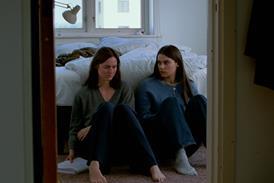

Theja Rio’s powerful debut explores the spiritual cost of assimilation in a remote Nagaland village
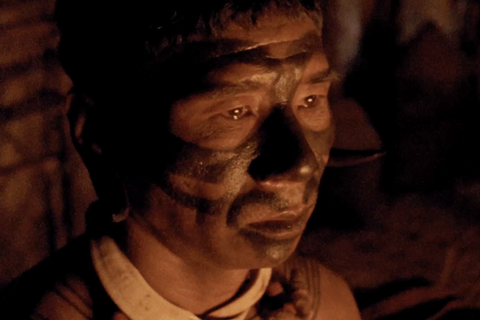
Dir: Theja Rio. India. 2026. 103mins
Intimately melancholic and achingly ruminative, Angh is an exquisite elegy to the people of Nagaland, India. It concerns Anghba (Anghlong Konyak), an aged chief trying to stave off the slow death of his traditional village at the hands of a patronising white American Baptist missionary (Douglas Henshall). Unlike most films about assimilation, no outward physical violence occurs here. The blows are instead to the spirit – especially when the chief’s mute son Amao (Sobino Rengma) becomes infatuated with the new colonising religion. The chief’s holy battle is a tragic fight against the inevitable.
A rich historical document marking the point of no return for a tribe and a culture.
Premiering in Toronto’s Platform section, Theja Rio’s feature directorial debut expands on his 2021 short of the same name. For Rio, who himself hails from Nagaland, this story is a personal one. He treats the region, located near the Indo-Myanmar border, with considerable care, hiring first-time actors from the local Konyak community and keeping the dialogue in the Konyak language. He also shoots this early 1960s-set film on 16mm, giving it a sense of posterity through its textured grain and photographic quality. Rio’s impeccable work, therefore, also functions as a rich historical document marking the point of no return for a tribe and a culture.
Anghba isn’t a vindictive man, but he is a proud one. His wife Anghya (Amah Konyak) is terminally ill and worried that once she’s gone, Anghba and Amao will be alone. Their wooden village is grey and largely deserted. Those who have converted to being the Baptist faith are banned from the village and live in a nearby compound where they are taught English, attend church and wear Western clothes. When they return in a bid to take Anghya for medical help, Anghba refuses, much to the silent chagrin of Amao.
Amao is further disillusioned by his father’s ways when Anghba prepares Anghya’s body according to the customs of their culture. Anghba must sacrifice the family dog to guide Anghya into the afterlife and then decapitate her to make a memento mori of her skull. It’s all a bit gruesome for a child to endure. So when Amao sits on the rocks beside a stream, hearing the Baptist minister’s congregation sing “Amazing Grace,” it becomes a kind of siren song drawing him towards a seemingly more empathetic way of life.
But there are well-placed signs that expose the false promise of this missionary project. Hontieh (Wangton Konyak), a former villager, returns warning of forced assimilation and rootlessness caused by being so far from his ancestors. Those protestations, however, do not deter Amao. No matter how many times Anghba attempts to shield his son from the outside world, he cannot stop the trees being cut down for a road to “modernity” or Amao visiting the Baptist village where he’s surrounded by Baptist iconography and new technology, including a radio.
Rio and his DoP Adam Pietkiewicz record these assaults with unflinching detail. They don’t just capture the tactile groundedness of the village, but compose arresting dream sequences that evoke the life that once flowed through these surroundings. They also trust their first-time actors to deliver revealing close-ups that silently convey conflicts and doubts, cultural anxieties and intimate fears. These telling emotions arrive organically in this unhurried film, whose delicate pace recalls the work of Pedro Costa.
And while Rio’s careful approach can sometimes feel too cautious in fully explicating the horrors of assimilation, his decision to remain invested in its cultural effects is equally understandable. Rio is interested in the traditions and relationships that are lost, the damage done to the land, and the severing of people from their ancestors. All deliver psychic and spiritual blows that are, as we discover in the film’s final moments, irreparable. Angh effectively allows us to mourn what can’t be seen and what will never be seen again.
Production companies: Winter Hymns Films, Undercover Squirrel
International sales: Jungle Book Studio, sales@junglebook.studio
Producers: Nancy Nisa Beso, Theja Rio, Jai Vir Rodgers, Bernardo Angeletti
Screenplay: Theja Rio, James Davis
Cinematography: Adam Pietkiewicz
Production design: Margarida Caetano Dias
Editing: Tanya Chhabria
Music: Sagar Desai
Main cast: Anghlong Konyak, Douglas Henshall, Sobino Rengma, Genpai Konyak, Amah Konyak, Wangton Konyak