





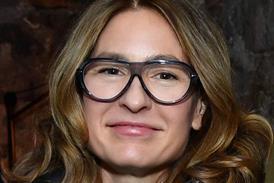
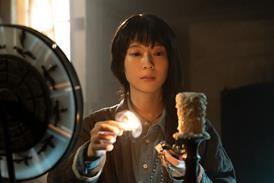
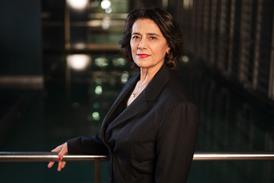

Ukraine’s official Oscar submission continues its healthy festival run with berths in London’s Women And The World and DOC NYC
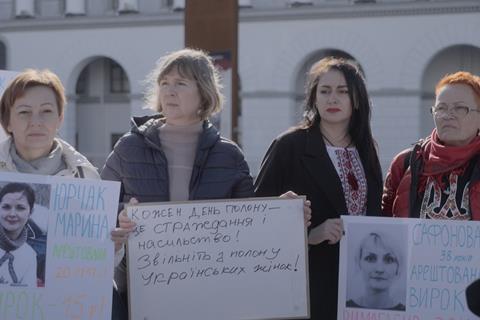
Dirs: Alisa Kovalenko, Marysia Nikitiuk. Ukraine, Poland. 2026. 85mins
War is destructive enough, but for women caught up in conflict the personal impact can be physically and psychologically devastating – even for those far from the frontline. Traces sees Ukrainian filmmaker Alisa Kovalenko team up with co-director Marysia Nikitiuk to document the experiences of several of her fellow countrywomen, all of whom suffered conflict-related sexual violence (CRSV) at the hands of invading Russian soldiers from the start of the hostilities in 2014 to the present day. Deeply moving and galvanising, the film plays as both a poignant witness statement and a rallying call to arms.
Plays as both a witness statement and a call to arms
Kovalenko, who has made several documentaries about Ukraine including My Dear Theo (2025) and We Will Not Fade Away (2023) is credited with being the first Ukrainian woman to speak publicly about her own experiences of CRSV. That binding of filmmaker and subject gives Traces a potent intimacy, which has helped it on a healthy festival run following its premiere in Berlin, where it won the Panorama audience award; it will next play London’s Women And The World festival and then DOC NYC. While films about the Ukrainian conflict are now ubiquitous, Traces’ specific focus helps it stand apart – as does the fact that it has been selected as Ukraine’s official Oscar submission.
An opening sequence introduces us to Iryna Dovhan, founder of SEMA Ukraine; an organisation aimed at supporting global victims of CRSV, and advocating for justice. In a measured voiceover, Iryna describes her own brutal rape and sustained abuse at the hands of Russian soldiers in Donbas, August 2014; as she talks, Kovalenko’s camera (she serves as her own cinematographer alongside Oleksandr Roschchyn) remains trained on Iryna’s beloved garden, the peaceful environs contrasting sharply with the horrors she is describing. The effect is powerful.
Iryna, however, is no victim – she is determined to fight back, wielding optimism and hope like weapons. “It is essential not to let them make me unhappy,” she says of her attackers, a mantra that she shares with those she meets through SEMA; women like Tetiana, Halyna, Olha and Mefodiivna, most middle-aged or older, who all have their own horrifying stories of CRSV. Their testimonies are also revealed in voiceover, rather than direct to camera; a creative choice that gives the speakers a respectful space and also separates the brave, strong individuals they are from the abuses they suffered.
Symbolic imagery is well used throughout: a burning tree, a wall pockmarked with shrapnel holes, a sea of sunflowers. Sometimes the women are shown impassively looking at the camera or within ruined homes and schools, the physical destruction mirroring the cracks in their own mental health. Recording and sharing their testimonies is a crucial part of SEMA’s work, but the fact that it effectively means each woman must continually relive her own trauma is not lost on either them, nor the filmmakers.
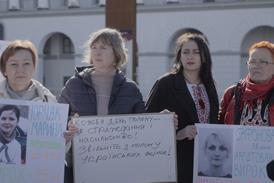
Kovalenko and Nikitiuk give the women plenty of room to share their experiences in their own words, but also devote a large portion of the film to the steps they are taking to move forward, to shift the dial. SEMA members work tirelessly to turn their trauma into action, supporting each other – including those, like the distressed Nina, whose shame is stopping them seeking help – and raising global awareness of CRSV.
Craft is subtle throughout, the filmmakers taking great care never to pull focus from their subjects. Handheld, fly-on-the-wall camerawork gives a sense of urgency when the women are on the move, organising protests or arranging symposiums; elsewhere, more static, lingering visuals make the testimonials feel raw and timeless. Wojciech Frycz’s barely-there score, with its gentle strings and female voices, works in harmony with evocative sound design, blending low rumbles and staccato artillery with natural sounds of wind in the trees, rain falling on a rooftop. As keen gardener Iryna will tell you, life goes on – even in a warzone – and a growing chorus of voices can be heard above the clamour of conflict.
Production companies: 2Brave Productions, Message Film
International sales: Stranger Films hello@strangerfilmssales.com
Producers: Olha Bregman, Natalia Libet
Cinematography: Alisa Kovalenko, Oleksandr Roschchyn
Editing: Milenia Fiedler, Alisa Kovalenko, Nikon Romanchenko
Music: Wojciech Frycz