












There is a chance that India will have three feature films at the Oscars this year.
By virtue of winning the Platform Prize at Toronto, Theja Rao’s Angh is able to bypass the national selection process and directly enter the best international feature film race alongside official submission Gondhal. Box office smash Ramayana is also being submitted by its financier and distributor Prime Focus in categories that include best picture.
While all three hopefuls hail from outside the Hindi-language mainstream, it is Gondhal and its platform at International Film Festival of India (IFFI) in Goa that now is now adding to the growing interest in Marathi cinema.
While also hailing from Mumbai, the home of Hindi Bollywood, Marathi cinema has evolved in parallel and carved out a distinct identity through its rich content-driven storytelling, grounded realism and literary roots – not money, stars, musical set-pieces or strass.
“Marathi is sparkling right now”, says IFFI festival director and Lagaan director Ashutosh Gowariker, who hails from a Marathi-speaking family. “The other regional cinema that is sparkling now is Malayalam film from Kerala, but that is not a new phenomenon.”
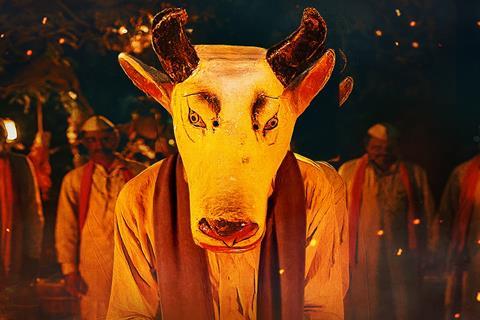
Gondhal had its world premiere at the 2025 edition of IFFI in the Indian Panorama section and earned Santosh Davakhar the Silver Peacock award for best director.
Centred around a newlywed couple in rural Maharashtra, the film plays out over a night that includes a traditional musical ritual, or ‘Gondhal’. But the woman feels trapped by family oppression and plots a murder and an escape with her forbidden lover.
“For the longest time, Marathi cinema was relegated [below other regions],” Gowariker recalls. “The comedy genre was on top. If you did not make a comedy, there was no chance that your film was going to work. Today we have Marathi filmmakers who are almost auteurs with their first film. They are writing their own scripts, they are coming up with their own stories and crafting them well on screen.”
Gondhal notably features a bravura 25-minute single-shot opening scene that Screen International’s review described as a “masterclass in efficiency [laying] the groundwork for the main players and how they relate to each other, pitched so precisely it’s obvious there’s a powder keg in the town just waiting for a spark to ignite it.”
Davakhar says he was inspired by award-winning international films including Roma and The Revenant and that the one-shot, “allows you to stay with the emotion of the character”.
Marathi showcase
This year the festival is expanding on Gondhal’s success and has set up a seven-film Marathi showcase within Indian Panorama.
The Indian Panorama Mainstream section includes Deool Band 2 (aka Temple Closed 2), written and directed by Pravin Vitthal Tarde. It depicts rural distress through the story of a woman who loses her farmer husband. Family and gender identity are on the agenda in Samir Tewari’s Baapya (aka The Man), which follows a transgender protagonist returning to their hometown.
Aadi Anant, directed by Mahesh Limaye, explores the emotional bond between an aspiring actor and his grandfather, while also presenting the challenges of caregiving. The cast includes Ashok Saraf, Sankarshan Karhade, Sakhi Gokhale and Yogesh Shirsat.
Tighee is a family drama reflecting on relationships, sacrifice and the pain of unspoken emotions. Directed by Jeejivisha Kale, it is in contention for IFFI’s debut director prize.
Another feature, Tu Aahes Na (aka You Are There, Right?) plays as a Gala Premiere, outside the Indian Panorama section, and touches on loneliness and unexpected human connections. It is directed by National Award-winning filmmaker Deepak Gawade.
The Panorama’s non-feature section showcases three other Marathi films: Amyth Patkar’s Shiksha (aka Punishment), while examines guilt and its consequences through two seemingly unrelated thefts; Nipun Dharmadhikari’s Chandoba (aka The Moon) captures a teenager’s struggle with vitiligo. Davakhar also returns with Abhal-Vriksh (aka Sky Tree) which portrays a villager’s hopes amid a drought.
Marathi crime thriller Devkhel appears in IFFI’s Best Web Series category. Directed by Chandrakanth Lata Gaikwad, the show is set in a coastal village where a series of ritual murders unfold and where superstition conceal a chilling truth.
And in the festival’s classics section, there is a restored version of 1965 Marathi film Sadhi Manase and an open-air screening of Natsamrat, starring iconic actor Nana Patekar.




No comments yet