






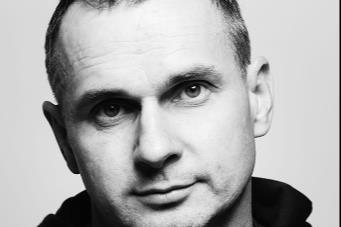
EXCLUSIVE: Ukrainian director Oleh Sentsov will head the international competition jury of the Molodist International Film Festival (MIFF), to be held in the Ukrainian capital of Kyiv from October 24 to November 1.
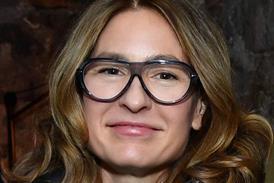
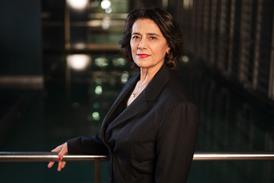
The jury will also include Matthijs Wouter Knol, executive director and CEO of the European Film Academy, Iranian filmmaker Mahnāz Mohammadī, whose latest film Roya screened at the Berlinale’s Panorama section last February, Ukrainian opera and theatre director Eugene Lavrenchuk, and Latvian film historian and critic Anita Uzulniece.
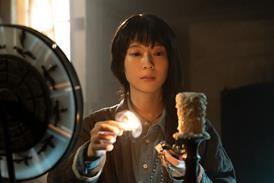
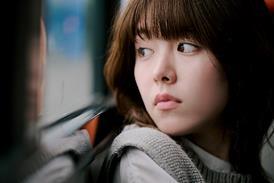
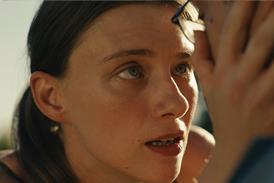
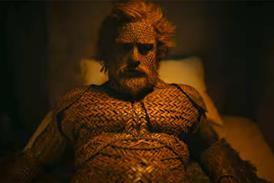
The international competition line up includes Kai Stänicke’s Trial Of Hein, Rafael Manuel’s Filipinana, Marie-Clementine Dusabejambo’s Ben`Imana, Mykyta Gibalenko’s Camouflage, and Pierre le Gall’s Flesh & Fuel.
Meanwhile, MIFF’s national competition programme includes Andriy Kokura’s High Frequency, and Maria Ponomarova’s Patronimic.
The jury for this section is Ukrainian filmmaker Vyacheslav Turyanytsya, whose short film Thoughts On Peace In An Air Raid premiered in Rotterdam last year, Radek Lipka, director of Luxembourg’s CinEast Film Festival, and sales agent Xavier Henry-Rashid of Film Republic.
Audience safety
The festival will take place amid Russia’s ongoing invasion of Ukraine.
“Apart from the challenges of power blackouts, we have to take care of our audiences’ safety and follow the new regulations on public events,” explained general director Andriy Khalpakhchi. “There are two levels of alarm: With the yellow alarm, we can ask our viewers whether we should continue the screening or if they want to leave, but the red alarm means that we must really make a break in the screening and this can disrupt our schedule.”
He described cinema “as a kind of psychological therapy” for people to attend a cultural event away from their current lives, although he admitted some were afraid to visit a cinema.
“It’s somehow our duty to help people to escape this stress,” Khalpakhchi added. He noted the screening of Federico Fellini’s La Dolce Vita on October 7 at Kyiv’s Zhovten Cinema as part of its Italian Film Classics series had been attended by around 300 people.
Programmer Bohdan Zhuk said the festival had received “overwhelming support” from filmmakers. “They have encouraged us to keep going with the festival despite the circumstances and all the attacks.
“The number of films screening this year will be reduced from 2025’s total of 158 to around 110-155,” Zhuk continued “The four competitions are still the core of the festival, but we want to continue having a selection like in past years representing international cinema.”
The festival will also host an industry strand of masterclasses, panels, and workshops targeting the needs and interests of emerging filmmakers by addressing such issues as copyright and strategies for selling films internationally.
In addition, there will be presentations of plans for Ukraine to establish its own film promotion institution, Ukrainian Films, and of the 1,000 Springs cultural initiative support programme launched by Tetiana Berezhna, Ukraine’s deputy prime minister and minister of culture earlier this year. It will have a $77m budget to support the creation of Ukrainian cultural products.
Wouter Knol, together with local EFA members, will attend the unveiling of a plaque at the Dovzhenko Film Studios confirming the facility as one of the ‘Treasures of European Film Culture’.
MIFF is supported by the Ministry of Culture of Ukraine, the Ukrainian State Film Agency, and the State Agency of Ukraine for Arts and Art Education, with the Italian, Spanish, French and Belgian Embassies as well as the Goethe Institut and Italian Institute of Culture in Ukraine.
Founded in 1970 to screen works by students of Kyiv’s State Institute of Theatre Arts, the Molodist festival - the name is Ukrainian for “youth” - has helping aspiring filmmakers to find their way onto the world cinema map.
International filmmakers whose debuts have been shown at past editions of the festival have included Francois Ozon, Corneliu Porumbiou, Paprika Steen, Ildikó Enyedi, Lukas Moodysson, Jaume Claret Muxart, Charlotte Devillers, and Bruno Dumont.



No comments yet