









Anna Foglietta’s accomplished debut premieres in Venice Horizons
Dir. Anna Foglietta. Italy. 2026. 107mins
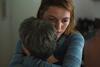
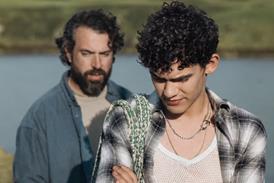
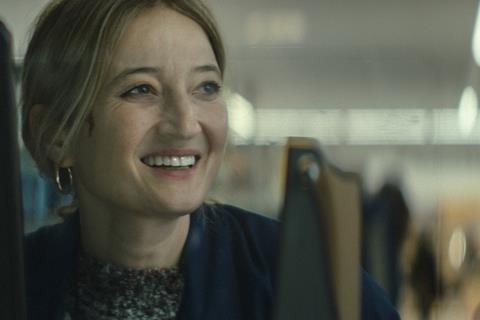
There’s a name for the hollowness, disconnect and sudden lack of purpose experienced by parents when their kids leave for college. But the somewhat dismissive term ’empty nest syndrome’ doesn’t come close to capturing the existential upheaval that confronts Erika (Alba Rohrwacher, also heading Venice competition title A Good Little Soldier) and Mauro (Guido Caprino) when their daughter departs. As the title of Anna Foglietta’s accomplished and considered feature debut suggests, this is not a particularly unusual experience for parents of adult children. But the sensitive, detail-orientated approach, together with Foglietta’s richly textured filmmaking and intriguing choices, make for a distinctive and strikingly cinematic exploration of a marriage edging towards crisis.
Superb performances bring emotional complexity to a seemingly simple dynamic
Following its premiere in Venice’s Horizons – one wonders if a picture this confident and daring in its choices might have warranted a slot in the main competition – A Common Story will screen in Toronto and then London, where it competes in the first feature competition. The picture’s relatable themes and emotional heft could make it a title of interest for arthouse distributors, and it certainly announces Foglietta as a considerable talent.
There’s much to admire in this confident first feature, but the element which carries the most emotional weight is Foglietta’s work with her actors; the superb performances bring such emotional complexity to a seemingly simple dynamic. Foglietta’s two decades’ worth of experience as an actor in film, television and theatre has clearly equipped her with a valuable skillset when it comes to working with her cast. Rohrwacher – three-time winner of the best actress prize at Venice, and whose name will be a draw for domestic audiences and beyond - is extraordinary, giving the kind of performance that gradually peels away the skin to reveal the raw nerve-endings beneath.
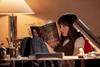
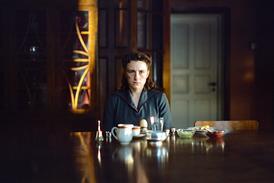
The temptation in a picture which is driven by such impressively nuanced performances – and which relies on our noticing the tiniest details and gestures – might have been to dial back other aspects of the filmmaking in order to better showcase the acting. Foglietta takes an alternative approach, one which greatly benefits the film. Cinematography from Andrea Benjamin Manenti, who uses vintage anamorphic lenses, is genuinely bold. The frame is frequently unbalanced and Foglietta rarely offers us a clear view of her characters. Instead, there tends to be an obstruction of some kind between us and the emotional truths which are gradually revealed: layers of reflections, a foregrounded piece of furniture, something to interrupt the image. There’s a kinship, in the almost impressionistic quality of the film’s photography at times, with the early work of Lynn Ramsay.
Likewise, the score, by Rodrigo D’Erasmo, which opens the film assertively with a busy seven-minute overture, on piano and fluttering strings. It creates a sense of weightlessness and anticipation, and accompanies the couple as they deliver their daughter to her college. Their response to this momentous event is very much in character: Mauro bristles protectively, wary of the unknown world into which his daughter is about to venture. And to her daughter’s obvious embarrassment, Erika scuttles into the kitchen, scouring the pans and fretting about their quality. Among other things, the film is exceptionally perceptive in the way that the maternal role and the act of caring for the well-being of loved ones can be perceived as a low status activity. Part of Erika’s gradual unmooring from the comfortable certainties of her life comes with the realisation of how little her labours are valued by others.
Music is powerfully used elsewhere in the film, notably in a terrific scene in which Mauro, buoyed up with beer and bonhomie, takes to the stage for a spot of karaoke. It all starts well enough – if not entirely in tune, he’s at least enthusiastic. But as the song goes on and Erika’s worried face stares palely from the audience, his confidence evaporates and he seems to visibly deflate and diminish as we watch. It’s almost as though the trajectory of his marriage plays out in this faltering song.
Divided into chapters that coincide with the seasons, the film explores the lives of Erika and Mauro more through silences and spaces than through the words spoken. And when the words finally come, Foglietta gives each character, shot in intimate closeup, an equal of a split screen. It’s almost as though they are gazing into a mirror; the needs of both finally starting to be seen.
Production companies: HT Film, Indigo Film, Tenderstories, Blu One Lab
International sales: True Colours sales@truecolours.it
Producers: Viola Prestieri, Valeria Golino, Nicola Giuliano, Moreno Zani, Malcom Pagani, Anna Foglietta, Paolo Sopranzetti
Screenplay: Anna Foglietta, Tania Pedroni, Matteo Ferri
Cinematography: Andrea Benjamin Manenti
Production design: Roberto De Angelis
Editing: Riccardo Giannetti
Music: Rodrigo D’Erasmo
Main cast: Alba Rohrwacher, Guido Caprino, Caterina Casini, Elio De Capitani