










The writer/director’s follow-up to ‘Grown-ups’ and ‘Fly On’ premieres in Busan competition
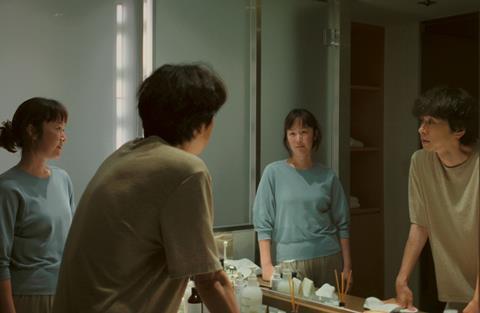
Dir: Takuya Kato. Japan/France. 2026. 82mins
Takuya Kato’s third feature is an exploration of a relationship fracturing under the weight of its silences, and plays out in a high-end hotel that’s as sterile, stark and cold as the family that checks in for a weekend getaway. This story of emotional immaturity, familial expectation and disconnection is all wrapped up in Kato’s signature geometric design and neo-brutalist futuristic tone.
Theatrical staging and creative use of space
Theatre director turned filmmaker Kato has made a name for himself with his meticulous aesthetic, and here trades in the same hushed tones, languid pace and visual precision as he started perfecting in his first two films, Grown-ups (2022) and Fly On (2023). As with those films, The Day After Sunday puts stunted characters at the heart of the narrative. Kato’s theatrical staging and creative – and indeed cinematic – use of space should see the film play further festivals following its Busan competition premiere. The intimacy of the filmmaking coupled with its relatively sedate pace could help it travel after it opens at home in Japan in November.
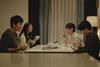
After a brief discussion about what they may or may not do when they receive the results of a series of prenatal screening tests, arriving the following Monday, ambivalently pregnant Mai (Fly On star Haru Kuroki) and her husband Koichi (Atsushi Hashimoto) book a staycation at a hotel outside Tokyo that wouldn’t be out of place in a David Cronenberg film. They meet up with Mai’s aunt Yumi (Yoh Yoshida, also seen in fellow competition title Satoko Always) and her husband Tetsuya (Kanji Furutachi) for an uncomfortable weekend where no one truly talks to each other – and when they do, their conversations perpetually run circles around the most critical subjects.
Even before they left town, Mai wanted to talk about her anxieties regarding the baby – which may not be Koichi’s – and he’s eager to avoid any serious discourse about their life, marriage or impending parenthood. It’s a dynamic that evidently defines the couple’s relationship as it’s the proverbial straw that compels Mai to throw her hands up in frustration, finally speak her mind and considering ending the marriage as well as the pregnancy.
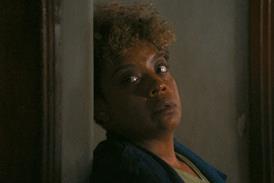
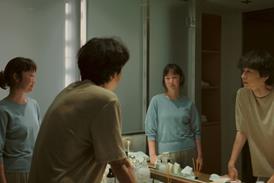
Not a lot happens, narratively speaking, in The Day After Sunday; it’s less A to Z storytelling and more of a character study that revels in the minutiae of how easily we opt out of communicating in favour of comfortable ignorance. The film’s striking compositions by cinematographer Toshihiko Kizu transform the ultra-modern, hyper-luxury hotel into a character unto itself, one that highlights the gaping emotional and philosophical chasms between the central couple, the rest of the family and, particularly, the cutting and unforgiving Yumi, whose barely concealed animosity towards Mai is one of the film’s mysteries.
Another is the reason Koichi is so sensitive (at least initially) about fatherhood. These queries, and the perpetually looming quandary of the struggle of women to retain agency over their lives and bodies, have an almost physical presence within Kato’s frames – all still open spaces and icy detachment that are nonetheless heavy with unspoken rage and frustration.
But The Day After Sunday lingers in the mind precisely because Kato, who also wrote the script, asks questions and floats ideas without ever offering answers – the closing frames are exquisitely ambiguous – which is the source of much of its low-key impact. As a woman struggling with whether or not she wants to live up to the obligations expected of her, Kuroki carries the film with a carefully calibrated performance that makes it clear – to audiences at least – that Mai is approaching a breaking point, even if Koichi and Yumi never see it. Or simply choose not to.
Production companies: Amuse Creative Studio, Comme des Cinémas Japon
International sales: Comme des Cinémas jimbo-y@commedescinemas-japon.com
Producers: Hiroyuki Araki, Masahiro Handa, Yasushi Horie, Katsuyuki Fuji, Tomoaki Iwao
Cinematography: Toshihiko Kizu
Production design: Shinsuke Kojima
Editing: Sylvia Lager
Music: Frédéric D Oberland, Romain Barbot, Paul Régimbeau (FOUDRE!)
Main cast: Haru Kuroki, Atsushi Hashimoto, Kanji Furutachi, Yoh Yoshida