



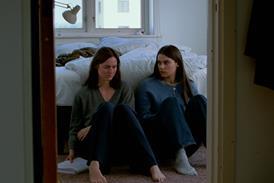

Edoardo De Angelis’s darkly comic feature premieres in Venice competition

Dir: Edoardo De Angelis. Italy. 2026. 94mins
An Italian Christmas dinner with the mother from hell becomes an intense, grotesque, tragicomic chamber drama in Neapolitan director Edoardo De Angelis’ tasty, exportable sixth feature which is hilarious and terrifying in equal measure. It’s fuelled by Vanessa Scalera’s braruva performance as the matriarch you will thank your lucky stars is not yours.
A bracing corrective to cliches about southern Italy as a land of pizza, pasta and amore
The screenplay was loosely adapted from a 2024 autobiographical book by Italian writer Antonio Franchini about his own difficult rapport with his mother, one that covers an entire lifetime rather than a single evening. While it occasionally feels a little theatrical, both in certain passages of dialogue and in some forced transitions from one scene or mood to the next, the film’s restricted timecode and the decision to film everything within the walls of a family apartment bring dramatic focus.
The result is a film that mixes shades of Tennessee Williams, Cassavetes and Mike Leigh with the late, great dramatist Eduardo De Filippo’s affectionately ironic view of his fellow Neapolitans. Audiences both at home and abroad will enjoy Scalera’s hypnotic, visceral performance as the toxic matriarch. Italians will particularly appreciate the film’s arch digs at the country’s north-south divide, but it’s easy to see this landing some international arthouse berths too – it’s a bracing corrective to cliches about southern Italy as a land of pizza, pasta and amore, and could work well in an alternative festive season slot
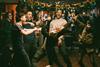
Aficionados of TV series The Bear will no doubt be reminded of the long, standalone episode ‘The Fishes’ from Season 2, in which Jamie Lee Curtis plays the out-of-control matriarch of an Italo-American family at a Christmas gathering. Here, too, food is a conflict zone, a source of recriminations and emotional blackmail. When the camera hovers over the table at the end of dinner, what might have been a cornucopia of delicious Neapolitan specialities like spaghetti alle vongole or aubergine parmigiana looks more like a battlefield.
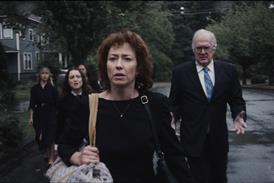
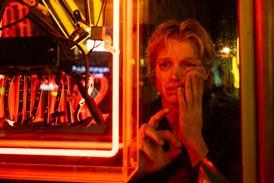
Experienced Italian DoP Vladan Radovic’s verite-style handheld camera is a fascinated but slightly appalled observer, at its most transfixed when it lingers on the face of Angela (Scalera), which can slip from cruel glee to wounded pride to contempt and back in an instant. She’s been invited to spend Christmas in Milan by her son Antonio )(Lino Musella), a literary editor who fled Naples years earlier. Naturally, Angela turned up with a live capon at the warm, cluttered, book-lined Milanese apartment Antonio shares with his Milanese wife Benedetta (Elena Radonicich) and two teenage kids – because capon is an essential component of the traditional Italian Christmas Eve dinner, and it’s always better to slaughter your own.
Scrupulously fair, Angela has insults for everyone on this festive occasion: Lino, who is spineless and should never have been born; Benedetta, who Angela calls to her face “a pretty table decoration”; her ballet-dancing, gender-fluid grandson Andrea (Samuele Mazza), who becomes the target of her casual homophobia; Angela’s daughter (and Antonio’s sister) Paola, who, because she has had more than one partner, is for her mother ‘la zoccola’, the hooker.
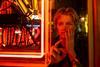
That doesn’t sound like comic material, and it one way it really isn’t. Angela is an angel of destruction, a bitter woman who feels an irrestible urge to bring everything down around her. But even those with a poor grasp of Neapolitan dialect will catch the energy, the cultural spark and the creative verve of Angela’s foul-mouthed vitriol, which is invariably delivered with a cigarette hanging from her hastily rouged lips. When she provokes her loved ones to snap back at her with even crueller jibes, her lips curl up into a a little smile of victory.
The arrival of a priest, come to bless the house, and a famous writer who Antonio recently landed for his publishing company, function as tension breakers. Angela flirts shamelessly with this elegant, bestselling writer of what he calls ‘novelistic essays’,, but soon enough turns on him too. Yet as the capon struts around the apartment, evading all attempts at capture, there’s a sense that Angela, a savage demon from what she herself defines as a world of lava and fire, has brought life as well as death with her.
It’s a paradox caught in the evocative score by Neapolitan musician La Nina, which delves into the ancient roots of the southern Mediterranean folk tradition, as well as the region’s Baroque classical heritage, with its semi-tone choral melodies, percussive tarantella rhythms and mournful viola da gamba chords.
Production companies: Picomedia, Rai Cinema
International sales: Rai Cinema fulvio.firrito@raicinema.it
Producers: Roberto Sessa, Chiara Grassi
Screenplay: Francesco Piccolo, Ilaria Macchia, Edoardo De Angelis, based on the novel by Antonio Franchini
Cinematography: Vladan Radovic
Production design: Carmine Guarino
Editing: Lorenzo Peluso
Music: La Nina
Main cast: Vanessa Scalera, Lino Musella, Elena Radonicich, Ivana Lotito, Tommaso Ragno, Nicole Malaj, Samuele Mazza, Tony Laudadio. Giovanni Franzoni