












The debut feature from Robert Mentov, Dwight Jantzi and Bryan Dickie explores a Myanmar People’s Defence Force training camp
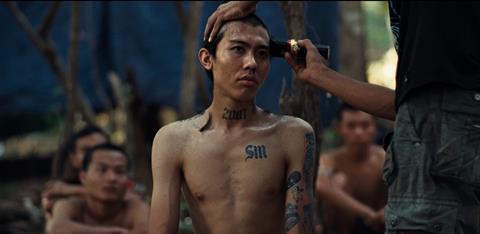
Dirs: Robert Mentov, Dwight Jantzi, Bryan Dickie. Canada. 2026. 95mins
Two girls in their late teens – firm friends, though they’ve known each other for less than a month – sing along to a Taylor Swift song during a work break. It’s a scene that could play out pretty much anywhere in the world. But the fact that they are trainee cadets, recently arrived in a Myanmar’s People’s Defence Force training camp in the Burmese jungle, lends poignancy and nuance to this tough, tender coming of age documentary – especially when one of the two suddenly breaks down in tears. In a setting like this, even the most benign of lyrics can acquire depth and existential urgency.
Sits on the cusp between detached observation and sympathetic study
Premiering as IDFA’s opening film, White Tiger Column is the directorial debut of Bryan Dickie, who has spent time in Myanmar as a photojournalist, and Dwight Jantzi and Robert Mentov, founding members of Toronto-based Nocte Collective, producers of documentaries for NGOs. In a crowded documentary feature marketplace, this emotional work should stand out because of its behind-the-scenes focus on a largely forgotten war. It’s also fascinating to discover that these gun-toting kids are exactly like young people anywhere.
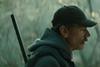
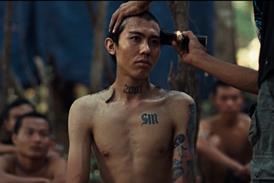
A brief opening caption sets the scene. When Myanmar’s army overthrew a democratically elected government in February 2021, ’the people’, we read, ’fled into the jungle to organise a resistance’. That’s a simplification – but it’s an effective one in a film which never sets out to chart the complexity of an insurrection sustained by myriad armed groups. Instead, White Tiger Column simply hangs out with 30 of so wannabe rebel soldiers over the 45 days of their training camp.
The power of the documentary lies in the filmmakers’ decision to dwell exclusively on the fragile zone of transition represented by this rural boot camp. We learn only scraps of information about the lives the recruits have left behind – some of it conveyed as we eavesdrop on the one weekly phone call home that cadets are allowed. When they leave for active service at the end, the camera stays behind to dwell on the new intake, whose nervous shuffling as uniforms are distributed takes on added resonance in the light of all we have seen. You can do a lot of growing up in a month and a half.
The camera – operated by Mentov with additional footage by co-director Jantzi – sits on the cusp between detached observation and sympathetic study. It charts some familiar boot camp routines: trainees run, jump or crawl around an obstacle course and do endless press-ups and sit-ups, berated by their commanding officers if they flag or dare to rest. But another commander, dressed in civvies, seemss more like the camp guru, or maybe therapist: in an amicable meeting with the recruits, he encourages these young people to articulate their reasons for being here and confirm their consent.
There’s a strange whiff of the summer camp here that comes across even more strongly as we watch young soldiers climbing palm trees for coconuts, washing in a nearby river, playing with the camp’s resident dogs or engaging in a guitar-led singalong around a campfire, while passing around what looks like a joint. There are even group activity sessions – the only difference from the classic summer camp offering being that these ones are liable to involve cooking up explosives in a wok or assembling homemade drones.
Of the few dozen trainees only four appear to be women, but their presence is central to the film’s portrait of a group of committed fighters for justice who are also typical, globalised Gen Z kids trying to forge a new path in a hidebound place. When one describes how she had to slip out of her family house without saying goodbye in order to enrol, it hints at parental and societal expectations regarding gender roles. (It’s ironic that the only female cadet we see ‘in action’ appears to be assigned to the infirmary rather than active combat). Meanwhile, male recruits with names like ’Cookie’ allow themselves tears in bonding sessions.
The sensation that we’re in a vulnerable, temporary but also charmed holding zone is enhanced by jungle sounds – wind, water, birdsong, creaking branches. They mingle with Dylann Miller’s sparingly-used ethereal soundtrack, kept mostly low in the mix, just enough for its low held chords and vocal overlays to underline a continual tension about what lies beyond, out on the front line.
Production companies: Lightwood Green
International sales: Lightwood Green info@lightwoodgreen.com
Producer: Tom Edgerton
Cinematography: Robert Mentov
Editing: Alyse Ardell Spiegel, Karl Kai
Music: Dylann Miller