


















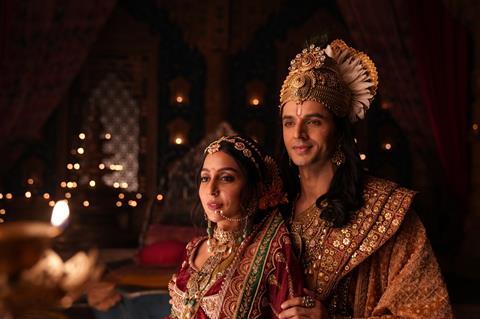
The India Panorama section of International Film Festival India (IFFI) is giving second wind to Krishnavataram Part 1: The Heart (aka Hridayam), a faith-based fantasy that released in mainstream cinemas earlier this year.
The film examines the fate of Krishna through the eyes of Satyabhama. She sees both a divine figure and a man who experiences love and separation.
“The emotional core of Krishnavataram is universal,” says Hardik Gajjar, the VFX ace who has expanded roles and entrepreneurial initiatives en route to readying a slate of productions, of which this film is the first.
“Even if someone is unfamiliar with Indian mythology, history or the story of Krishna, they can connect with the emotional journey of the characters and through the large-scale cinematic approach we have taken. To make the film accessible we even had AI visual dub in other Indian languages, and my producers are also exploring the same in English.
“Direction was always my ultimate goal. However, I strongly believe that to create experiential cinema, you need to understand the technical aspects of filmmaking. In India, there was an opportunity to develop a stronger understanding of VFX and its application in large-scale cinematic storytelling. So, I deliberately built my journey through editing, VFX and other technical aspects of filmmaking,” he says.
“Every company I started has a different purpose within the filmmaking ecosystem – lighting, VFX and production services. Having them within a structured ecosystem helps us manage budgets, organise resources and maintain better control over the filmmaking process.”
The film had gross revenues of $5m (INR463m) since opening in June. The lack of big-name stars may have hindered it from earning more, but Gajjar says his choice of a cast of newcomers was a deliberate decision that brought better creative control, faster production and lower costs than a star-driven title.
“Audiences are increasingly interested in experiential cinema, and filmmakers and production houses are becoming more confident about investing in large-scale visual storytelling. Distributors have also started understanding the budgeting requirements and the commercial potential of such films,” says the filmmaker.
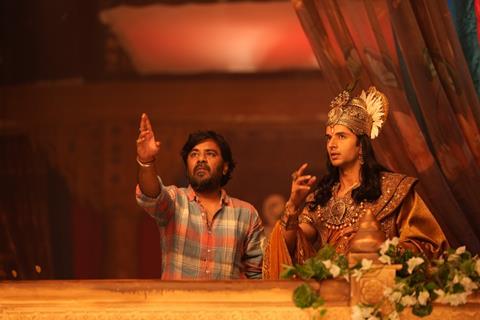
He will take a similar approach with the other titles unveiled in the last month. Abhimanyu is a revenge drama rooted in The Mahabharata, exploring sacrifice, injustice and the story of a young boy who fights for his family’s pride. Tana Riri is a culturally rooted musical story inspired by the traditions of Indian classical music, the ragas and the historical world of Tansen. The common thread is translating Indian culture into cinematic experiences for contemporary audiences.
Gajjar says he does not fear the rise of artificial intelligence in film production, but says it is not yet of a standard to deliver the big-screen experience.
“We are already seeing AI being used extensively in microdramas and short-form content across the world,” he says. “However, theatrical filmmaking demands a much higher level of visual authenticity.
“The challenge is to bridge the gap between artificial visuals and the natural atmosphere of real footage. This is not just true for India, but I think is a global phenomenon. There has been great progress and it’s exciting to see what’s in store in the years to come.”






No comments yet