







The Seville European Film Festival (SEFF) opens this week (November 6-14) with an emphasis on supporting the films it screens beyond the festival.
The festival has a relatively small budget of €2m - compared with €3.2m for Málaga, around €3.5m for Sitges and Valladolid’s Seminci, and €11.4m for San Sebastián - but it aims to make a big impact through the calibre of films it screens.
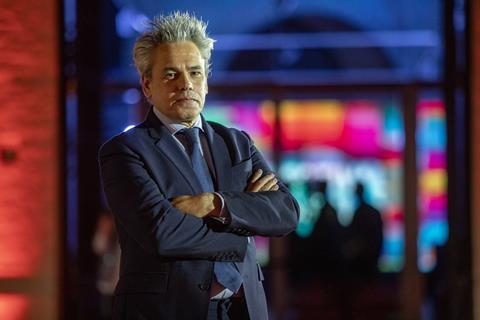
Festival director Manuel Cristóbal talks to Screen
about developing Seville’s industry activities and the increasing role the festival is playing in awards season.
This time last year, you called for more European comedies, thrillers and animation. How does this year’s programme reflect that?
Seville is Spain’s fourth-largest city by population. Everyone should find something they want to see. We programme for multiple audiences, which means offering different kinds of films.
Between the official selection and the European Film Academy section, we believe we’re presenting the best European cinema of the year. We would always like to add more international premieres.
The programme should reflect the country and city’s social fabric. We are showing films connected to Seville’s different audiences, including a documentary about Sevilla Football Club, a documentary series about local craftspeople and the Spanish premiere of the sixth season of Dallas Jenkins’s The Chosen. That screening has sold out the large auditorium at the Cartuja Centre. We should programme with fewer preconceptions.
Why did you choose the opening film, the animated feature Viva Carmen!?
European cinema is much more diverse than people often think. We’re particularly pleased to open with Sébastien Laudenbach’s film, which is set in Seville and based on Bizet’s opera.
And the Honorary Giraldillo awards?
It’s the first time the award has gone to a studio, Cartoon Movie, rather than an individual. Cartoon Saloon is admired throughout the industry and makes brilliant films.
Film festivals should reflect the full array of cinema, including animation and documentaries alongside live-action dramas. I welcome other festivals’ recent inclusion of animation in their main competitions. We screened Gints Zilbalodis’s Flow in competition in 2024, where it won four awards.
We’re also presenting honorary awards to Agnieszka Holland and Thierry Frémaux. They’re both respected by both the industry and audiences. Holland’s contribution to exploring history and character interaction is immeasurable. And we’re particularly pleased Thierry accepted this prize, recognising his work at Cannes and the Lumière Festival, as well as his documentaries about the Lumière brothers.
Tell us about Ínsula, the new screenplay market.
We’re the only major festival that lists the writer and producer alongside the director. Cinema is a team effort, although the director clearly provides a vision. Ínsula reflects our commitment to writers, as does our choice of jury president: screenwriter Howard A. Rodman, vice-president of the US Academy.
You have said festivals should be useful to films. How do you measure that?
Our role is to support the films’ theatrical releases following the festival. We need to keep the competition manageable — around 16 or 17 titles — while attracting more press and giving films greater visibility.
What are your short and medium-term priorities for the festival?
Developing the Puerta América Award to support European countries’ Oscar submissions and attracting private sponsors. We’re strengthening Seville’s identity as a festival that organisations want to partner with. This year, we welcome La Caixa Foundation [linked to bank La Caixa].





No comments yet