














EXCLUSIVE: Billed as “a global platform for action,” France’s Lumière Summit has unveiled its programme, participants and a preview of the concrete initiatives expected to emerge from the September 7 event, following a year of planning and build-up.
Screen can confirm that the UK contingent now features BFI CEO Ben Roberts, Vue International CEO Tim Richards and Mubi CEO Efe Cakarel, while other entertainment industry leaders joining the lineup are Casey Bloys, chairman and CEO of HBO and Max Content; Charles Rivkin, chairman and CEO of the Motion Picture Association; Paulo Marinho, CEO of Brazil’s Globo; Mo Abudu, CEO of EbonyLife Group; and Jane Hastings, CEO and managing director of Australia-based EVT, a leading cinema circuit operator.
They join previously announced industry heavyweights including Netflix co-CEO Ted Sarandos, Walt Disney Company CCO Dana Walden, NBC Universal Entertainment chair Donna Langley, Sony Pictures Motion Picture Group chairman and CEO Tom Rothman, CAA co-chairman Bryan Lourd, Ampas president Lynette Howell Taylor, Cinépolis CEO Alejandro Ramírez Magaña, Toho Cinemas president Hiro Matsuoka and Regal Cinemas CEO Eduardo Acuña, alongside French executives such as Canal+ Group CEO Maxime Saada, Pathé president Ardavan Safaee, Mediawan co-founder Pierre-Antoine Capton, TF1 CEO Rodolphe Belmer and Unifrance managing director Daniela Elstner.
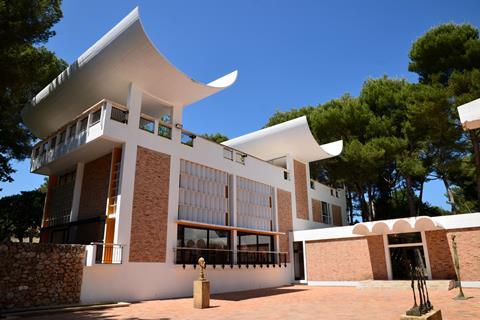
All told, around 150 senior executives from film, television and gaming, policymakers, cultural leaders and creatives from more than 50 countries are expected to attend the one-day event at the modern art venue the Maeght Foundation in Saint-Paul de Vence. The day will comprise a series of panels and workshops that will examine the challenges facing the global screen industries against the backdrop of profound disruption driven by AI, streaming and the rise of the creator economy.
The event is co-chaired by French president Emmanuel Macron and South Korean president Lee Jae-myung and organised by France’s National Centre for Cinema (CNC), under the authority of the Ministry of Culture and the Ministry for Europe and Foreign Affairs which are jointly financing the event.
Several film talents are also expected to attend, as are the heads of prestigious film schools including UCLA, USC and La Femis, and culture ministers from more than a dozen countries.
The future of the industry
Screen understands that several announcements are planned during the summit, including a joint global initiative to support independent cinemas by creating an NGO, an accelerator programme for young leaders, and a series of initiatives to spearhead film education and preservation.
“We hope there will be a before and after this Summit,” said CNC president Gaetan Bruel.
The idea grew out of conversations between Macron and leading industry figures at the 2025 Choose France investment conference, which brought together more than 200 business leaders, investors, ministers and tech entrepreneurs. Bruel then travelled to Los Angeles to test the concept, where, he said, some of Hollywood’s top executives told him: “There is no Davos for the film industry, and we need one.”
The decision to keep the summit intimate and informal has meant turning away some of the global industry’s most senior names, Screen understands. The reduced roster still includes some of the most powerful industry and political leaders from both sides of the Atlantic – and the Davos comparison is deliberate.
“The value of films, series and games is cultural and economic, but it is also very much a geopolitical issue,” suggested Vincent Florant, secretary-general of the summit.
Programme preview
The summit will tackle four key challenges: harnessing AI and technological change while protecting creativity and creators; developing new financing models and partnerships; finding innovative ways to reach audiences; and building a more sustainable and future-facing industry.
One workshop, ‘Old Rivals, New Playbook’, will bring broadcasters and streamers together to explore new forms of collaboration after decades of competition.
Another, ‘Easy to Criticize, Impossible to Replace: Rethinking the Festival’, will convene leaders from 15 of the world’s biggest film festivals, including Cannes general delegate Thierry Fremaux, Berlin’s Tricia Tuttle and TIFF’s Cameron Bailey, to examine how festivals can reach new audiences, safeguard their independence and adapt to a rapidly changing industry.
Other sessions will tackle AI, the creator economy, education and training, audience engagement and reducing the screen industries’ environmental footprint.
With 120 journalists expected on site, the round tables and workshops will be recorded and available online the following day on the summit’s website, lumieresummit.org.
The last time France hosted industry figures and world leaders for such a culturally charged event was in 1926 with the International Film Congress in Paris, which assembled industry leaders of the day to address challenges such as Hollywood’s dominance in Europe.
A century later, as the industry enters another period of transformation, Bruel said: “It makes sense for France to host. We invented cinema and hosted the landmark 1926 gathering. A century later, we’re bringing the entire world together once again to help shape the industry’s future.”






No comments yet