



The film premieres in New York before opening in the US in December and the UK in January
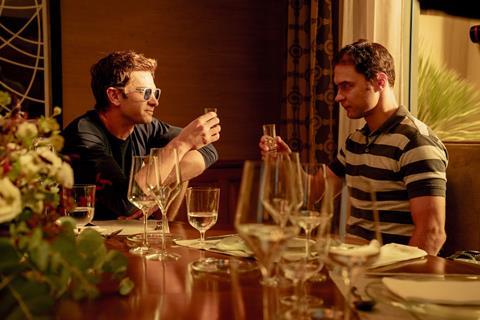
Dir: Luca Guadagnino. US. 2026. 139mins
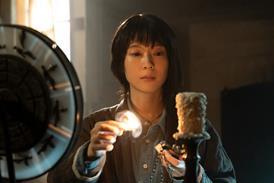
The perilous rise of artificial intelligence is treated like a fearsome monster steadily growing in power, ready to destroy us all, in Artificial, an intermittently arresting fact-based drama. Luca Guadagnino brings style to a film that hinges on Andrew Garfield’s scathingly slimy portrayal of OpenAI CEO Sam Altman, who will stop at nothing (and lie to anyone) to be at the forefront of this burgeoning industry. Although the picture taps into the anger and anxiety surrounding AI, Simon Rich’s screenplay fails to offer any real insight into the deeply flawed humans who have gotten obscenely rich foisting this volatile technology upon the world.
Flamboyant characters lacking in subtlety and depth
Artificial premieres at the New York Film Festival before screening at London and then opening December 25 in the US. (It arrives in UK theatres on January 22.) This summer, original distributor Amazon MGM Studios surprisingly walked away from the high-profile project, with observers suspecting that the company didn’t want to be associated with a film critical of Altman after entering into a deal with OpenAI. (Neon picked up Artificial in the aftermath.) That controversy is likely to boost awareness, as will a cast that features Monica Barbaro, Mark Rylance and Anora’s Yura Borisov. The subject matter could not be timelier, and the picture’s similarities to another cautionary tech drama, David Fincher’s The Social Network (and, indeed, Aaron Sorkin’s forthcoming The Social Reckoning) might also be a lure.
Thoughtful, brilliant computer scientist Geoff Hinton (Rylance) is accosted by eager young genius Ilya Sutskever (Borisov), who volunteers to help him develop artificial intelligence’s potential. About 10 years later, their AI startup is purchased by Google, but Sutskever becomes frustrated by Hinton’s reluctance to proceed at top speed. He leaves Google to join Sam Altman (Garfield), a budding entrepreneur dreaming of creating a company that advocates responsible machine learning. Armed with funding from the arrogant Elon Musk (Ike Barinholtz), Sutskever and Altman launch their altruistic project, OpenAI, but soon money and ego threaten their highminded mission.
Although Artificial focuses on several key figures — including eventual OpenAI CTO Mira Murati (Barbaro) — Guadagnino centres the story around Hinton, Sutskever and Altman, with the working relationship between Hinton and Sutskever dominating the film’s early stretches. Once Sutskever grows tired of Hinton’s cautiousness, he is seduced by the flashier, cockier Altman, who showers Sutskever with praise. Artificial disparages Silicon Valley’s toxic masculinity and greed, but at its core the film is an examination of Sutskever – a brainy idealist who believed that AI could make the world a better place, only to discover what happens when the wrong people gain control of the technology.
Those who have seen The Social Network will recognize the two films’ comparable narrative arcs, with both pictures following impetuous upstarts driven by ambition rather than conscience. Consequently, there is a meta pleasure in watching Garfield, who played one of The Social Network’s more kindhearted characters, here portraying the brash, immature Altman.
At first, Altman comes across as sweetly nerdy but, once OpenAI co-founder Musk pulls his financing, this bratty boy king becomes more and more ruthless. The key to Garfield’s performance is how he depicts Altman’s ingenious spinelessness, knowing exactly what to say in every situation so that others will do what he wants. A master of avoiding confrontation and always casting himself in a sympathetic light, Altman consolidates his power and outmanoeuvres his opponents — including former confidant Sutskever, who learns that this CEO does not care about fashioning safeguards around OpenAI’s tantalising new product, ChatGPT, if it hurts the company’s bottom line.
As entertaining as Garfield’s performance is, he suffers from the same problem as many of his castmates, who play flamboyant characters lacking in subtlety and depth. Barinholtz’s Musk is an amusing cartoon and even Borisov, who articulates Sutskever’s journey from young optimist to bitter realist, has a largely one-dimensional role. Amidst these energetic caricatures, Rylance is the most affecting because he is the most understated, portraying Hinton as a humble sage whose AI warnings go unheeded.
Over the course of Artificial’s two-hour-plus running time, Rich’s screenplay immerses us in the characters’ jargon-heavy milieu. Not being aware of terms like NLP (natural language processing) will make the film an even more disturbing viewing experience, forcing audiences to contend with an unsettling new world run by individuals who may be smart but are profoundly ethically dubious. Utilising an electronic score from Blur and Gorillaz frontman Damon Albarn that sometimes replicates the bleeps and bloops of computer games, Guadagnino incorporates slow-motion and showy camera moves to give the story an operatic grandeur meant to hint at our encroaching AI future.
But while those flourishes keep Artificial highly watchable, they cannot save the picture from a nagging familiarity. Whether it’s The Social Network’s spotlight on questionable technological advancement or Frankenstein’s mournful Prometheus tale, we have seen Guadagnino’s film in other forms over the years. Ultimately, Artificial is populated by real-life characters who seem less compelling than the very real dangers they’ve unleashed.
Production companies: Heyday Films, Frenesy Film Company
International sales: Neon International, joey@neonrated.com
Producers: David Heyman, Jeffrey Clifford, Luca Guadagnino, Jennifer Fox, Simon Rich
Screenplay: Simon Rich
Cinematography: Malik Hassan Sayeed
Production design: Stefano Baisi
Editing: Marco Costa
Music: Damon Albarn
Main cast: Andrew Garfield, Yura Borisov, Monica Barbaro, Cooper Hoffman, Jason Schwartzman, Ike Barinholtz, Mark Rylance