









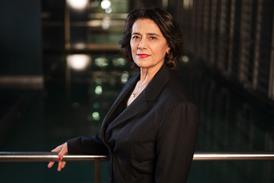

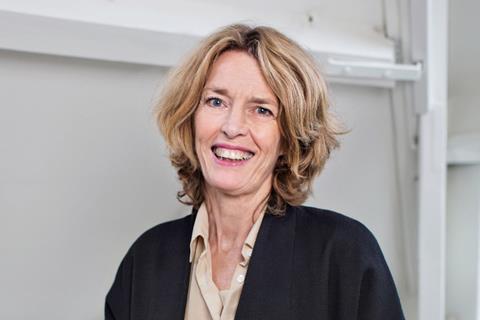
Adriek van Nieuwenhuyzen, head of the industry programme of International Documentary Film Festival Amsterdam (IDFA) just wants the event to get going.
“When you have prepared all year, it feels like ‘OK! Let’s start,” she says.
Taking place from November 14018, the industry programme is a place to do business - Van Nieuwenhuyzen says she is expecting some 2,500 accredited guests, on a par with 2025 -and is also where the documentary industry looks inward, discussing the most pressing matters currently affecting the sector.
Distribution is one of the big issues this year. “The traditional methods do not seem to work any more,” says Van Nieuwenhuyzen, who explains the rhetoric this year is therefore all about rethinking the distribution model.
“We recognise that it is not only in documentary. It is in fiction as well. If no one is going to see these films which are partly or fully paid for by public funds or public broadcasters, then there is a problem.”
It is a paradoxical situation. The European Audiovisual Observatory’s first-ever study on documentary-specific box office data is being presented during the festival. As van Nieuwenhuyzen points out, all the evidence suggests there is still a strong appetite for documentary. IDFA itself is holding the Dutch premiere of the Elizabeth Holmes documentary, You Can See Everything by Nathan Fielder and Lance Oppenheim, which has already grossed around $80m at the global box office.
Meanwhile, NAZA, the hard-hitting film from Yuval Abraham and Rachel Szor exposing Israeli Defence Force killing of civilians in Gaza, has grossed close to $10mn globally.
Nonetheless, certain titles are clearly struggling to cut through. “There is too much, and we don’t know how to find it,” says van Nieuwenhuyzen of a familiar concern in the sector.
This is why this year’s industry programme is focusing on ideas such as ‘direct to community’ distribution.
“There is a lot of research and experimenting going on about different ways of finding these audiences, for cinemas and the platforms,” says van Nieuwenhuyzen. “We have to learn from these examples.”
The annual coproduction bazaar, IDFA Forum (November 15-18), is showcasing 47 new titles. That’s slightly fewer than last year and will “allow a little more room for discussion”, says van Nieuwenhuyzen.
Some tweaks have been made to the industry format: There will be immediate industry feedback after pitch presentations. “This will give the audience and the project teams a sense of what the first impression is and how people are responding to what is on offer,” van Nieuwenhuyzen explains.
Another new initiative is the Bonfire Circles events - informal hour-long discussions which bring together funds, producers and institutions to discuss how they can best work together in territories ranging from Asia and Canada to East Africa.
Forum titles encompass stories of every type. Several projects deal with death and near-death experiences. For example, Marta Miskaryan’s UK-produced project Near Life follows a group of Belgian neuroscientists who are doing groundbreaking research into what happens between life and death, while An Chu’s Taiwanese project Game Of Replacing Gods explores the world of “Zhizha” shops which make paper offerings to the dead.
“It is our intention to have a diverse selection of topics, themes and geographical spread and also approach,” the industry head says.
There are also “essayistic” feature projects such as Liang Zhao’s Ship Of Fools, exploring the place of human beings in a technology-dominated world, to broader social investigations such as Roman Bondarchuk’s Recovery, produced by Darya Bassel, which looks at the Herculean task of rebuilding war-torn Ukraine.
“There was a huge wave of personal and identity-related films a few years ago. Now we see more films that are, let’s say, political but in subtler ways,” says van Nieuwenhuyzen. She points to Indian director Pallavi Paul’s How Love Moves, about a cemetery caretaker in Delhi, which touches on political violence and trauma, as an example.





No comments yet