



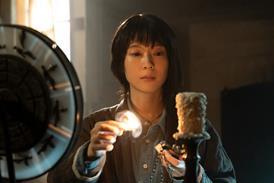
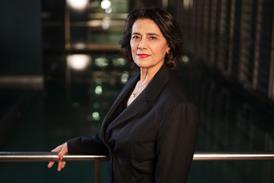
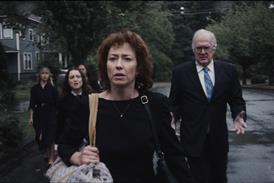
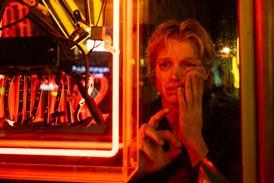




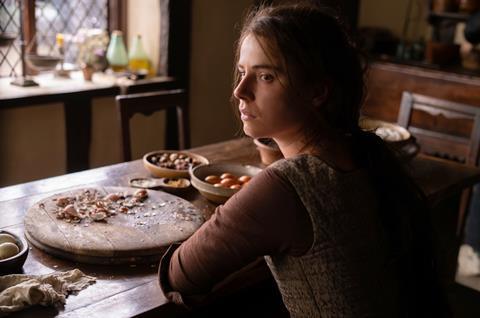
Jessie Buckley recalls walking around the streets of Telluride, in August, where Chloé Zhao’s Hamnet was about to have its world premiere, and sensing people’s nervous anticipation of its reportedly intense emotions.
“It’s interesting, because some people were a bit scared to come see this film in Telluride, they thought it was gonna be too much. They were like, ‘I’m going to go watch it on my own because I’m not ready.’”
And after audiences have seen it, “Some people need to go away by themselves and have a walk. Some people need a hug. Some people just want the permission to feel.”
Buckley suggests that Zhao’s adaptation of Maggie Farrell’s acclaimed 2020 novel, with its unusually immersive depiction of love, loss, grief and creativity, is an antidote to the escapist fare that has dominated cinema of late. “I think we’ve been so scared to feel, have distracted ourselves with sensation, that, especially now in the world, it’s like oxygen that you forgot you needed.”
Her view is borne out by audience awards at a swathe of film festivals — including Toronto and London — where Hamnet built profile ahead of its late-November release via Focus Features in the US, and via Universal Pictures in international markets. Hamnet has garnered eight Oscar nominations including for Buckley, and has grossed $28.4m worldwide so far.
“I think the emotion that is released in the film, which is exactly why I love what I do, is that the bits of me that are way down in the shadows get an opportunity to move through me and shift and have some sort of catharsis and revelation, in myself and in the character,” says the actress. “But it’s very rare for that to reach beyond the screen and into an audience, and we’re all feeling it together.”
What becomes quickly evident in Buckley’s company, even in the dry confines of a London hotel, is that she is quite the poet — one who now happens to be in the thick of the awards race.
O’Farrell’s story proceeds from a single historical fact — that William Shakespeare wrote Hamlet shortly after the death of his young son Hamnet — to imagine the personal life denied us by surprisingly scant record for one so famous. The focus is not actually on the playwright but his wife Agnes, played by Buckley, an intuitive force of nature who is formative in her husband’s journey towards the theatre, just as the boy’s death is the seed of his most famous play.
Shakespeare had proved key to Buckley’s creative pivot when she was still a teen. “He was instrumental to me recognising myself as an actress, and not as a musician or a musical theatre performer,” she explains. “When I first moved over to London [from Ireland], I thought I’d just do musicals, because I’d grown up around music. And then a producer asked me if I would like to do a four-week Shakespeare course at RADA [Royal Academy of Dramatic Art]. I’d always been intimidated by him at school. I was like, ‘I don’t know. This is gobbledygook to me.’ And then I did the course, and it blew my mind. The Winter’s Tale was the first play I did. I was playing Paulina, and it was like an earthquake inside me.”
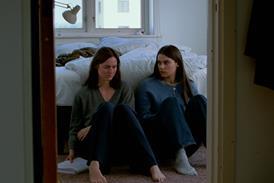
Buckley was then 18, since when she has played Perdita, in the same play, opposite Kenneth Branagh, and Juliet opposite Josh O’Connor’s Romeo, among others. Now she discovers Shakespeare the man, in the form of Paul Mescal, alongside Emily Watson as her mother-in-law. “She’s always been a lighthouse for me,” says Buckley of Watson. “Seeing her in Breaking The Waves, I thought, ‘I want to do that, whatever she’s doing’, which is being raw and human and alive and present.”
Film alchemy
Buckley calls Zhao, who won best picture and director Oscars in 2021 for Nomadland, and is Oscar-nominated again for Hamnet, “an alchemist, who wants the energy to cook to the most potent vibration. That’s when magic happens on film.” It could be said the magic started immediately, with Mescal: after a chemistry test, their second meeting was in a tantric workshop, led by the director herself. “She wanted us to work somatically, in our bodies,” laughs Buckley. “Sure, we’re embarrassed for the first five seconds but then you’re just in it together, who cares, we’ll go wherever we need to go.
“I worked so differently on this,” she continues, referencing her journal, prompted by dreams and full of writing, pictures, pieces of music. “I dream quite a lot anyway, but they were coming thick and fast. And suddenly, I had an abstract tapestry for each scene, which helped me to let go… I was just coaxing the fire of my unconscious.”
A case in point would be Agnes’s heartbreaking howl of anguish on the death of her son. “I didn’t know I was going to do that. Chloé didn’t know. That just happened. In that moment, that is the howl of an ancient grief, of other mothers that have lost their children.”
The experience of playing Agnes became strongly personal for her. “I have learned so much about what it is to be a woman through the women I’ve played,” she says. “And this woman cracked tenderness into me, to the point where I’ve become a mother. You know, I got pregnant a week after this film finished… I’m going to cry now.”
Some of Buckley’s best work is with women directors, including Maggie Gyllenhaal (The Lost Daughter) and Sarah Polley (Women Talking). Is she looking for them, or they her? “We’re looking for each other,” she replies. “These are incredible directors who happen to be women. And the kind of collaboration and the questions we’re asking of each other is for a new language to come through, something that is undeniably feminine.
“Hollywood is a very masculine place. The stories are masculine,” she continues. “Maggie and Chloé and Sarah are so curious about all of what it is to be a woman, in relation to men and the world. It’s not about being divisive. There’s more to us, and this language is so interesting, it’s going to wake you up.”
Buckley has just partnered with Gyllenhaal again, in Warner Bros’ The Bride!, the seeming antithesis of Guillermo del Toro’s more traditional Frankenstein. “It’s Bonnie And Clyde. It’s Sid & Nancy. It’s Wild At Heart. It’s punk, it’s provocative, it’s wild. Don’t have any expectations,” she enthuses. And working with her fellow monster Christian Bale? “Amazing. I mean, he’s a force, a giant. We just got on that rollercoaster together and went.”





No comments yet