






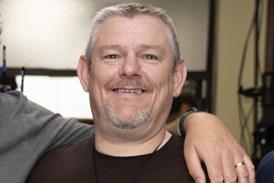

Born in Brazil, resident in Portugal and working across continents, director of photography Adolpho Veloso connected with the itinerant themes of Train Dreams.
When cinematographer Adolpho Veloso read the screenplay for Train Dreams, he was astonished to see himself reflected in the lead role of Robert Grainier, an itinerant logger in the Pacific Northwest in the early 20th century. “Coming from Brazil, I was surprised how much I connected with the story,” explains Veloso from Sao Paulo, the city where he was born and attended film school at Fundacao Armando Alvares Penteado.
“Not only because it’s a character who has a similar lifestyle to me, in terms of being away from home for several months at a time, working with people he doesn’t know,” continues Veloso, who is now based in Portugal. “It’s hard for him to go back home and feel like he belongs and reconnect with his family and his place, which is my life, as a filmmaker, as a cinematographer. There were also a lot of themes that were universal — grief, the immigration aspect. There were so many points I connected to deeply.”
Veloso — who has been Bafta- and Oscar-nominated for his work on Train Dreams, and previously worked with the film’s director and co-writer Clint Bentley on 2021 Sundance hit Jockey — began his visual research by looking at photographs from the 1920s.
“One of the things that struck us was [American photojournalist] Dorothea Lange’s work, especially her pictures during the Great Depression, and the way she was able to capture beauty within the desperation and chaos,” he says.
“It’s what we wanted to do with the movie. Clint wanted it to feel like someone’s life told through memories and we talked a lot about how to translate that into a visual aspect. The closest thing we have is family photos, so we dived deep into that concept of having found these pictures and trying to figure out who this person was through them. That was the starting point for everything.”
So much so that the format of old photographs led Veloso to shoot the film in a boxy 3:2 aspect ratio, “to better resemble a still image”. The squarer shape also helped with framing, offering more headroom and space around the characters in the vast forests of the Pacific Northwest.
“It is not a reason we chose it,” continues Veloso. “But during prep we realised how much that would help with nature and tall trees. From the beginning we knew how important nature was in the movie. Everything happening around those characters plays a big part in who they are and what they’re feeling. The conversation was always, ‘How do we give nature the same importance as the other characters?’”
One way was no drone shots. “You wouldn’t shoot a person that way. Why would we shoot nature that way? It’s going to create a distance from it. We wanted to do the opposite,” says Veloso. Another was to treat the trees as characters. “Whenever we’re shooting nature, it’s either a PoV of a tree, or the camera is attached to a tree, or it’s a reverse on a tree, like they’re having a silent conversation.”
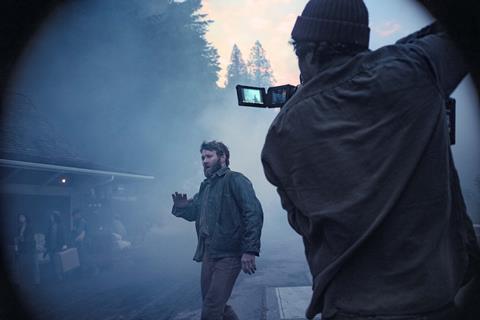
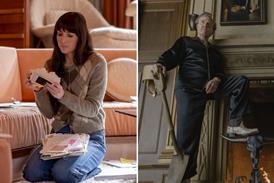
As well as resonating with the nomadic lifestyle of Train Dreams’ protagonist (played by Joel Edgerton), Veloso says he felt connected to the character in terms of his personality. “He is very introspective, very silent, someone who takes things in but does not necessarily express them in words,” he notes. “I could see myself in that, and a lot of people involved in the movie could too, like Clint and Joel.” Again, that fed into how Veloso chose to use the frame, frequently opting for wider shots.
“When you have a movie that is very quiet, you could fall into the trap of going for closeups all the time, because you need to show all the emotions,” he says. “What I realised early on with Joel, because he is a genius, is that he is able to show so much with his whole body, not just his facial expressions. So, we knew we just had to be there with the camera, and he would give us everything.”
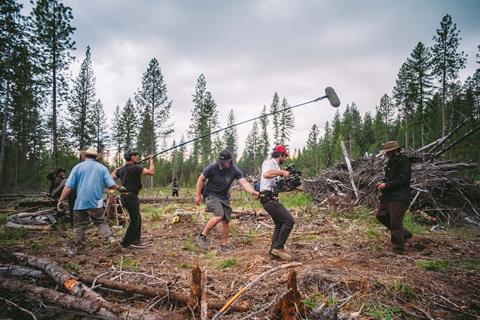
Bentley and Veloso had a crew of 10 on Jockey, with a smaller on-set footprint allowing them to “shoot more, to improvise and to interact with the spaces”. They wanted to translate that ethos into Train Dreams, a movie that was bigger in both scale and budget.
“That was the challenge and the idea,” explains Veloso, who filmed Train Dreams using natural light 90% of the time. “Even though we had a 100-person crew, when we were shooting it felt like a 10-person movie, because whoever was around the camera and the actors was minimal.”
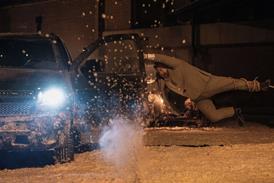
That meant shooting digitally, using the Alexa Arri 35, with Kowa lenses for daylight — “they have the most beautiful sun flares ever and we wanted a lot of those moments to feel magical, like a vivid image made in the ’20s” — and Zeiss Super Speed lenses for night scenes and dark interiors. “We briefly talked about shooting on film but gave up early on that idea, not just because of budget, but we had scenes literally lit by campfires or a single candle and that would be much trickier.”
Moreover, with the brisk, 29-day schedule, shooting digitally allowed for improvisation, with Bentley sometimes filming for up to 40 minutes, during magic hour, sunset, blue light and night. This translated into fewer takes, with the onus on Veloso and the actors to get it right first time. “It was tricky, but as soon as we started shooting, we understood we were getting so much in so little time. It takes a lot of time during prep to figure out how to do it. Clint is not a director that loves to do a lot of coverage, so that makes everything move faster. The actors feel they can give it their all because they don’t need to give it 300 times.”
Making history
Since Train Dreams, which was financed by Black Bear and released by Netflix following its Sundance premiere in January 2025, Veloso has shot two other features, including Remain from M Night Shyamalan, which he filmed partly in Vista Vision. His Oscar nomination is the first in cinematography for a Brazilian — with Train Dreams also Oscar-nominated for best picture, adapted screenplay and original song — and Brazil is flying high thanks to four nods for Kleber Mendonca Filho’s The Secret Agent.
“Last year was the first Oscar ever for Brazil, for I’m Still Here, which is insane, thinking it took 97 years for the Academy to recognise Brazilian films in that way,” says Veloso. “I moved to Portugal six years ago, but I am still connected with Brazil. When the news came out about the Oscars, I flew out to celebrate with family and friends. Everybody’s celebrating and rooting for it, almost like it’s a football World Cup.
“I hope it will inspire other generations the same way I was inspired by what City Of God did 20-something years ago. It’s a great moment and I’m happy to be a small part of it.”



No comments yet