







Yukinori Makabe’s Glasgow Film Festival premiere is adapted from a short story by Banana Yoshimoto
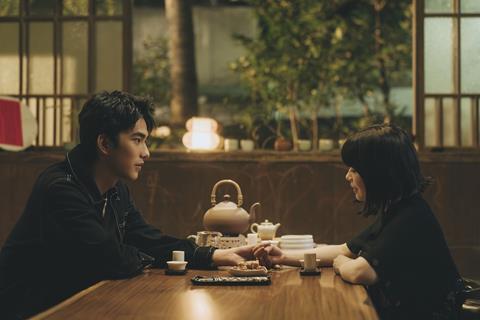
Dir: Yukinori Makabe. Taiwan/Japan. 2026. 107mins
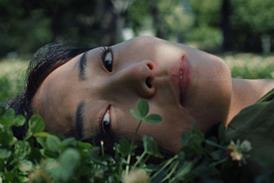
Crushing ennui has rarely looked as radiant as it does in Yukinori Makabe’s Sinsin And The Mouse, a languid drama with a stealth romance in the centre. A Japanese woman mourning the recent death of her mother and a Taiwanese-Japanese man feeling disconnected from the world meet in Taipei – and maybe soothe some festering emotional wounds over the course of one day.
Granular observation of untethered urban life
Making its world premiere at the Glasgow Film Festival, the film is based on a short story by popular Japanese author Banana Yoshimoto and is a slow burning portrait of loneliness and grief compounded by urban sprawl and anonymity. Admittedly some audiences will likely find the sheer volume of measured walking and staring into the middle distance taxing, but strong performances and thematic modesty separate Sinsin And The Mouse from the films it most immediately recalls; among them the gold standard of two people talking film, My Dinner With Andre, as well as Before Sunrise and last year’s Peter Hujar’s Day. Sinsin And The Mouse should generate interest for international festivals and distributors in Asia, and seems well suited to speciality streamers.
Director, writer and editor Makabe first emerged with his 2015 debut I Am A Monk, about a Tokyo bookstore worker who becomes a monk after the death of his grandfather; after a brief detour into sports drama (2018’s Last Hold!) and the vaguely gender-swapped 2021 rom-com Love, Life And Goldfish he now returns to familiar territory. Here, he effectively utilises the intimacy of the 4:3/Academy aspect ratio, and gives his actors ample room to breathe in their long, quiet scenes. Stars Yukino Kishii (Small, Slow But Steady, Sato And Sato) and Tseng Jing-hau (a Golden Horse winner for Pan Ke-yin’s Family Matters) keep the film on track with their portrayals of empathetic characters
Still mourning the loss of her mother, Chizumi Mitsuoka (Kishii) takes up a musician friend on his offer to join him and his new wife in Taipei. After a fair amount of wandering the city and getting distracted by memories in spaces that remind her of her mother, she meets up with Masamichi (Kisetsu Fujiwara), Sachi (Seina Nakata) and Sachi’s friend Shingo Tagawa, aka Sinsin (Tseng), the Taiwanese-Japanese son of a famous singer-actor. Sinsin agrees to take Chizumi to Masamichi’s gig later that night and, in the meantime the two wander Taipei’s streets, slowly getting to know each other.
The two slowly discover they are opposing halves that make a better whole. Chizumi and her single mother (Kayo Ise) were close, and she feels her sudden absence intensely. At the other end of the spectrum, Sinsin felt that absence growing up as the child of a glamorous, jet-setting mother. He was lonely enough to imagine a life with the mice living in his wall, taking as inspiration a favourite children’s picture book. For Chizumi their unexpected bond results in accepting the death of her mum, and for Sinsin a reconciliation of the long unrecognised pain of his parents’ divorce and his own mother’s frequent absenteeism.
Sinsin And The Mouse teems with the same kind of granular observation of untethered urban life and existential wondering that’s made Yoshimoto such an enduring literary star in Japan. At the same time it’s a film that lives or dies by how well its actors can telegraph internalised traumas, fears and frustrations. Makabe and co-writer Noriko Kato (Amazon’s Great Teacher Onizuka prequel series Shonan Junai Gumi!) bask in the little details – her nails and fragile tolerance of her father’s excuse for infidelity, his tube socks and awkward description of her as a mouse. These add depth to the budding relationship between Chizumi and Sinsin and texture to their characters, and Kishii and Tseng make the most of them.
Makabe’s seamless editing never allows the story’s requisite flashbacks to feel jarring or out of place. They hold meaning and context, and structurally provide respite from what is essentially a verbose and meandering two-hander about private pain that’s not afraid to put a light at the end of the tunnel.
Production companies: Robot Communications, Flash Forward Entertainment
International sales: Flash Forward Entertainment, sara@ffe.com.tw
Producers: Daisuke Toyama, Brendan Huang, EN Lee
Screenwriters: Yukinori Makabe, Noriko Kato, based on a story by Banana Yoshimoto
Cinematography: Wayne Lo
Production design: Chang Wen-pei, Joy Wu
Editing: Yukinori Makabe
Music: Taku Tanaka
Main cast: Yukino Kishii, Tseng Jing-hua, Kisetsu Fujiwara, Seina Nakata, Tokio Emoto, Kayo Ise, Chen Shi-lin, Angel Lee, Kisuke Iida