

James Dawson’s appealing, insightful film bows in Thessaloniki Documentary Film Festival
Dir: James Dawson. UK. 2026. 88mins
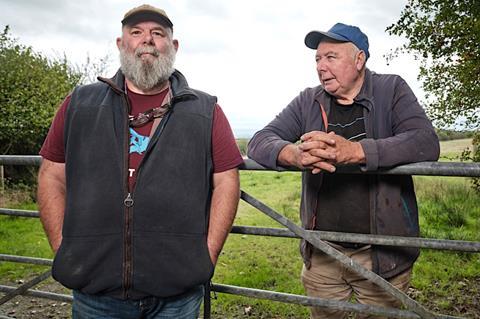
The debate around intensive farming and wild spaces in Britain is effectively encapsulated by the friction on neighbouring Devon farms in this engagingly eccentric crowdpleaser. Filmmaker James Dawson captures gentle feuding English style, an opposition between second generation dairy farmer Derek Banbury and rebellious Scottish rewilder Derek Gow that is built more upon eye-rolling and humorous take-downs than shouting and pistols at dawn.
Engagingly eccentric crowdpleaser
Dawson began his career in the realm of TV reality shows, winning a BAFTA for Channel 4’s Wife Swap, before notching up films including Organ Stops – Saving the King of Instruments (2021). Derek Vs Derek comes packed with personality and the sort of green and pleasant quintessential Britishness that will best appeal to domestic distributors. The film’s quirky delivery of a robust environmental message could, however, help it travel after its premiere in the international competition at Thessaloniki Documentary Film Festival.
“My cows come before wildlife, I’m afraid,” says Banbury, highlighting his commitment to his intensive dairy farm. Across the road and over a hedge, however, former sheep farmer Gow rails against the way agriculture has come at the cost of British wildlife. He is busy restoring his farmland to its former glory, digging ponds and breeding everything from water voles and storks to boar and beavers. Hedges on either side of the road that splits Banbury’s land from Gow’s sum up their differences, with Banbury’s shorn of personality into a regimented line while Gow’s flourishes with fruit and flowers.
While Banbury comments that Gow makes him “mad”, the smile on his face speaks more of bemusement than genuine animosity. The stubborn but largely sweet-tempered clash between the two men’s approaches forms the bedrock of Dawson’s film, as the documentarian smuggles in his environmental message beneath the personalities.
Gow is a no-nonsense type, who was inspired as a young man by naturalist Gerald Durrell and has been busy upending local agricultural traditions for several years – his wild boars, in particular, have lead to confrontation. The animals are, as Gow notes, a natural plough, which is terrific from his perspective but not so handy for neighbouring landowners when the animals get loose in their fields. Local farmer Tony Bricknell-Webb has trail camera footage of a boar eating one of his sheep, although Gow insists that the animals only consume fallen livestock. For all his straight-talking, Gow is also seen to be sensible and largely sympathetic in his approach, making efforts to round-up the boar while also acknowledging the commercial challenges faced by his neighbours.
“I don’t want to broaden my mind,” insists Banbury and yet, through the course of the film, there’s growing potential for an epiphany as Gow gently nudges at the argument – especially regarding the pollinating insects that Banbury and others admit have become increasingly scarce. The simple act of watching Gow turn over the pages of a Ladybird book on British wildlife while noting how many species are now endangered economically indicates how nature has come under the cosh.
Dawson is attentive and gives scope to both men to articulate the issues, showing that Banbury’s increasingly intensive approach is less about personal desire than the pressure put on his bottom line by supermarkets. Shooting over three years, Dawson also pays attention to others in the men’s orbit, with Banbury’s wife Linda, who is finding her B&B business benefiting from Gow’s escapades, offering some delightful observant asides.
Dawson avoids favouring either man while still making it clear he’s on the side of the environment. James Gold’s editing between individually shot footage of the pair allows a conversation to emerge organically between both Dereks’ positions. While the men may never completely see eye to eye on matters, this is a film that celebrates the potential for understanding; one that just needs time and a bit of empathy to take root.
Production companies: Damer Films Ltd
International sales: CAT&Docs, info@catndocs.com
Producers: Serena Kennedy
Cinematography: Jon Sayers
Editing: James Gold
Music: Alexander Parsons