

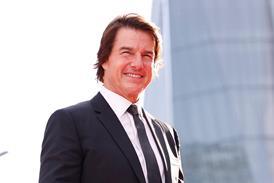

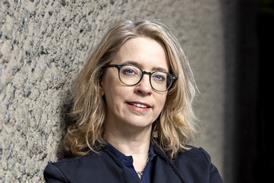





Isabel Arrate Fernandez, artistic director of International Documentary Film Festival Amsterdam (IDFA, November 12-22), is heading into her second edition leading the festival at a moment of optimism for theatrical documentaries.
The festival is screening Nathan Fielder and Lance Oppenheim’s Elizabeth Holmes film You Can See Everything, which has grossed some $80m at the North American box office, and is generating awards-season buzz.
“For many years, I have been hearing sales [agents], distributors, they’re saying documentaries aren’t working, there is no money in it, it’s difficult – and it is difficult,” says Arrate Fernandez. “But that thinking is happening in a framework of what we knew… But what is the new framework? That’s also what we’re trying to achieve within IDFA – to bring people together and get the ideas going.”
Arrate Fernandez talks to Screen about programme highlights, the festival’s new AI policy and its stance on boycotting companies and projects backed by the Israeli state.
What are your highlights in the programme?
What I’m really looking forward to and very happy with is the selection of films we have in a competition like Envision, which is the section that we created several years ago to create a space for filmmakers and works that look for different ways of telling stories, that do not uphold traditional storytelling ways, and sometimes challenge what documentary can be, or look like.
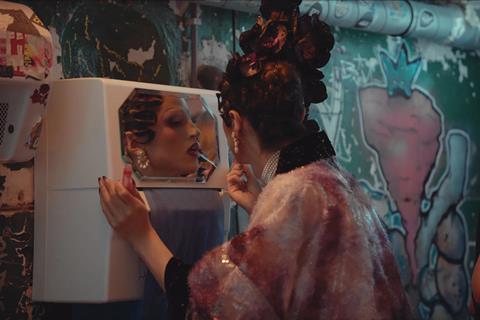
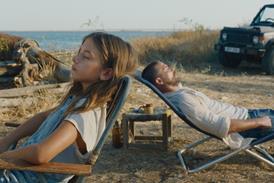
From a very small, maybe more emotional film like Memories, which speaks about solitude, to a film that is much more complex, like Lyrical Vengeance, that connects feminism and colonialism.
What can the sector take from the box-office success of You Can See Everything and Yuval Abraham and Rachel Szor’s NAZA (currently on over $14m worldwide)?
These films show people are willing to go [to cinemas to watch docs]. The Elizabeth Holmes film is three to four hours, and people want to go and watch that. NAZA doesn’t tell people anything they don’t already know, unless they didn’t want to know. But people have gone to see it in the cinema, outside of an event-based context, not with a Q&A with the filmmakers there.
That’s very interesting because if you look at the state of documentary distribution, and in general, I would say the programming of documentary, it’s all very formulated. There are so many preconceived ideas.
What I hope these films show is that audiences have been underestimated. The idea of only having stories that are easy to digest, not too complex to process, not too long, that’s not true [of what audiences respond to]. Something else is possible.
This is the first year submissions have been asked to declare use of AI. What have you learnt from this?
I haven’t counted how many did and how many didn’t, but I found it very helpful. We asked filmmakers to declare how they use it, and it teaches you a lot about how the industry is doing it. Out of that, we have two panels [in the IDFA forum] that are talking about this. One is talking about copyright and ethics, and the other will talk about the use of AI in a creative way in filmmaking.
Is IDFA again turning down accreditation for Israeli state-sponsored guests? Are there any other countries with similar restrictions?
We flag the films, accreditation [requests] that are made in countries where freedom of speech is under threat, or [the country is] accused of violating human rights.
[Each film] goes through the regular route of being watched and evaluated. [We ask ourselves] ’Is it something that fits our curatorial line or not?’ For films that end up on a shortlist for selection, we go and see who’s behind the film, to see if it is an independent work being made. [We ask] ’Is it a film or project supported by a national organisation in one of these countries? What does that mean? What was the influence?’ We base our decision then on that.
With regard to [accrediting] organisations, it’s a similar approach. There is not a blanket idea like – ’oh, these countries we will not do’. It’s something we look at, case by case.
We want to prevent governments and organisations that are involved in or suspected of serious human rights violations from gaining from a platform such as IDFA. Last year, we signed the Dutch cultural boycott of Israel. This year, we decided to continue as a signatory. Next to it, we apply a case-by-case approach, where we test or look at and investigate the independence of this voice or this institution that is coming to IDFA.
What lessons have you learnt from your first edition as artistic director?
I’ve learned to relax a little bit more because last year, once the festival happened, it was exhausting, but joyful. That’s what I’m focusing on.






No comments yet