



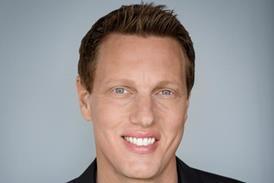








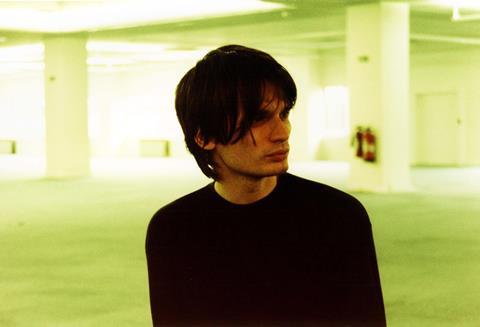
Jonny Greenwood is a founding member and lead guitarist of Radiohead whose multi-million-selling albums include The Bends, OK Computer, Kid A, Amnesiac and Hail To The Thief. Greenwood has also composed for the London Contemporary Orchestra and the BBC Concert Orchestra and played on the soundtracks of Velvet Goldmine and Harry Potter And The Goblet Of Fire.
In 2003, he scored the documentary Bodysong and in 2007 provided the score for Paul Thomas Anderson’s There Will Be Blood, kickstarting a celebrated filmic collaboration that continued with The Master, Inherent Vice, Phantom Thread, Licorice Pizza and One Battle After Another for which he was nominated for both an Oscar and a Bafta. He won film composer of the year at the World Soundtrack Awards in 2022 for Spencer and The Power Of The Dog and is nominated again this year for One Battle After Another.
Before we talk about One Battle, I wanted to ask how you first met Paul. I read he invited Radiohead to a screening of Punch-Drunk Love back in 2002.
That is true. He was hanging around when we were recording Hail To The Thief. And when we were recording that in Ocean Way in LA, he just dropped round and said there was a cast-and-crew screening of Punch-Drunk Love if we wanted to see it. I think he’d also chosen the title from stealing the first half of a Radiohead song, so he must’ve been in touch with us before that. And then he started putting some of my classical stuff onto his films.
How did that lead to you scoring There Will Be Blood?
He had seen Bodysong in some film festival in Europe and came out wanting to know who’d done the music. And then he found some audience bootleg of this piece I wrote for the BBC and started using that as temporary music in his films. Then [he] asked me to write more like that, and more romantic stuff as well.
Was film music something you’d aspired to do?
No, not really. I wanted to spend every minute I could with string players and orchestras, these people that can turn ink on paper into something amazing. I’ve learned since then that I’m always happier working with somebody; forming a band with somebody is how I think of it when I’m working with Paul. And I can see when we’re working, when the music and the picture combine into something bigger than the two of them, that’s exciting. When that first happens, it’s quite a dragon to chase. It’s addictive. That’s what pulls me through and makes me want to carry on trying to get that hit every time.
When I interviewed Paul earlier this year, he said that you don’t write to picture. In his words: “I get three-minute chunks of ideas based on ideas I might have given him, and he writes like a songwriter.”
I will usually write a suite of things based on the script or the era the film is set in and instrumentations that would be contemporary. Phantom Thread was all about writing romantic ’50s music, but without any kind of tongue-in-cheek-ness about it. I got into listening to lots of Nelson Riddle and Ella Fitzgerald arrangements. That’s what I really like doing, trying to understand something new and suddenly being in a room with an orchestra. So it starts more with the choice of instruments and the choices of how to make music, and it’s the most fun part – talking Paul into various approaches, trying to engage his enthusiasm with ideas.
[The One Battle score] was all about mechanical percussion ideas, mechanical pianos and things. Some things have to be written to picture but I will tend to write a three-minute piece for a two-minute scene, and there’s usually a way of editing to make it fit. It’s like carpentry, really.
How did you arrive at “mechanical percussion ideas” being the key for One Battle?
Partly it’s a reaction against what I’m meant to use, which is all the samples and the film drum sound. There’s not much peril in that stuff. I like things being on the edge of not working. It’s more interesting. We built these little mechanical hitters out of solenoids, and I wrote some software in Maximus P to trigger them. It’s quite creepy. You go into an empty room, but all these drums are scattered around the room and hitting themselves. The same kind of thing is attached to the piano. So you’re driving it with all this homemade software that keeps breaking, but when it’s working, it’s great. Plus, when pianos are playing, your hands are free to interfere with the strings and detune it, and so there’s all that stuff going on as well.
Is this just working from the script, or has Paul started shooting?
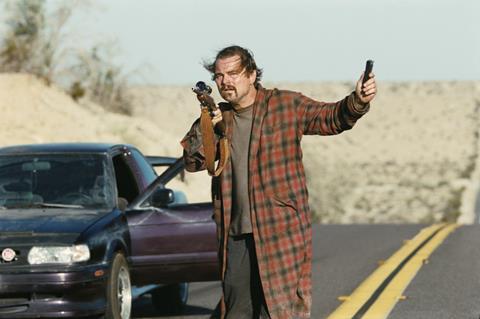
I’d seen lots of it by then, but he warned me that one scene was going to need at least 25 minutes of music, which is obviously insane. That’s when the percussive stuff came in. Then it was a question of orchestrating some of that stuff for wind and brass as well. It’s working backwards in a way: you start with all this mechanical stuff, and then have to put that on paper, and then brass players come in and play the melodies and rhythms.
Paul said the strings were important during the phone call scene with Leonardo DiCaprio’s Bob.
Yeah. I obviously don’t know this, but I’ve been led to believe that sometimes when you smoke too much [weed], your head feels like it’s expanding in that sense of paranoia. I wanted to work out harmonically how that would sound. He’s got his joint, he’s watching Battle Of Algiers, and the phone rings, and it’s all about that fear. That’s a good example of something that was written without any sort of click track, it was a few minutes of music of paranoia that was made to fit. Paul tends to have his music so loud it’s either there or it’s not. He doesn’t really have background music.
Do you have the same approach with other directors?
To be honest, Paul will often cut the picture to music, which is insane. I don’t think I’ve ever written to a locked picture. I think that’s better for everyone. It’s better for the music. It’s a fluid thing. I love the technology when it comes to editing and changing speeds. Paul will take my iPhone demos and put them in the film and say, “Let’s use it.” A lot of the piano in One Battle After Another is voice memos from my iPhone, because he likes the feel of someone working something out. He hears a quality he likes in that stuff, so you have the absurd thing of a piano recorded on a phone and the London Contemporary Orchestra trying to keep time with it. The main theme of One Battle After Another, that’s what’s going on there. Insane.
It’s been six films with Paul so far, not including Radiohead videos. How do you see your creative partnership?
When I’m working on a film for Paul, it’s pretty much all I think about for months on end. I don’t have a team. I don’t have anyone sort of arranging or helping, which is good because it means I can obsess about it all for ages. The bad thing is, it means I can’t do more than one film a year, two sometimes. I felt like I had the choice about five years ago to get all professional and have a team and do it properly. But that’s not really me. I suppose that’s the secret – I’ve been indulged working with someone who is happy for me to spend as long as I need while he’s shooting. I’ve never had that thing of, “Here’s the finished film. We need it in three weeks. Hire your arrangers.” That’s how it is for a lot of soundtrack composers. Whereas when Paul comes here and watches me work, he says he finds it funny, because it looks like amateur hour because it is me and paper and a printer that’s not working, and the orchestra’s coming tomorrow. But he knows I’m taking it very seriously. He’s a very funny man. He’s got a very European sense of humour.
Hildur Gudnadottir mentioned in her interview with Screen that she was a last-minute replacement for you on The Bride!. What happened there?
Mostly it was Paul’s film taking all my energy. Also, I fell ill and was recovering from sepsis. It was all a bit grim, but I’m better now. I remember having my guitar in the hospital and sending him cues of me trying to play the solo guitar stuff. I haven’t seen The Bride! since it was finished. I must, not least for the music.
What’s next for you, filmically or otherwise?
Paul is getting close to pressing the button on the next film, I believe, and I’m already trying to learn a new instrument that would be central to it. You see what I mean? It’s quite protracted. And I’ve got to write a string quartet for the London String Quartet.
I didn’t think a new PTA film was a possibility for a while.
It may well not even be a while, but he had a few ideas and I think he’s chosen one and he seems to be gaining momentum again. You think the [next] film is going to take years to do, and often they do. But then he turned Licorice Pizza around in a matter of months.





No comments yet