













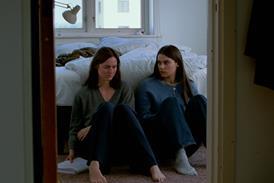
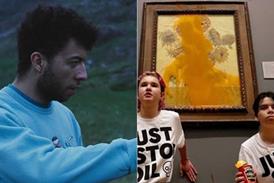

The success of local productions is a bright spot in a Saudi box-office market that has levelled off after early breakneck growth
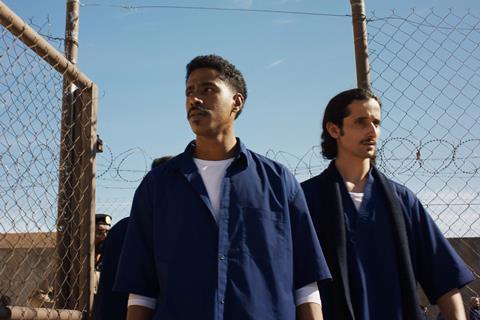
Take a look at the Saudi box office in 2025, and one theme stands out clearly: the popularity of local films with Saudi audiences.
Saudi movies represent more than 14% of all box-office revenues so far this year, notes Nathan Gilligan, senior operations manager at box-office analyst Comscore. Three Saudi movies – heist caper Alzarfa: Escape From Hanhounia Hell, comedy sequel Shabab El Bomb 2 and drama Hobal – sit in the top 10 chart of all releases so far this year.
Alzarfa is in third place overall with takings of $8.2m (SAR 30.6m), just behind two Hollywood releases: first-placed F1: The Movie on $10.4m (SAR 39.1m) and second-placed Lilo & Stitch on $9.8m (SAR 36.8m), according to Comscore.
Alzarfa, which centres on a botched attempt by three friends to steal treasure from a museum owned by an eccentric billionaire, is produced by Saudi’s AlShimaisi Films and Telfaz11, the companies behind 2022 comedy Sattar, the Kingdom’s all-time local box-office hit.
At the time of writing, Shabab El Bomb 2 was in fourth place in the overall box-office chart for 2025 on $7.4m (SAR 27.7m), with Hobal in fifth on $6.6m (SAR 24.6m). Other strong Saudi movies include Essaf, in 13th place with $5m (SAR 18.9m), and Siwar in 24th place with $2.9m (SAR 10.9m).
In total, Saudi-produced titles have collectively grossed more than $32.7m (SAR 122.6m) since the start of the year, giving local productions a share of around 14.2% of the total box office so far in 2025.
Saudi features have moved from being something of a tentative experiment to a proper commercial backbone for exhibitors and distributors, suggests Gilligan. In the past, Saudi films have done well – such as Sattar and 2023 thriller Mandoob (Night Courier) – but these were often isolated cases.
But now local films are punching above their weight more consistently. The shift suggests growing confidence among filmmakers, distributors and the public.

“Audiences are embracing stories that speak directly to their experiences; producers and exhibitors are investing more,” says Gilligan. “The result is a pipeline of homegrown films that can chart reliable run-rates. Titles such as Shabab Al Bomb 2, Hobal and Alzarfa show that a Saudi film no longer needs to be niche to be a hit.”
The success of local films has buoyed the Saudi market in 2025, helping it to surpass a disappointing 2024 that saw revenues fall below 2022 and 2023 levels. Saudi cinemas have generated $230m (SAR 863m) in box-office revenue to the end of November 2025, from more than 17.6 million admissions. That is ahead of the same period in 2024, when takings were $208m (SAR 780m) from roughly 16.1 million admissions.
Backing local films
Of course, big global releases remain central to the Saudi market: Hollywood is still top of the charts in many weeks. “What’s changed is that international tentpoles are now joined by strong regional and domestic films, making for a diversified release slate,” says Gilligan.
Backing local films is key to driving the growth of the Saudi cinema industry, according to Adon Quinn, CEO of Saudi’s biggest exhibitor Muvi Cinemas.
Speaking at Saudi Film Confex in October, Quinn said: “The biggest thing that we can do for the overall industry – and what will help with the expansion of the box office and the cinema industry in Saudi – is supporting local content.”

Muvi Cinemas launched its first cinema in Jeddah in 2019 and now has 214 screens in 23 locations across the Kingdom. It also has a distribution arm and finances films. To date, it has backed four Saudi films and three Egyptian films.
“There have been so many examples of Saudi films this year and in the past few years where we see such a high increase in first-time customers,” said Quinn. “Saudi films tell stories that resonate with people and bring them to the cinema for the first time. That’s where habits will be developed. For us, it’s about trying to find ways that we can support local filmmakers and to support more films being made.”
As such, local movies represent a shot in the arm for a Saudi cinema sector that has struggled to live up to huge hype and expectations that surrounded it when cinemas reopened in 2018. Back then, analyst PwC predicted that Saudi would become a near $1bn box-office market by 2030. It suggested the Kingdom had the potential to absorb up to 2,600 screens.
However, after a period of breakneck growth in the early years that was characterised by a massive cinema-building spree, the market has levelled out at around 621 screens from 68 cinemas. For the past four years, box-office revenues have plateaued at around $225m-$250m a year.
Exhibitors have slowed their expansion plans, and some have even exited the market. In 2023, AMC Entertainment Holdings, the world’s biggest cinema chain, sold its Saudi cinemas to Saudi Entertainment Ventures (Seven), which is operated by the government’s Public Investment Fund.
There is talk of exhibitors reining back further expansion plans, and even closing cinemas. Some are said to be struggling amid high levels of debt incurred during the rapid expansion.
One distributor, speaking to Screen on the condition of anonymity, says: “You have major studio distributors who haven’t been paid in the last three months. Some are only releasing KDMs [key delivery messages required to play an encrypted movie] when they get paid.”
Distributors say the market has changed over the years. In the early days there was an appetite for a wide range of films, both Hollywood and independent movies as well as Egyptian films, as audiences experimented. But now Saudi has become more like other major markets, perhaps a sign of its maturity. The top films are as might be expected elsewhere: Lilo & Stitch, F1: The Movie, A Minecraft Movie, Weapons and Mission: Impossible — The Final Reckoning, complemented by Egyptian hits.
But independent international films have taken a major hit, says the distributor. “The market is correcting itself. Before, it was very heavily theatrically dependent. Now you have to depend on good first pay-TV or streaming deals… Theatrically, you’d only bet on your high-concept films like Hunger Games or John Wick.
Notes of caution
Distributors have become cautious about independent releases as a result. Amid the excitement of the country opening up, distributors initially paid competitive sums for the rights to big independent films. Bidding wars for titles from major US sellers were common, but less so now. Minimum guarantees have dropped as a result, reflecting the reality of a market that has levelled out.
The distributor says the novelty value of going to the cinema seems to have worn off for Saudi audiences, who flocked to theatres soon after they opened. There is also much more competition for their attention: not only from streaming platforms, but from an array of entertainment offerings that are newly available in Saudi, from top sports events to theme parks.
Exhibitors have responded by cutting ticket prices from nearly $20 to around $13 now. This succeeded in growing admissions slightly, but did so at the expense of box-office takings.
The challenges facing the market, however, need to be put into perspective. From a standing start, the Saudi box office now represents around 38% of takings across the Middle East, just ahead of the United Arab Emirates on 37% (although Saudi’s population of 35 million is more than three times bigger than the UAE).
It is a welcome box-office addition to the MENA market for producers, distributors and exhibitors. But it is no longer a heady, emerging theatrical market – for now, all the signs are that the Saudi cinema sector is maturing rather than growing exponentially.
| SAUDI-MADE FILMS AT THE LOCAL BOX OFFICE JAN 1-NOV 30 | ||
|---|---|---|
|
Rank |
Film title |
Revenues |
|
1 |
Alzarfa: Escape From Hanhounia Hell |
$8.2m (SAR 30.6m) |
|
2 |
Shabab El Bomb 2 |
$7.4m (SAR 27.7m) |
|
3 |
Hobal |
$6.6m (SAR 24.6m) |
|
4 |
Esaaf |
$5.3m (SAR 18.9m) |
|
5 |
Siwar |
$2.9m (SAR 10.9m) |
Source: Comscore
| SAUDI BOX OFFICE ANNUAL REVENUES | |
|---|---|
|
Year |
Revenues |
|
2025 to date |
$230m (SAR 863m) |
|
2024 |
$225.5m (SAR 845.6m) |
|
2023 |
$245.8m (SAR 922m) |
|
2022 |
$249.9m (SAR 937m) |
Sources: Comscore, Saudi Film Commission





No comments yet