











Sentimental Value tells the story of a Norwegian family, past and present, through the prism of an absent father reconnecting with his daughters. Writer/director Joachim Trier dives into four key scenes with Screen.
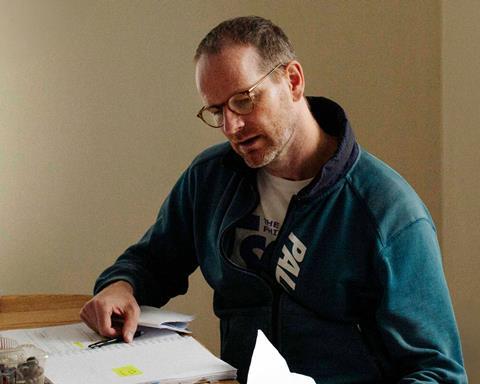
Joachim Trier clearly relishes directing as a truly collaborative process — during this conversation about four key scenes in his seventh feature, he name-dropped at least 20 cast and crew members for their essential contributions. That includes his four lead actors Renate Reinsve, Stellan Skarsgard, Inga Ibsdotter Lilleaas and Elle Fanning — all now Oscar-nominated in a remarkable feat for a Norwegian film — and his two producers, Andrea Berentsen Ottmar of Eye Eye Pictures and Maria Ekerhovd of Mer Film.
He saved some special praise for two collaborators who have been with him since the start: co-writer Eskil Vogt and editor Olivier Bugge Coutté; Trier has worked with them since his NFTS graduation short film Pieta back in 2000. “There is always this arch of the process where I start with Eskil and Olivier. To see them both get nominated for the Oscars is so wonderful. This is our creative triangle.”
Released by Neon in the US and Mubi in the UK, Sentimental Value has made history for the Nordic region with nine Oscar nominations and eight at Bafta — eclipsing Ingmar Bergman’s Fanny And Alexander’s six Oscar nods in 1984 - with one win for film not in the English language.
The film, which premiered in Cannes Competition and won the grand prix, is about two sisters, Nora (Reinsve) and Agnes (Lilleaas), who have different reactions when their estranged father, film director Gustav Borg (Skarsgard), comes back into their lives.
Trier reveals that he often likes to share space with the actors, not standing away by a monitor. “I go in and out,” he says. “Sometimes for technical reasons I will not always walk next to the camera, but I will always be on my feet. I want the actors to feel me with them. I see it as my responsibility to be close to the camera so I feel what potentially the audience will see.”
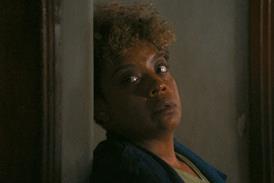
Panic attack
The scene: Nora (Renate Reinsve) has extreme stage fright before the opening of her new play, keeping a packed audience waiting.
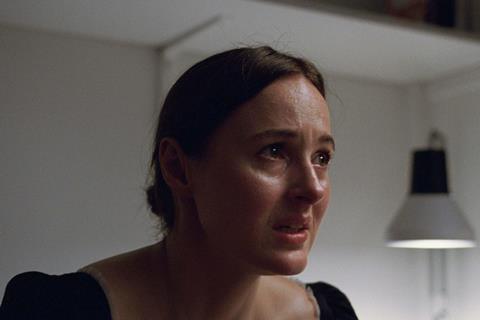
Joachim Trier: “I am a third-generation filmmaker, and in psychology they talk about going into a space that we are deeply scared of — what is the longing to go into that place of risk? It’s a very human thing. You’re drawn to, and at the same time frightened by, the thing that makes you who you are. That creates an interesting character dynamic. I spoke to a lot of actors I know when we wrote this. On premiere nights going on stage, people have panic attacks, they vomit. Yet they do it for the audience, which moves me.
“I was using the example of a very good friend of Renate’s and mine, an actor who will leave his family at one in the afternoon, go to the theatre, do a bit of yoga, warm up his voice, do some stretches, get ready, and almost vomit out of anxiety, then go on stage and be Hamlet for four hours. That endeavour makes me love actors.
“We shot in the National Theatre of Oslo, which opened in 1899. Ibsen did some of his first stagings of his famous plays there. Now it’s gritty and old — we had to be careful because it’s a very vulnerable building. We had 750 extras, which was expensive and also caused a lot of social pressure, having them there watching us shoot. It was something I was most nervous about before the shoot.
“Atilla Salih Yücer, who is one of the AD team and also a co-producer of the film, was on stage doing his stand-up routine and charming those extras for hours and hours. There was a lot of great work being done by everyone to sustain the energy of the audience. They are participants in this, and we thank all those extras on the credits.
“The film language I’m interested in is the subjective, objective polarity. We are with Renate, then lose her and become more objective, then come back into her, and then go in the audience, then go backstage, seeing how they’re struggling, go to the play’s director being sweaty. The suspense of all those beats is fun, and we needed to shoot a lot of material to build it and construct it in the edit, to create a three-dimensional experience of that whole event.
“The film deals with a clear dichotomy in life, especially for Nora and Gustav, of the relationship between the fictional work life and the real. Being backstage with the pragmatics of getting this show together, taping up torn dresses with gaffer tape, to create this work of art that everyone admires — it was interesting early on in the film to look at this interplay between life and art.”
The beach
The scene: After meeting at Deauville American Film Festival, US actress Rachel Kemp (Elle Fanning) and her entourage spend hours on the beach with filmmaker Gustav Borg (Stellan Skarsgard).
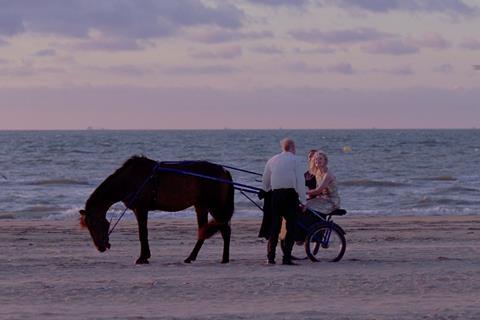
Trier: “Renate and I had been to Deauville with The Worst Person In The World. It’s a great festival, and yet the landscapes can look tremendously melancholic. Marguerite Duras, the great French writer, lived nearby at Trouville-sur-Mer, where she lived in the latter half of her career and wrote and looked at that same horizon Stellan looks at. It captures this sense of mortality: if you look out towards the sea, you have that melancholic flatness of vast eternity. Deauville also has a boardwalk with names of the stars who have been there, many who have passed away, and maybe Gustav is walking there thinking he’ll never make a film again. Also, they really do train horses on those beaches, and I love the colours on the beach umbrellas, so there were many elements to play with to make it cinematic.
“It was the first scene Elle and Stellan shot together. Elle had been released from her shoot of Predator: Badlands — they were very collaborative so she could do both films — and came to Oslo that summer before we shot, so we could all play around and rehearse. Then she met us again in Deauville; that was fitting because she and Stellan are pretending they’re just meeting. We shot the film almost chronologically — there was that discovery of getting to know each other as the characters did.
“It was a tough scene to shoot because of the light. We had to work backwards. We shot at sundown for sun-up three nights in a row, and it was damn cold, and Elle was there in this summer dress. The tide came up and we had to move the base because it almost flooded — it was rather tumultuous. But it was also one of the most beautiful moments of the whole shoot because of the transitional light.
“We had a horse that went crazy. Stellan is the toughest guy in the world, so he walked up towards the first horse, and it almost kicked him in the face. Still, he can handle it [laughs]. We found another horse.
“I love this scene because we see Stellan as Gustav really being a director — it’s an almost Felliniesque way Gustav can arrange to go to the beach and get the horse and send Rachel home. Gustav has that ability to elevate reality. We see the sparkle in his eye returning after the melancholy of the rejection by Nora.
“This is the moment where he suddenly — as we say in Norwegian — ‘when the old show-horse smells the sawdust [in the circus]’. He’s not just a difficult father, he’s got charm. This is a scene to see his character from a different perspective.”
Sisters
The scene: Agnes presents Gustav’s script to Nora, and asks her to read a particular scene in which the character confronts her grief and her family’s legacy of trauma — bringing Nora to a fresh understanding. The sisters then comfort each other.
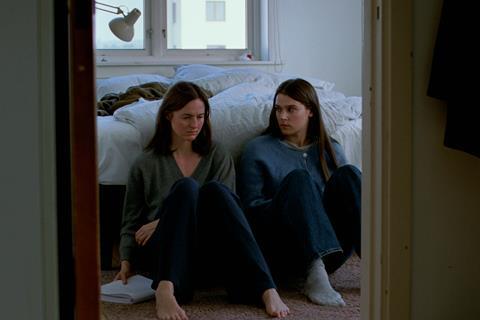
Trier: “It’s a special moment in my life to direct this scene, because it’s based on the core premise when we started working on the script: Eskil and I exploring the mystery of siblings and how we support each other. This also had been the scene we would explain when we first pitched the film to our close collaborators — this was the moment when the producers teared up. We learn Gustav has somehow understood his daughter [evident in his script’s monologue written for Nora] and the two sisters are sharing something unspoken about their traumatic childhood. There was a lot of pressure on everyone because we wanted it to mean a lot, and that pressure could make it less interesting creatively, because we don’t want to be intellectual storytellers. We want to be in the moment.
“I experienced everything on those days. Renate and Inga showed both great capacity of craft and great emotional openness and availability to the chaos of being in the moment. The whole range of what I admire in actors came into play.
“How does Agnes convince Nora to read the script when she’s so depressed and also so mad at Gustav? Inga let herself be emotional to an extent that was unexpected to me. We hadn’t quite rehearsed that; it just happened. And then Nora has to read the monologue. Renate did take upon take — pushing it to crying and then she went to zero again. I was giving her directions to hold back. We had all these versions, but the take we ended up using was one of the latter ones when she’s really holding back so that her craft aligns itself with the character’s resisting of this breaking moment. That struggle moves me every time I see it.
“The latter part of that scene is in the bedroom — Inga is really feeling what Agnes is feeling for Nora. That’s what the film is about. It’s how difficult and tender and complicated it is to actually embrace love. There they are, and they have this beautiful conversation, one sister saying you were there for me when we were children, when our mother couldn’t quite be there for us.
“I usually don’t speak during takes, but I saw Inga’s impulse to hug Renate — that was not in the script. So I said, ‘Yes, go get in bed and hug her.’ Inga says ‘I love you’ in the most pure way. And she feels it. It’s real, and we can hear it. Renate answers perfectly in her slightly reserved character’s way: ‘Well, I love you too.’ It’s hard for Nora to express these kinds of emotions because she doesn’t know that she’s loveable, that she can receive love. It’s a hard thing for her, and in this exact moment she does. For some people’s taste, that’s cheesy. To me, it just shows how complicated love can be.”
The family home
The scene: A montage looking at the family house in Oslo as seen through the decades, with many of Nora and Agnes’s ancestors.
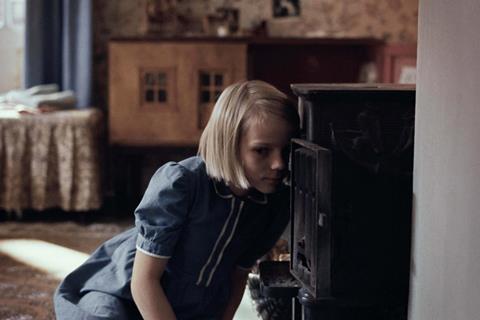
Trier: “This house reminded me a lot of the family home that we were selling while writing the film in Oslo — an old wooden villa that reeks of the experiences of the 20th century, good and bad. We had seen 100 houses, but we had actually shot some of Oslo, August 31st in the same house, so it means a lot to return. There are a lot of clear spatial relations there so the audience can recognise the rooms.
“We wanted to have a house witness the 20th century, and then to have the film language in this montage mirroring different techniques. We did a lot of different looks and lenses and film stocks to mirror each decade through the century into the modern day. I thought about how the house looked at all of this, and the tragedy of Gustav’s mother, and how could the house help us talk about the unspoken relations between parent child, parent child, parent child through several generations by just observing it.
“We all have that experience of realising as we get older that, yes, we are affected by the past in unusual, individual ways. There’s probably many sides to any story, and I thought the house could witness that in a more objective and observant way to create a dynamic between what the characters were able to talk about and what the audience is engaged in. There’s more space for interpretation.
“We did a lot of rehearsals in the house. Stellan has this beautiful way of always joking, in a way of saying, ‘I don’t do so much rehearsals and stuff,’ but he’s a great listener, and he’s a great friend in the collaboration. He’s attentive, even though he doesn’t like to flaunt his research or his rehearsal techniques. He’s very sensitive. I know that he knew exactly what those different rooms meant to his character.
“This house is up the street from where I live. It’s five minutes away from me. So I walked past it a couple times with the kids and looked in and said, ‘That’s the house that daddy shot in.’ But I do feel like it’s time to move away from that house and do a new film.”



No comments yet