












Paweł Pawlikowski, the Polish-UK director of Fatherland, has said his career has been built on telling stories built on facts since he started making documentaries for the BBC in the early 1990s, “by walking through the right door at the right time”.
His first, From Moscow To Pietushki: A Journey With Benedict Yerofeyev, portrayed a Russian writer no one but Pawlikowski knew about.
“I didn’t know what a traditional documentary aesthetic meant really. I was just filming stuff that interested me, and I cut corners, and I just went for interesting bits,” Pawlikowski said. “His story is an amazing fiction. When you watch the whole film, I’m just using reality to tell a story.”
Pawlikowski noted the BBC was “a very eccentric organisation at the time” and that his documentary wouldn’t get made now.
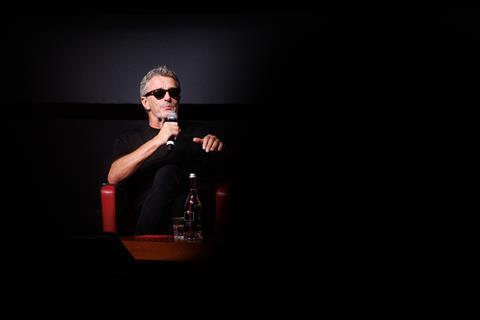
Talking in the first of this year’s masterclass events at the Rome Film Fest this week, Pawlikowski said the idea of filling out a story while mindful of including facts has informed all his work and informed his transition into fiction filmmaking.
“It’s important for people to find their own form, but usually form comes with the urge to actually say something,” Pawlikowski said. “It’s not a question of finding a type of shot or an aesthetic. That has to result from some development from something that you discover for yourself because you really want to show, communicate something that’s worth showing.”
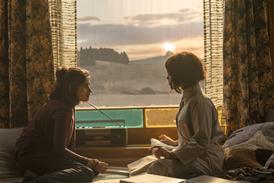
Fatherland centres on the relationship between the German writer Thomas Mann and his daughter Erika. Sandra Hüller and Hanns Zischler star in the film, which is set in 1949 as the Cold War grips Europe and Russia, and the two embark on a road trip across a Germany in ruins. Written by Pawlikowski and Henk Handloegten, the film is one of the director’s fictions based on facts – in reality, Mann made the road trip with his wife, not his daughter.
Pawlikowski’s first features, Last Resort and My Summer Of Love, the latter of which gave Emily Blunt her first film role, were made in English. He then shot Ida in his native Polish, and it went on to win an Oscar for best foreign-language film, and Cold War, which was nominated for three Oscars.
He told the Rome audience why he believed casting to be one of the most important parts of the entire process. “You have to put an effort in to actually get the characters or the actors who embody something that you want to see, who have a depth, who have some kind of aura.”
The filmmakers’ commitment to authenticity led him to Russia to cast Last Resort, and determined to find a Russian actress with her own child, as the story dictated. He described that decision as “a bad idea because, why would you?”
“There was a really bad actress who turned up with her kid, but the kid was brilliant,” he recalled. “I spent a day hanging around with them and filming them together, furious and trying to work out how to get rid of this mother.
“It turned out that she wasn’t his mother. She just borrowed him from a neighbour because she knew he was sparky.”
He abandoned his lofty aspirations and cast the child with an unrelated actress, Dina Korzum.
Prior to Rome, Fatherland screened in competition at the 2026 Cannes Film Festival, earning Pawlikowski his second best director award from the festival – following his win for Cold War – ex aqueo with La Bola Negra’s Los Javis, and is Poland’s entry to the Oscars.
Mubi has rights in key territories, including Italy, where it opens today (October 16) and also in the US and UK-Ireland.





No comments yet