







Bafta has detailed its work on safeguarding, risk assessment and compliance processes in a letter to members ahead of the Bafta Cymru awards this Sunday, and Bafta Scotland awards next month.
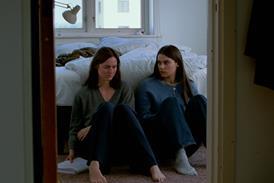
The letter follows the incident at this year’s Bafta Film Awards, when John Davidson, who has Tourette Syndrome and whose story is told in I Swear, experienced his involuntary tics during the ceremony.
Davidson shouted an offensive racial term during an award presentation by Sinners stars Michael B. Jordan and Delroy Lindo, which was transmitted on the BBC broadcast of the show.
Read the letter in full below
I Swear has received seven nominations for the Bafta Scotland awards. For the ceremony on Sunday, November 15, at his suggestion, Davidson will watch via a video link from a separate relaxed space, together with his family and friends.
“We have consulted organisations including Tourettes Action and Tourette Scotland and, most importantly, we have been speaking directly to John,” said Bafta in a letter to members today.
The letter also noted the independent review commissioned by the Bafta board in March “identified specific areas for improvement”.
“Since then, the BAFTA team has worked extensively and consulted widely on best practice to learn from what happened in February and the racial harm experienced by our community, and to make our Awards events as inclusive and as safe as possible.”
The letter acknowledges there is no “‘one size fits all’ approach” to matters of inclusion and accessibility, and that “rebuilding trust requires more than changing processes.”
I Swear won two awards at the Bafta Film Awards: best actor for Robert Aramayo and best casting for Lauren Evans, with Aramayo also winning the EE Rising Star Award, which is not directly presented to a film, but on the basis of his I Swear performance.
Bafta letter to members, October 1 2026
As the BAFTA Awards season is now underway, with the Cymru Awards set to take place on Sunday, quickly followed by the Scotland Awards in November, we wanted to take this opportunity to update you on the work BAFTA has undertaken since the Film Awards earlier this year.
The independent review commissioned by the Board in March identified specific areas for improvement. Since then, the BAFTA team has worked extensively and consulted widely on best practice to learn from what happened in February and the racial harm experienced by our community, and to make our Awards events as inclusive and as safe as possible.
We have strengthened and centralised our safeguarding, risk assessment and compliance processes, creating a more connected, intersectional and cross-organisational approach to live event planning. We have also simplified communication and escalation routes so concerns can reach the right people quickly, and strengthened briefings for everyone working with us, including hosts, presenters and citation readers.
With all our guests in mind, we have sought independent advice on inclusion and accessibility best practice from a range of experts. There is no ‘one size fits all’ approach and adjustments should always be tailored, so our planning will aim to better understand individual requirements and consider how this can be supported alongside the safety and dignity of everyone attending. Where adjustments are possible, we will work closely with individuals, supported by experienced access coordinators, to accommodate them.
We recognise that rebuilding trust requires more than changing processes. The review also challenged us to strengthen BAFTA’s cultural understanding and capability. We have engaged with organisations and experts with experience across race, disability, inclusion and international cultural context and we are developing further training for our staff. This work continues.
For the upcoming BAFTA Scotland Awards, for which I Swear has received seven nominations, we have worked with both safeguarding and inclusion experts to consider the arrangements necessary to enable John Davidson MBE, whose life inspired I Swearand who is an Executive Producer of the film, to participate in the safest way possible for all.
We have consulted organisations including Tourettes Action and Tourette Scotland and, most importantly, we have been speaking directly to John. Following those conversations and our wider risk assessment, we have made adjustments to enable John to attend in the way he has suggested to us, which is to watch the ceremony via video link from a separate relaxed space within the venue together with his family and friends.
John has Tourette Syndrome and experiences coprolalia, a type of vocal tic involving the involuntary expression of socially inappropriate words or phrases. These vocalisations, like all tics, are neurological in origin, occur outside of the individual’s control, and do not reflect a person’s views, beliefs, character or intentions.
At the same time, we know that involuntary vocal tics involving words relating to race, religion, sexuality or other protected characteristics can cause distress and harm to others, and it is BAFTA’s responsibility to plan for and mitigate any such impact on our guests.
We take this very seriously. These changes reflect a broader principle we are embedding in our Awards planning: listening to people about their needs, preparing carefully, and creating an environment in which everyone is treated with dignity and respect.
We know that no live event can be entirely risk-free. We will continue to test our processes, review how they operate in practice and be accountable for improving them. We will do everything we can to make sure every guest feels safe, welcome, and included at our Awards.
Thank you to the members, committees, advisers, community organisations and external experts who have challenged us, shared their experience and helped us improve.
If you are thinking of attending the Scotland Awards, or have questions about any of this work, please contact infoscotland@bafta.org.
With best wishes
Sara and Jane
Sara Putt
Chair
Jane Millichip
CEO
No comments yet